 English
  Chinese
 Injection molding is a highly efficient and stable manufacturing process for producing complex dimensional parts by the injection of liquid materials into molds and subsequent cooling and solidification. In modern manufacturing technology, it has been established as a major process for the mass production of plastics and elastomers. Complete injection molding systems are critical for process reliability and efficiency.

1. Classification of Injection Molding Types
Injection molding can be classified into several types based on material properties and molding methods. Each type serves different production needs within injection molding systems, suitable for diverse product structures and applications.
(1)Thermoplastic Injection Molding
The dominant method is thermoplastic injection molding. The material is heated to a liquid state, injected into a mold, cooled, and solidified, and it can be reheated and reprocessed if needed. This method is very efficient in mass production and provides consistent quality.
Applications:
Commonly used in packaging, appliance housing, consumer products, and automotive parts.
Automation Integration:
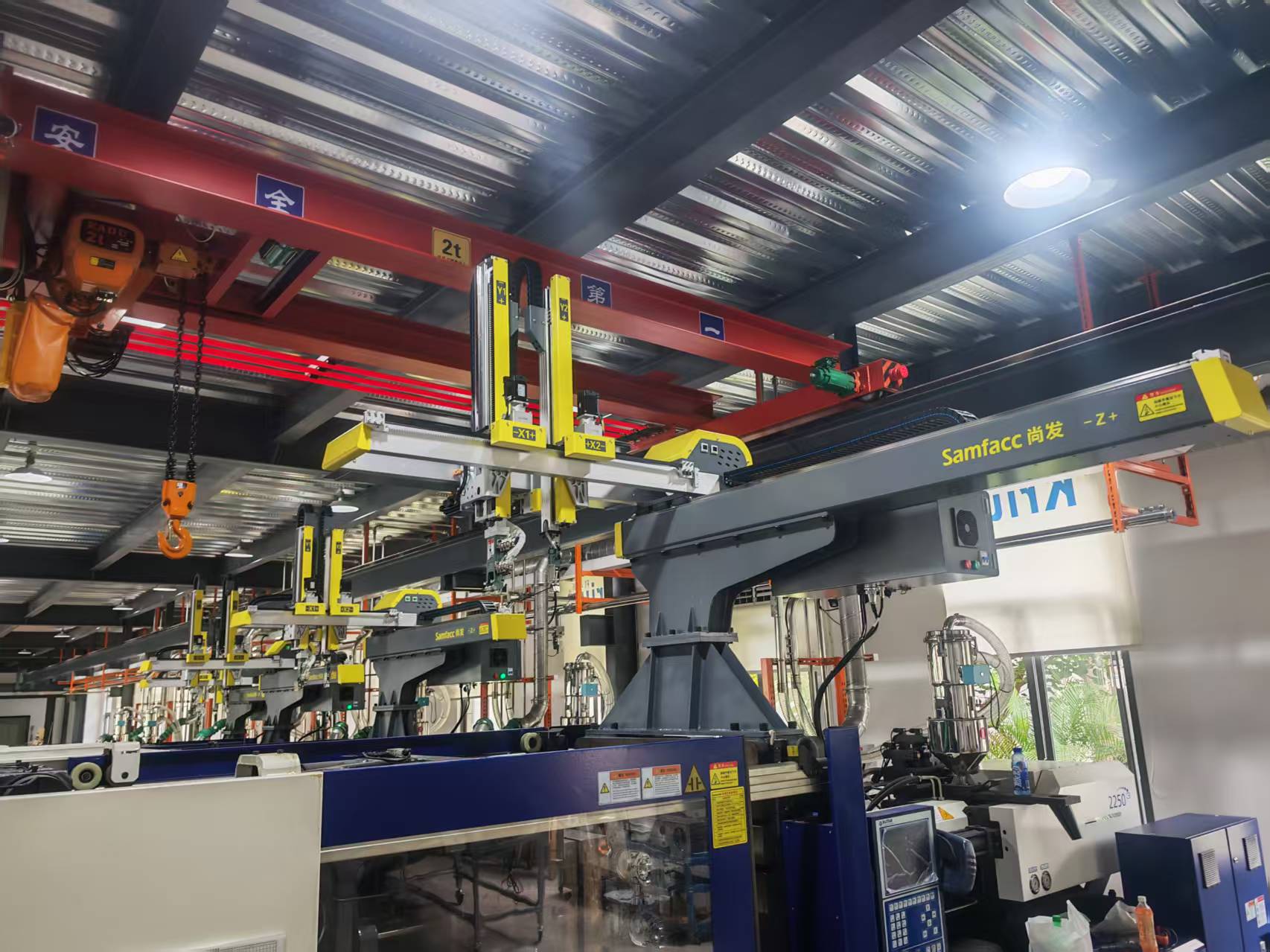
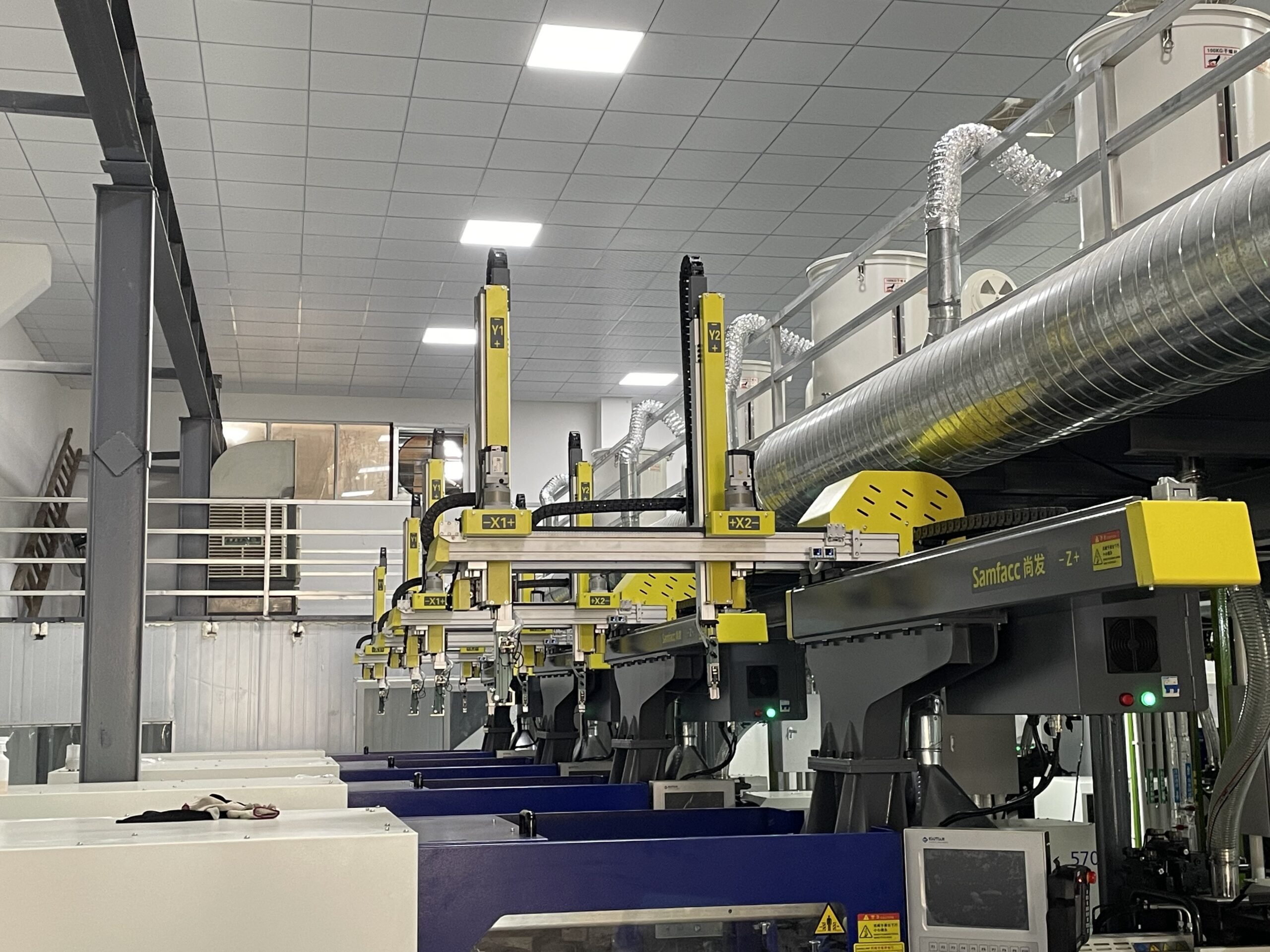
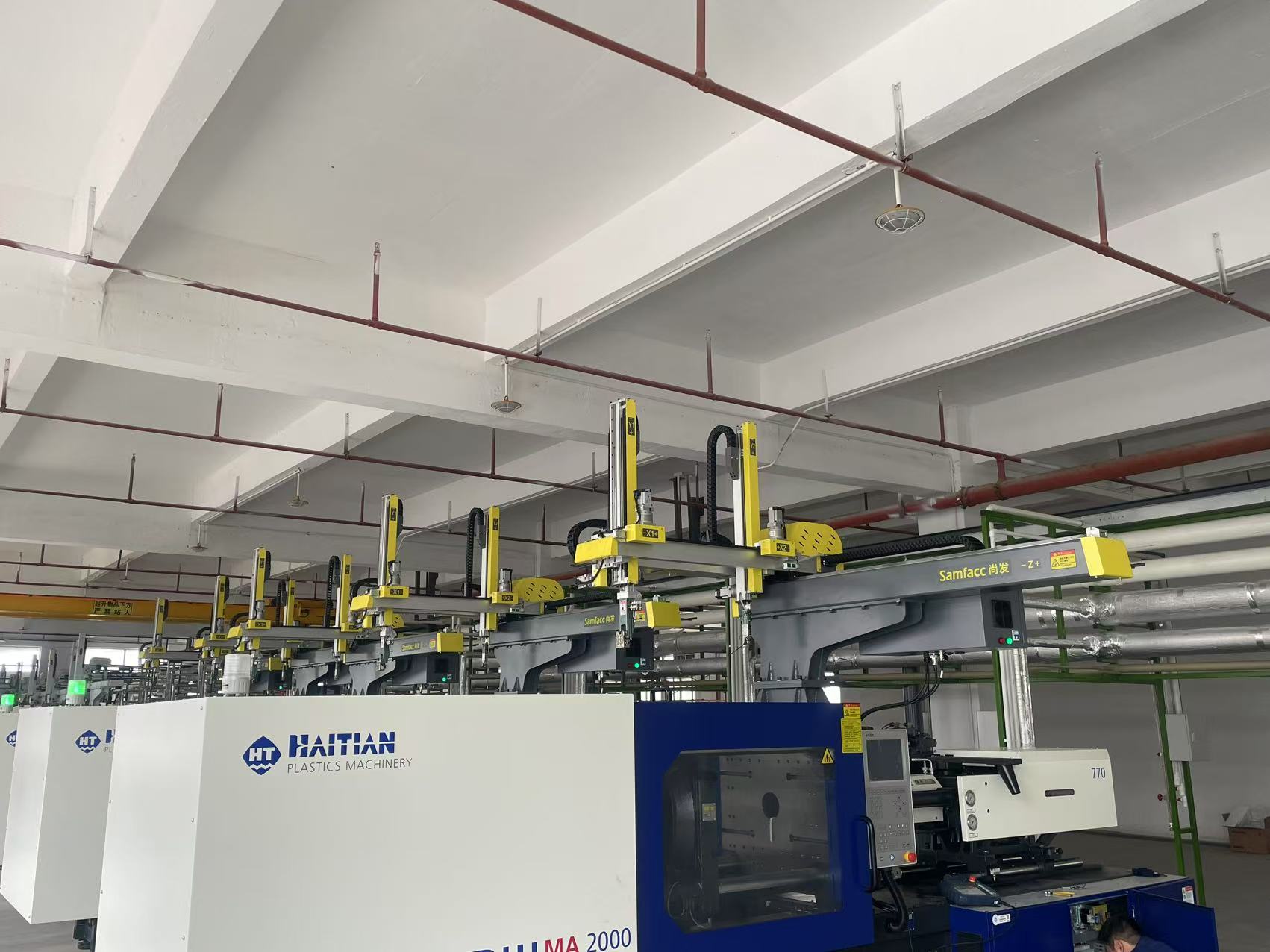
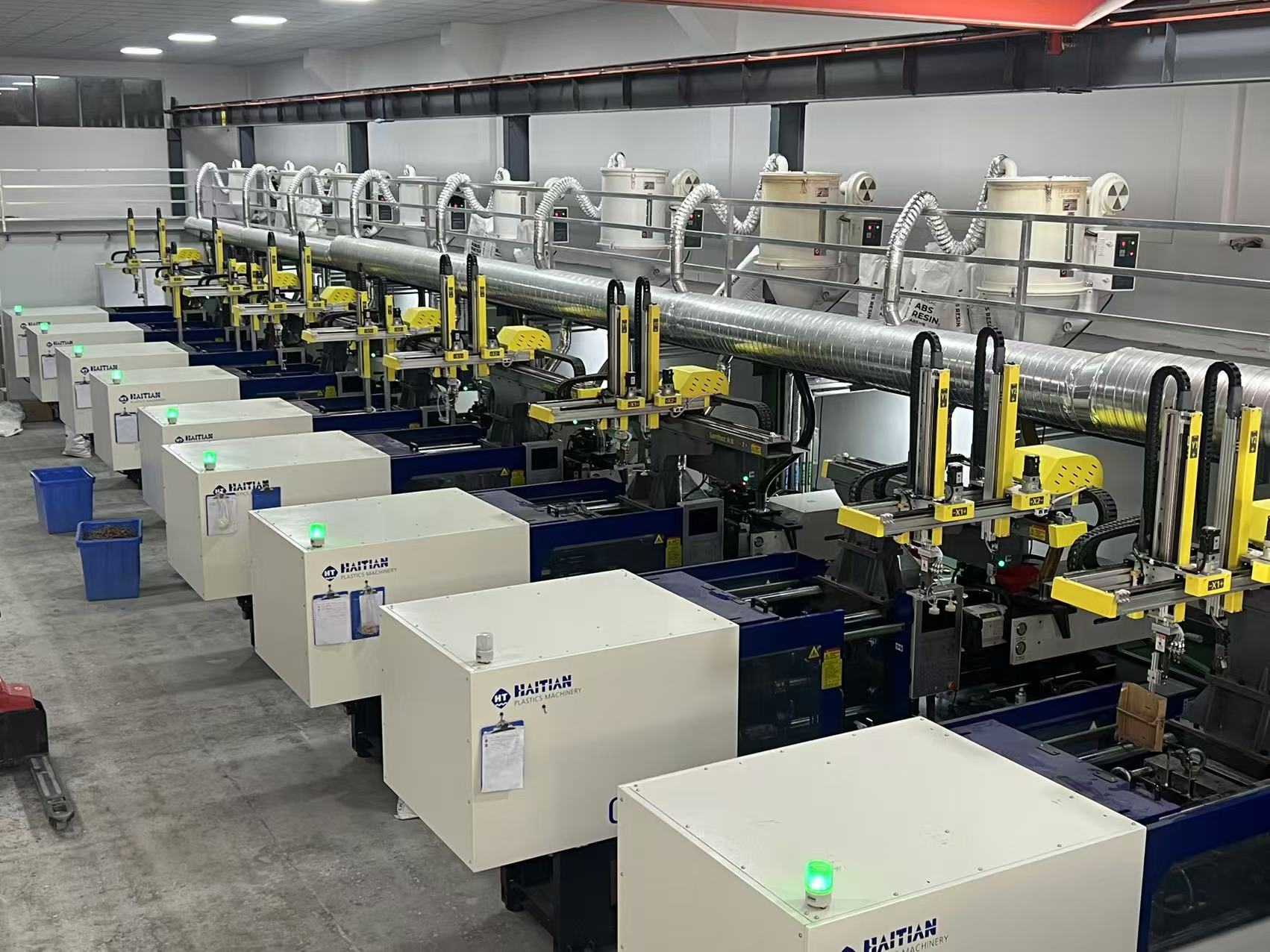
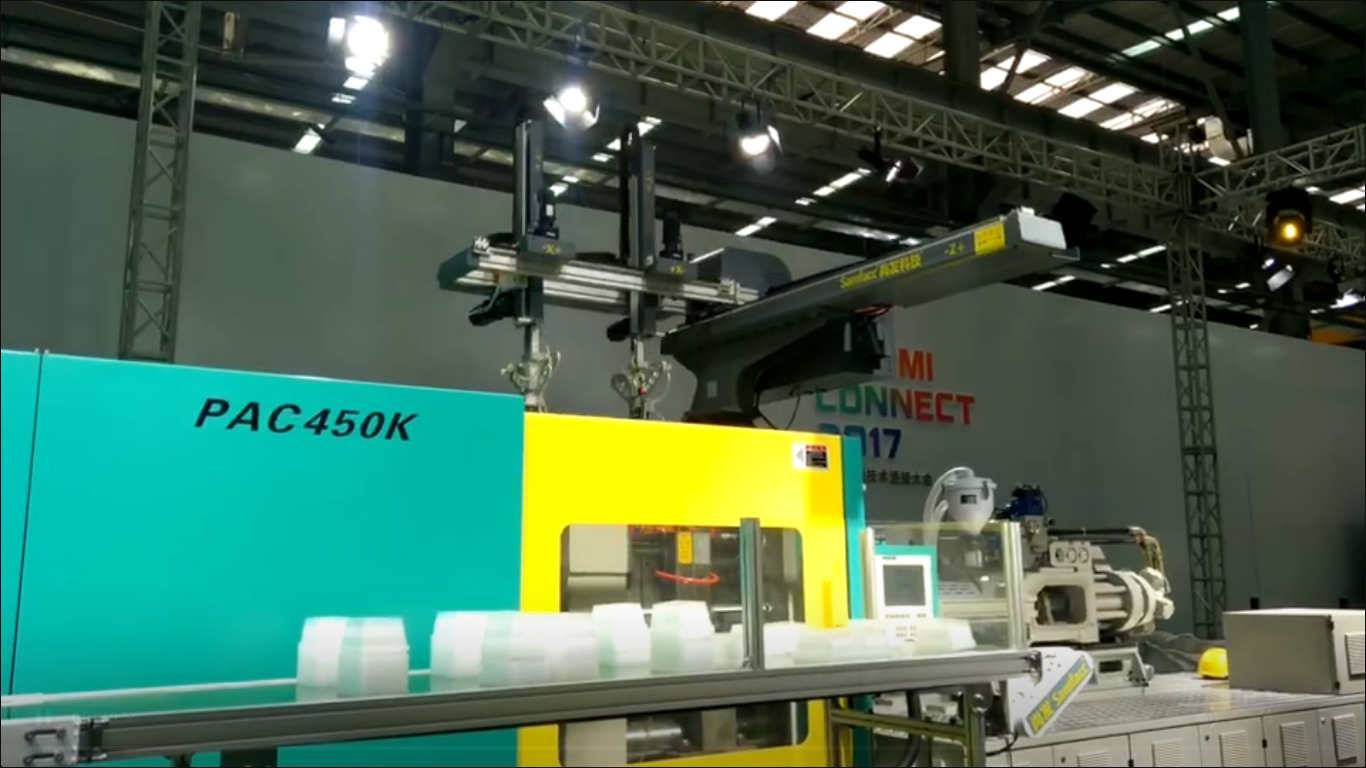
The traverse robot and IML injection molding robots of SAMFACC can be widely used in thermoplastic injection molding lines to coordinate part removal, IML, and cycle synchronization, thus improving the injection molding systems’s overall efficiency and stability.
(2)Liquid Silicone Rubber (LSR) Molding
The process of LSR molding requires precise control of temperature and dosing. Due to the high fluidity and fast curing of LSR, automation and precise process control are crucial to ensure product consistency and safety.
Applications:
Applications: Commonly used for high-precision, durable elastic components.
(3) Overmolding
Overmolding is a process whereby a secondary material is injected over a substrate. This results in the bonding of several materials in a single molding operation.
Applications:
Typically used for handles, buttons, and multi-material components.
(4)Insert Molding
Insert molding involves the precise positioning of the inserts before injection into the mold. Robots are used to deliver the inserts to the injection machine.
Applications:
Commonly used in the production of electronics, structural components, and functional parts.
2. How Injection Molding Works
The full process for injection molding follows a structured procedure that ensures efficiency in the production process within the injection molding system.
Stage 1: Clamping
The mold is tightly closed to ensure stability for high-pressure injection.
Stage 2: Injection
Molten materials are injected into the mold cavity to create a part with a high degree of accuracy.
Stage 3: Cooling
The material solidifies in the mold, controlling part quality and production rhythm.
Stage 4: Ejection
The mold opens, and the produced part comes out, often aided by robots for further processing.
3. Advantages of Injection Molding
Injection molding is a key process in injection molding systems owing to its ability to offer efficiency and economy.
| Advantage | Description |
| High production efficiency | Suitable for continuous, large-volume production |
| High product consistency | Maintains dimensional accuracy and appearance stability |
| High automation potential | Easily integrates with robots and conveyors |
| Material versatility | Supports a wide range of plastics and elastomers |
| Cost-effective | Unit cost decreases as production volume increases |
4. Types of Injection Molding Machines
Injection molding machines are the core equipment in injection molding systems.These have different types depending on the drive, power consumption, precision, and usage. The main types include hydraulic, electric, and hybrid machines.
(1) Hydraulic Injection Molding Machines
Hydraulic machines use hydraulic systems for providing clamping forces and injection power. These machines are mature, robust, and suitable for high-force operations.
Advantages:
- High clamping force for large or high-influence molds
- Mature architecture with stable operation
- Suitable for complex or heavy-duty production environment
(2) Electric Injection Molding Machines
The electric machines employ the use of servo motors to drive all the axes directly. This makes the machines suitable for precise molding as well as clean production.
Advantages:
- High repeatability and positioning accuracy
- Low noise levels, ideal for clean rooms and medical uses
- Rapid response, which helps to shorten cycle times
(3) Hybrid Injection Molding Machines
Hybrid machines are a combination of hydraulic and electric-driven models that use electric servo control on the key axes. These machines use hydraulic systems for other purposes.
Benefits:
- Combines Hydraulic Power with Electric Precision
- Less energy consumption than conventional hydraulic machines
- Flexible and compatible with different molds and products
5. Why Choose SAMFACC?
SAMFACC specializes in injection molding automation, providing reliable and high-efficiency robotic solutions for diverse molding processes and production lines.
SAMFACC customizes robot arm lengths, gripper designs, and I/ O interfaces grounded on earth structure, opening stroke, and plant layout to integrate seamlessly with injection molding systems and conveyor systems.
Core Strengths:
- High precision and repeatability: Protects multi-cavity molds and delicate parts
- Full servo control: Allows for smooth motion
- Ease of integration: Integration with conveyors, stacking systems, and packaging machines
- Technical Support: Assists in installation and provides long-term maintenance

6. FAQs
Q1: Is robotics obligatory in the injection molding process?
Not obligatory, but robotization improves effectiveness and safety significantly.
Q2: What products are compatible with IML robots?
This grade of packaging material is best suited for food packaging, thin- wall packaging, and products that need a high ornamental finish.
Q3: Are injection molding systems applicable for small- batch product?
Yes, injection molding systems can provide flexibility for low-volume runs, while still being highly effective for medium to large-scale production and high-value parts.