 English
  Chinese
 Injection molding of large parts helps reduce assembly steps and ensures part consistency. However, injection molding large parts presents several specific requirements that impact both process quality and cost.
This article aims to provide an overview of how injection molding of large parts is performed in real-time industries, the difficulties faced by manufacturers, and how automation can aid in achieving stability in the process.

What Defines Injection Molding Large Parts
Injection molding of large parts is usually defined as parts with larger surface areas, greater heights, and greater weights. Injection molding of large parts requires greater clamping forces compared to smaller parts. The process is more stressful compared to injection molding small parts. This is why process stability is emphasized in injection molding large parts.
Key Process Challenges in Injection Molding Large Parts
Various technical challenges arise in injection molding large parts, which the manufacturer must overcome during the project’s early stages.
- Material flow control
In injection molding large parts, the flow path of the molten plastic must be quite long. Any uneven flow may lead to short shots, weld lines, and/or air traps in the molded part.
- Cooling efficiency
In injection molding large parts, the thicker cross-sections require longer cooling times, thereby increasing the cycle time. Uneven cooling may also cause warping and internal stresses in the molded part.
- Mold strength and stability
In injection molding large parts, the molds must withstand higher pressure and expansion due to their large size. The mold must, therefore, be strong and stable.
- Machine requirements
In injection molding large parts, injection molding machines with high tonnage must be used to ensure that the clamping pressure is adequate. The injection speed and pressure must also be controlled during the injection molding process to avoid defects in the molded part.
Automation in Injection Molding Large Parts
Handling injection-molded large parts is difficult and time-consuming. It is also not safe. Automation has emerged as an important issue in injection molding large parts, particularly for those companies that wish to achieve consistency and lower labor costs.
The use of robots is common in the following areas:
- Removing parts from the mold
- Handling parts that are either too hot or too fragile
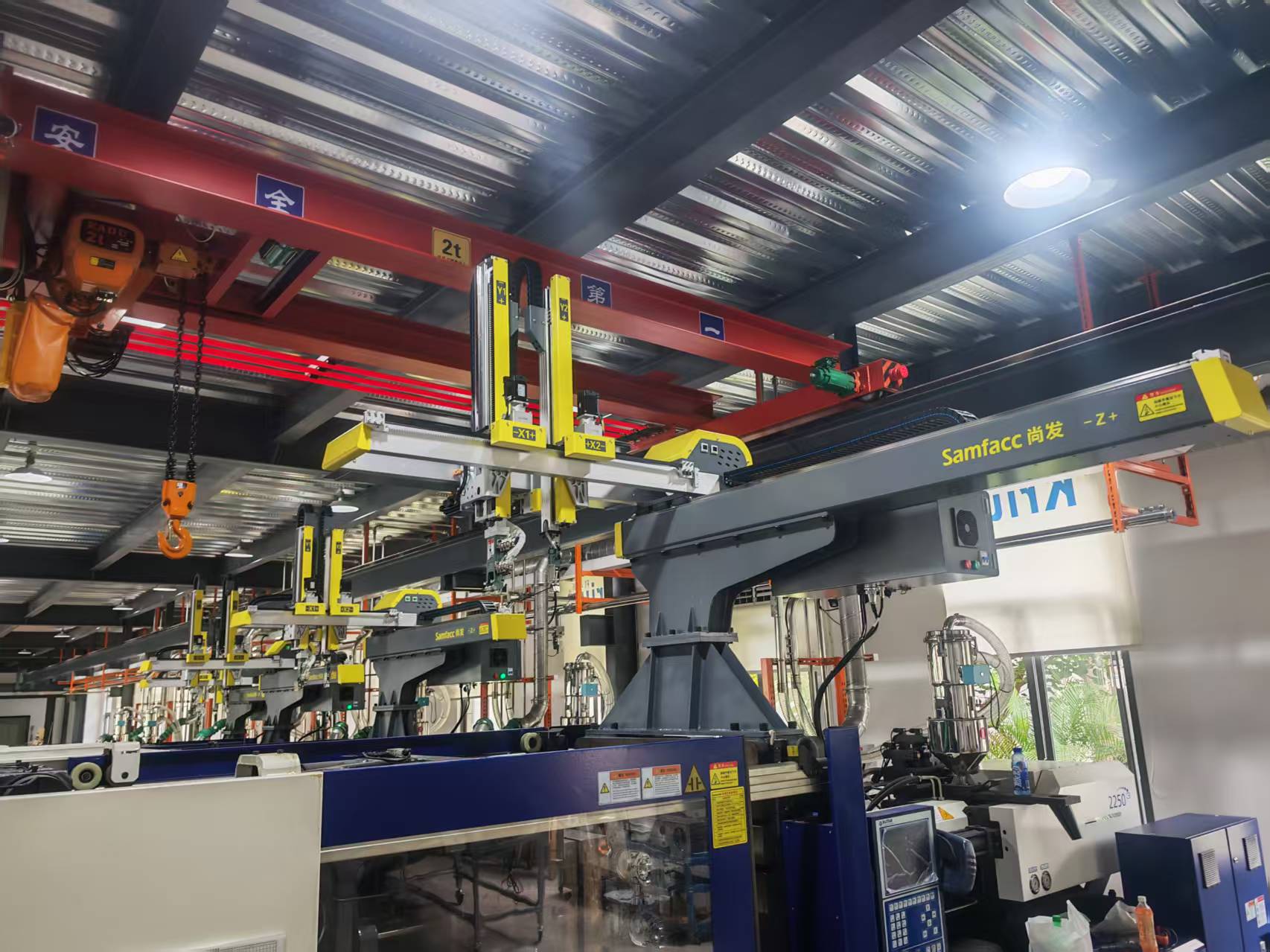
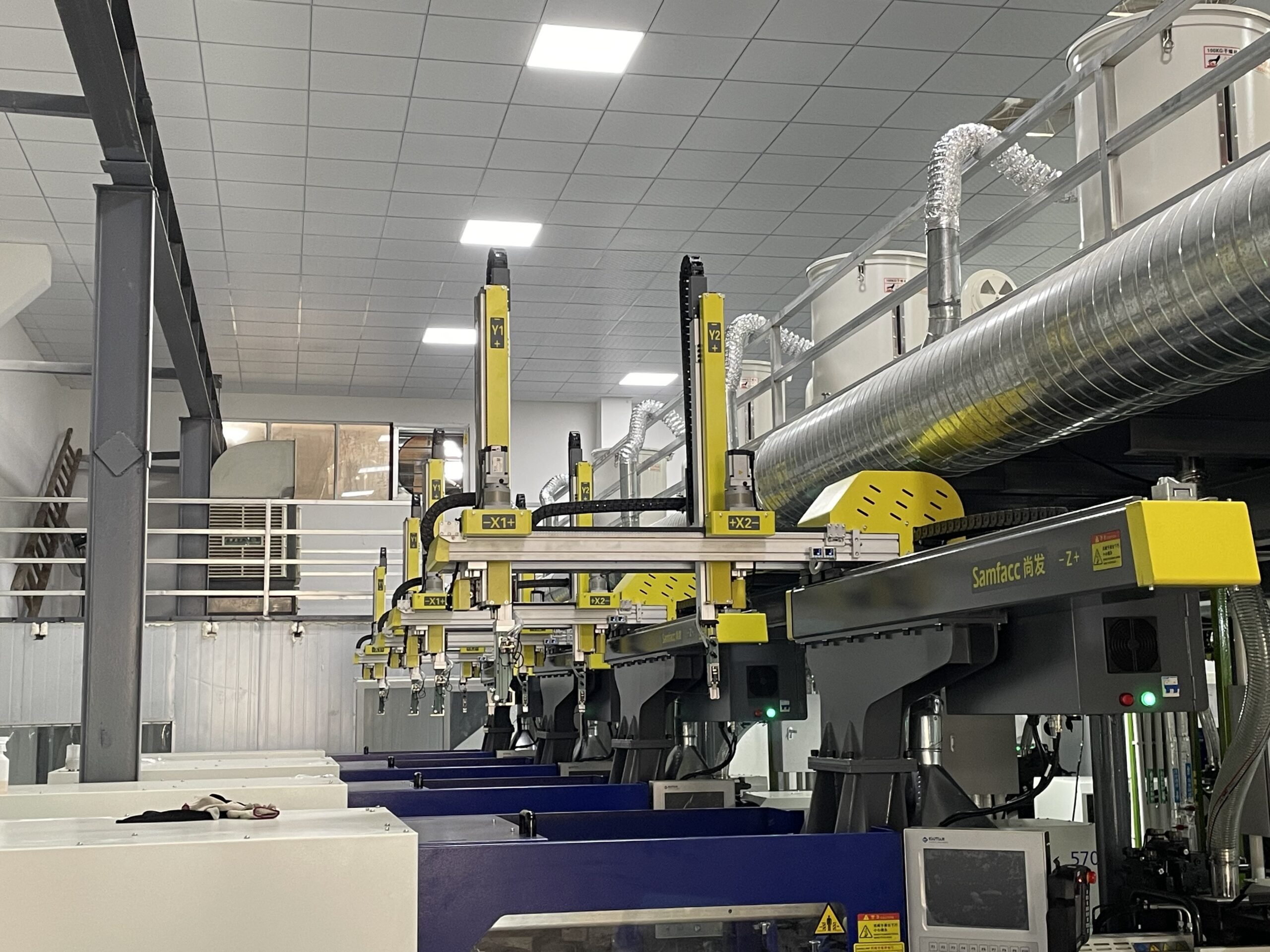
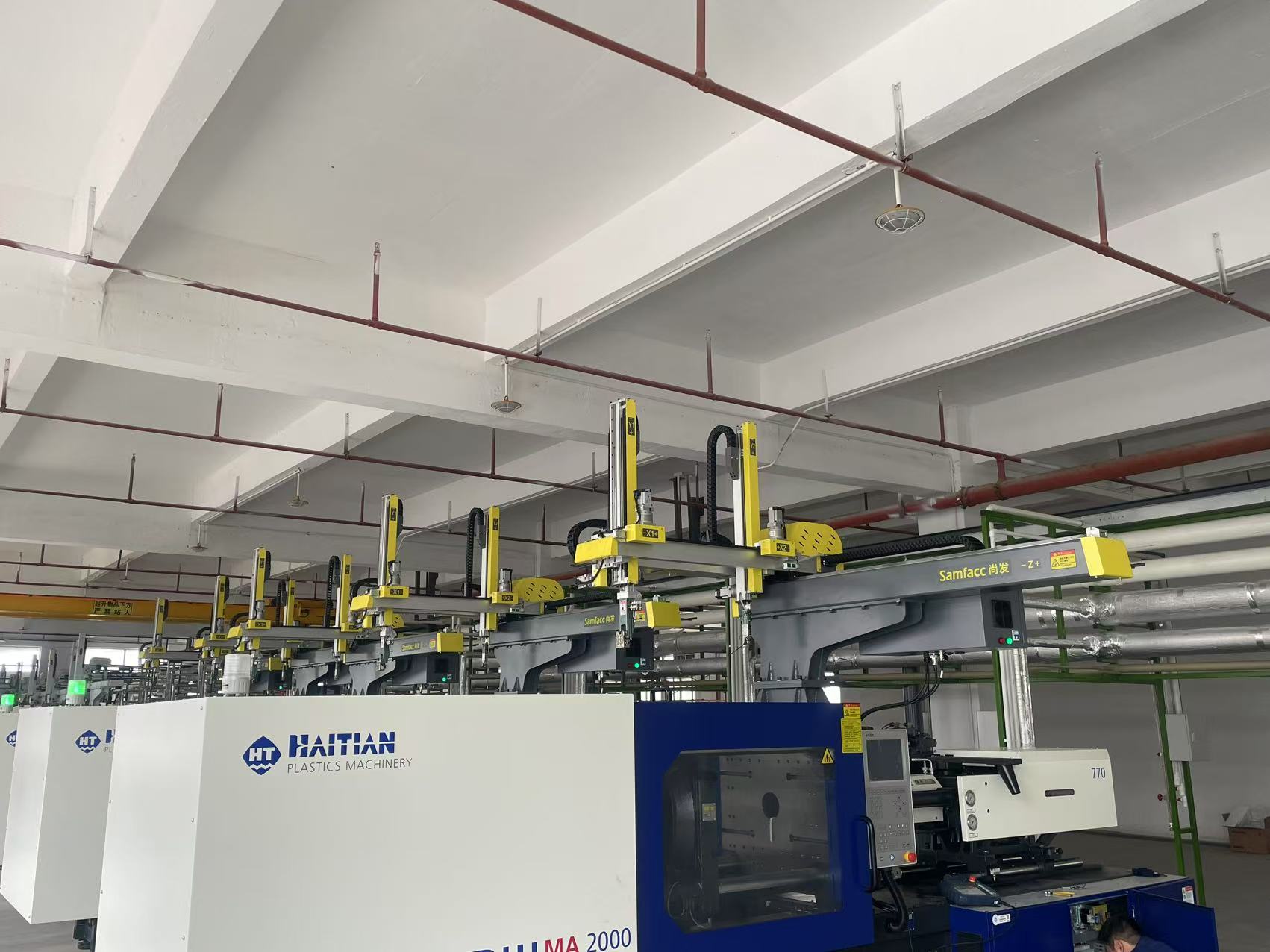
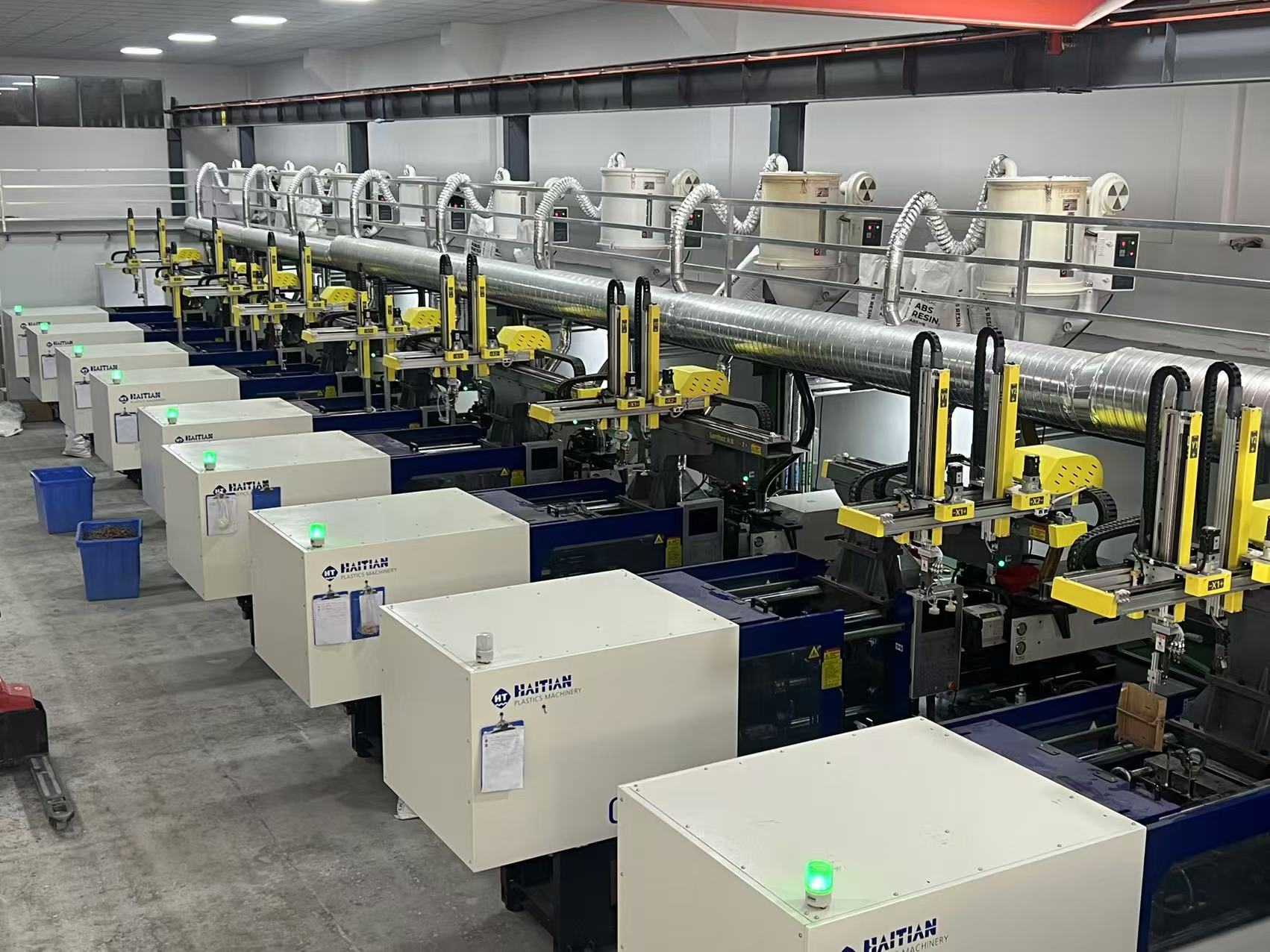
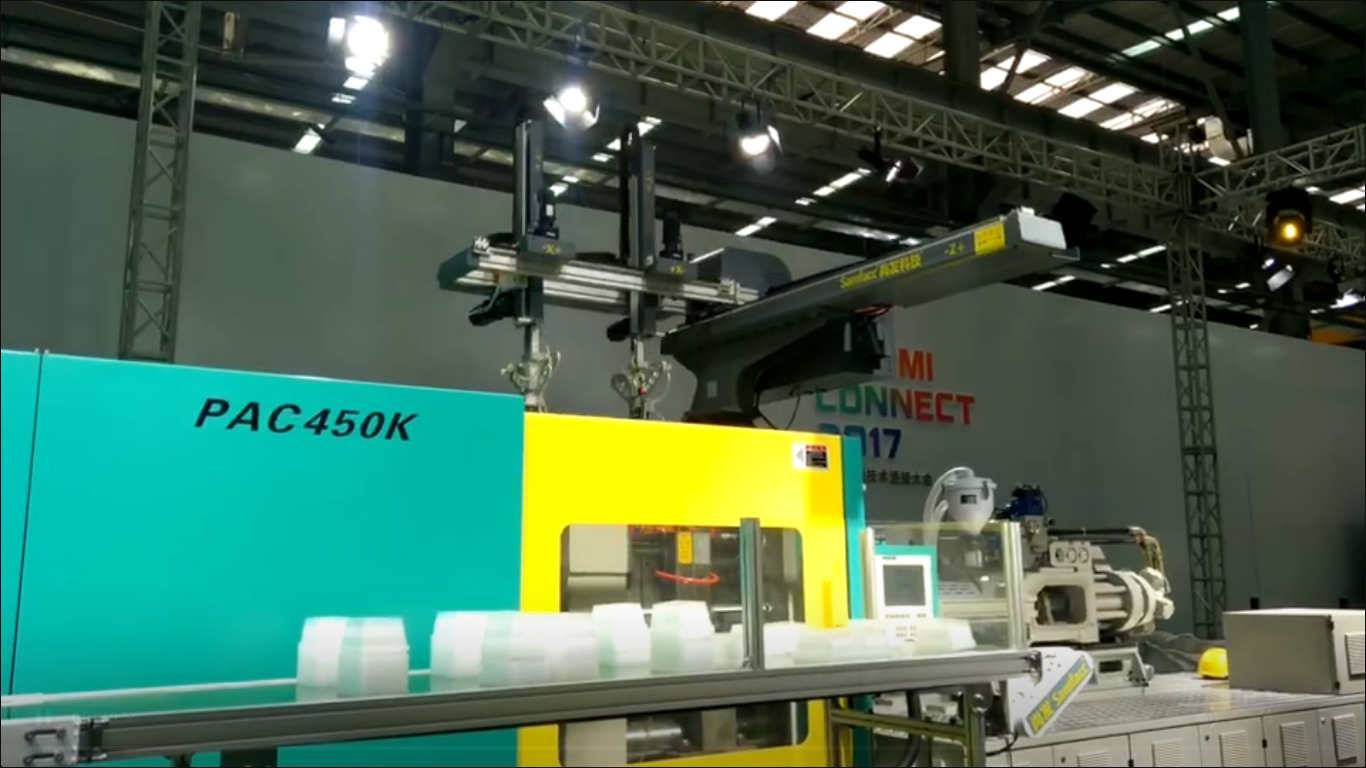
By shortening cycle time through synchronized motion, Samfacc’s SP series swing-arm robot is a pneumatic rotary robot capable of handling large parts, specifically designed for part removal and handling in injection molding environments. Its powerful performance, low power consumption, compact design, and ease of use make it ideal for factories processing large or fragile parts.
The SP Series robot is particularly well-suited for double plate mold injection molding. Its single-function design makes it perfect for handling fragile parts, and the suction device makes it perfect for more complex operations. With the implementation of such a system, manufacturers can benefit from a more stable workflow when it comes to injection molding large parts.

Quality Control for Large Molded Components
Quality control becomes more critical as part size increases. Small deviations in temperature, pressure, or timing can lead to visible defects or dimensional issues.
Key quality control practices include:
- Process monitoring to track injection pressure and temperature curves
- Dimensional inspection using gauges or 3D scanning
- Surface inspection for flow marks, weld lines, and warping
- Material consistency checks to ensure stable melt behavior
For injection molding large parts, maintaining consistent parameters across long cycles is often more important than achieving extreme speed.

When Injection Molding Large Parts Makes Sense
Not every project is suitable for injection molding large parts. This process is best suited when:
- High-volume production is required
- Tight dimensional consistency is important
- The part design benefits from integration
- Surface quality matters
For low-volume or highly customized parts, alternative processes such as thermoforming or rotational molding may be more practical.
Conclusion
By applying sound design principles and selecting appropriate equipment, manufacturers can overcome the challenges of injection molding large parts. As demand for large plastic components continues to grow, understanding these fundamental principles helps factories remain competitive, efficient, and safe in real-world production environments. For further questions, please contact us on the Samfacc website.