 English
  Chinese
 Understanding how do robotic arms work is crucial for appreciating their role in modern industrial automation. These machines are engineered to emulate human arm movements with remarkable precision and speed. In this article, we examine the fundamental scientific principles behind robotic arm operations, focusing on mechanical structures, control systems, and practical applications, including a detailed look at Samfacc’s five robotic arm models.

I. Core Scientific Principles of Robotic Arms
(1)Kinematics: Understanding Movement
Robotic arms rely on kinematic chains made of links and joints to perform complex tasks, which explains how do robotic arms work in various industrial settings. The arrangement of joints defines the arm’s flexibility and operational range.
For example, a robotic arm with six degrees of freedom (DOF) can navigate three-dimensional space, enabling tasks such as precision assembly, welding, and even microelectronics handling with sub-millimeter accuracy. Some high-end models achieve repeatability of ±0.05 mm, ensuring precise and reliable operations in sensitive manufacturing environments
(2)Actuators: Driving Motion
Actuators act as the “muscles” of robotic arms, converting energy into mechanical movement.
- Hydraulic actuators deliver high force, ideal for automotive, aerospace, and heavy machinery tasks, where components may weigh several hundred kilograms.
- Pneumatic actuators enable rapid motion with moderate force, often used in packaging, pick-and-place operations, and repetitive production lines.
The choice of actuator affects cycle times, precision, and operational safety. Modern robotic arms can achieve cycle times as low as 0.8–2 seconds per operation for small payloads.
(3)Sensors: Enabling Feedback and Accuracy
Common types include:
- Encoders: Track joint positions and speeds, allowing accurate motion control.
- Force/Torque sensors: Measure applied force or torque, preventing damage during assembly or handling fragile items.
- Vision systems: Utilize cameras and image processing to detect objects, identify orientation, and guide precise movements.
By combining multiple sensors, robotic arms can perform complex operations such as aligning microchips, stacking products with ±0.1 mm tolerance, and adapting to minor variations in real time.

II. Control Systems: The Brain Behind Robotic Arms
The control system processes sensor inputs and directs actuators to achieve desired movements. Key components include:
- Path planning:Determines optimal trajectories while avoiding obstacles, minimizing energy use, and reducing wear on components.
- Feedback control: Adjusts movements in real time based on sensor readings, correcting deviations and ensuring consistency.
Advanced control systems incorporate machine learning to adapt to new tasks and optimize repetitive operations. Some robotic arms use predictive algorithms to anticipate mechanical wear, enhancing maintenance planning and extending service life.
III. How Samfacc Robotic Arms Operate and Why They Are Preferred
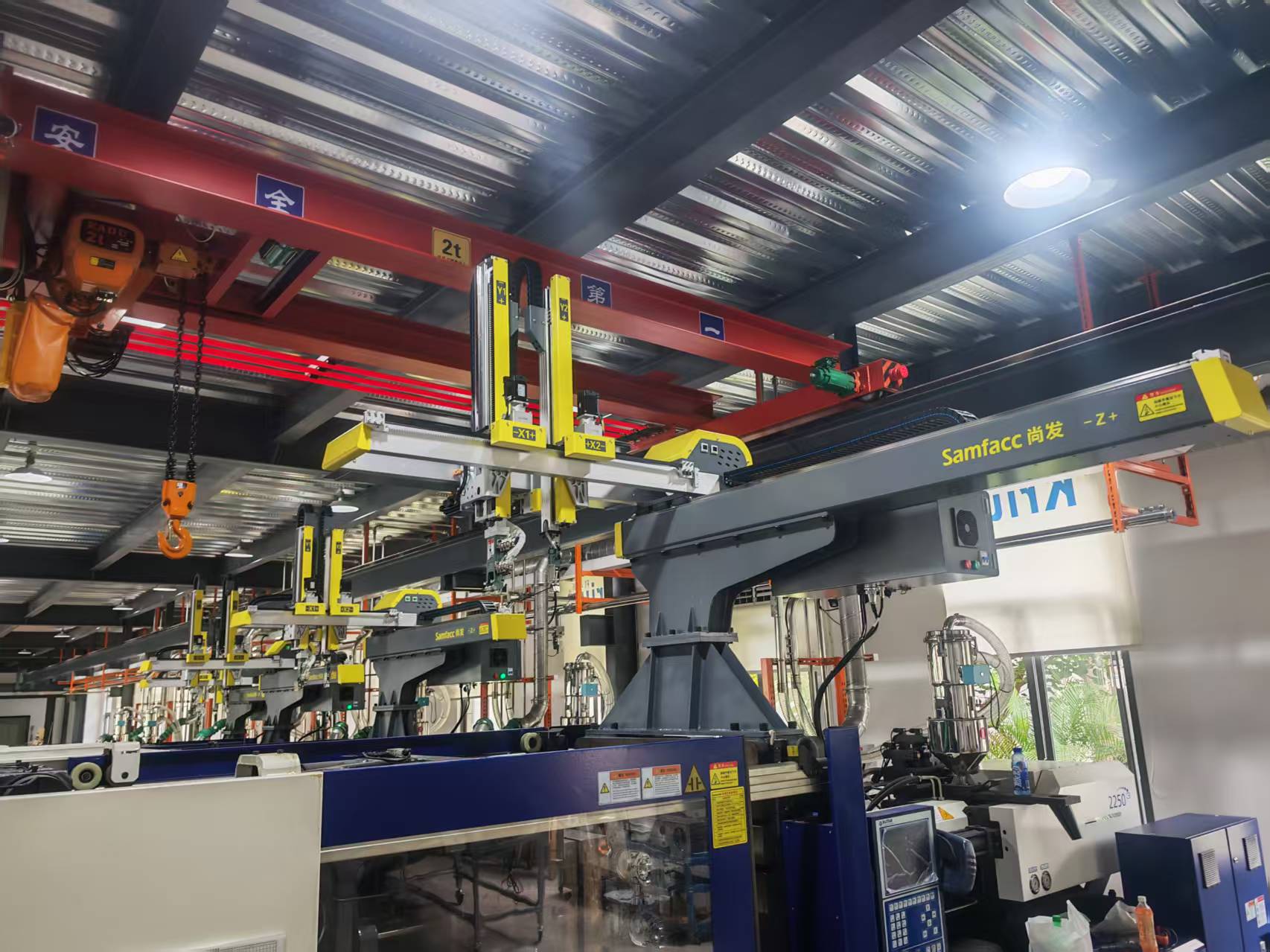
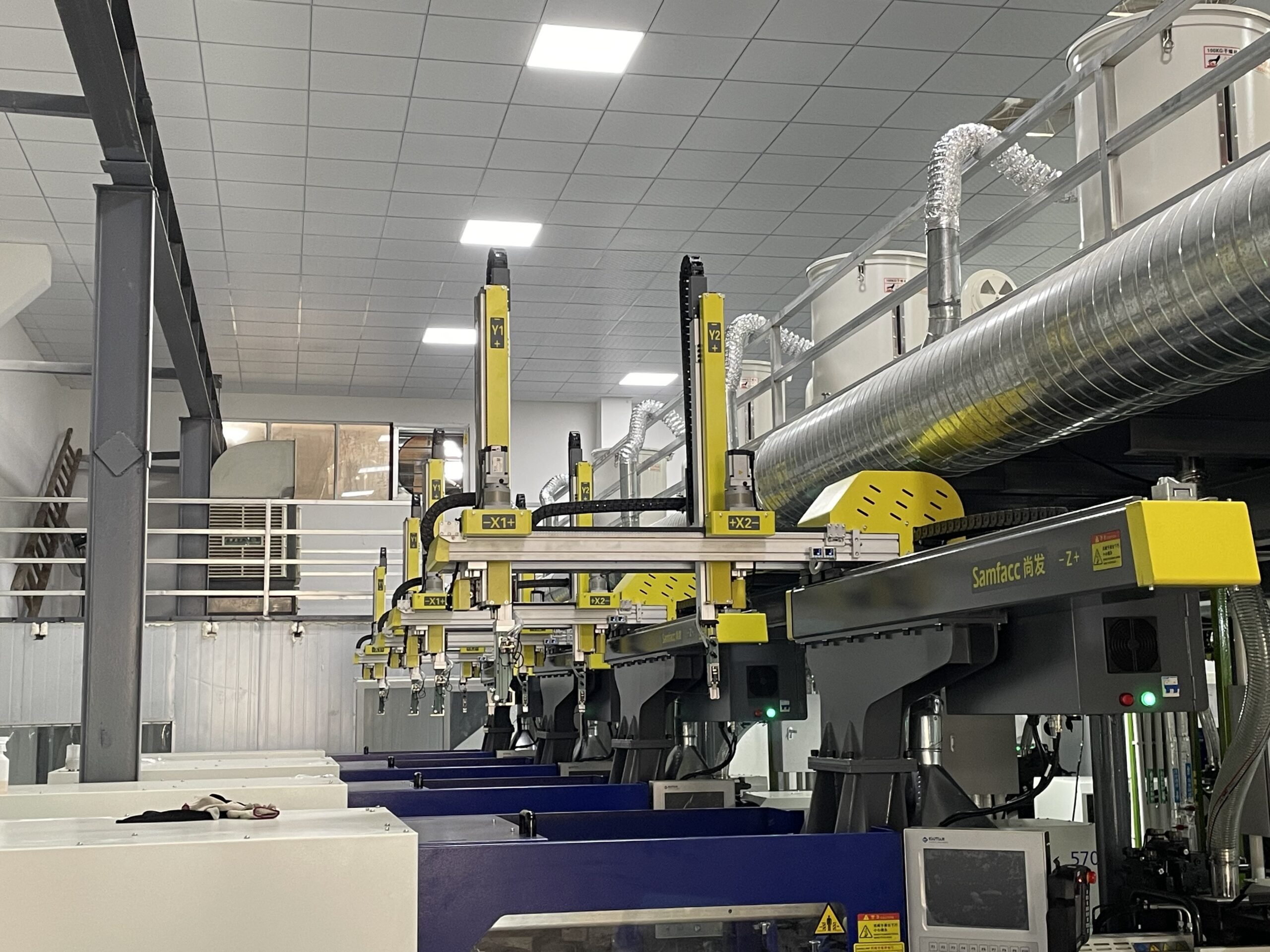
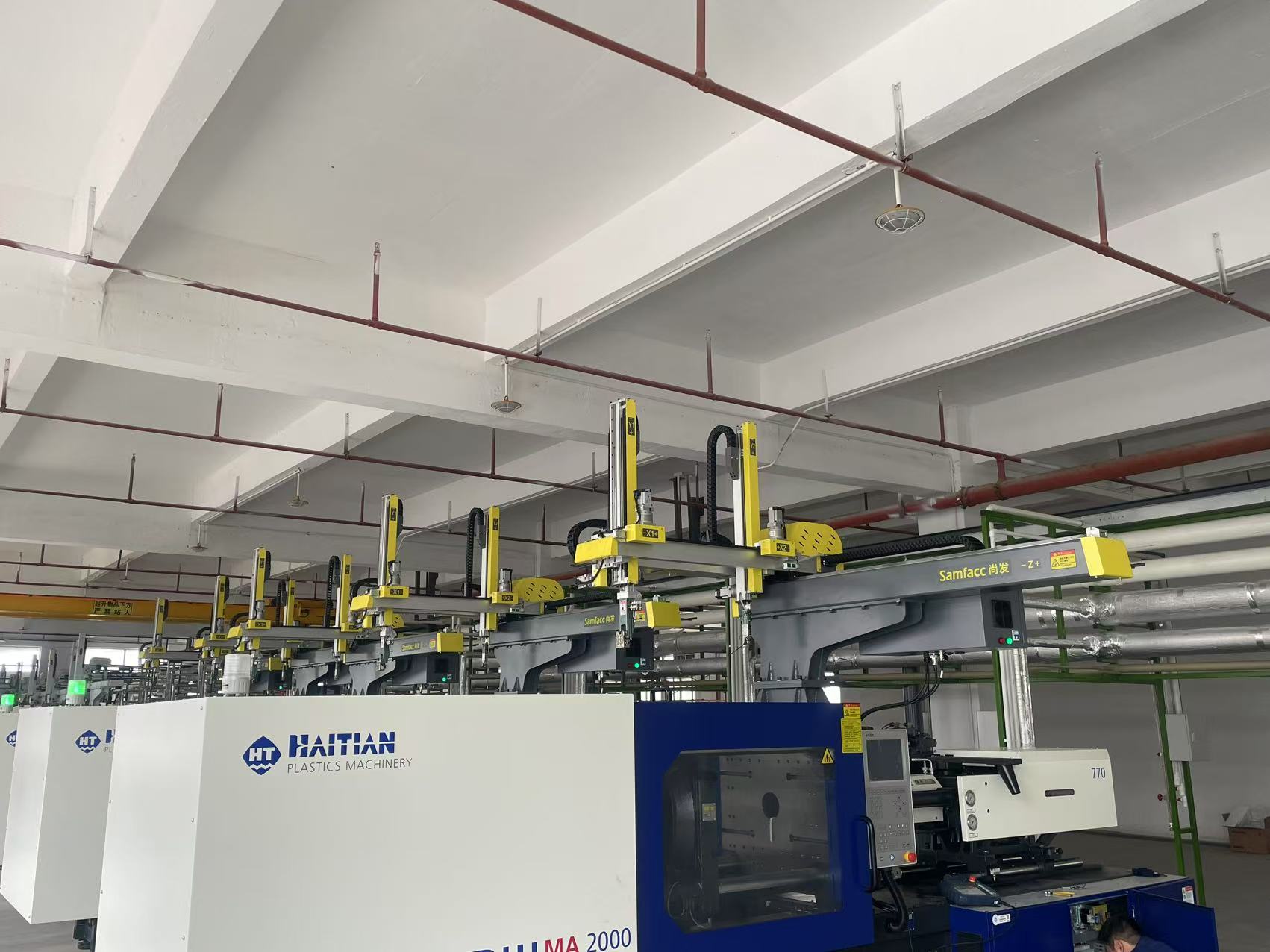
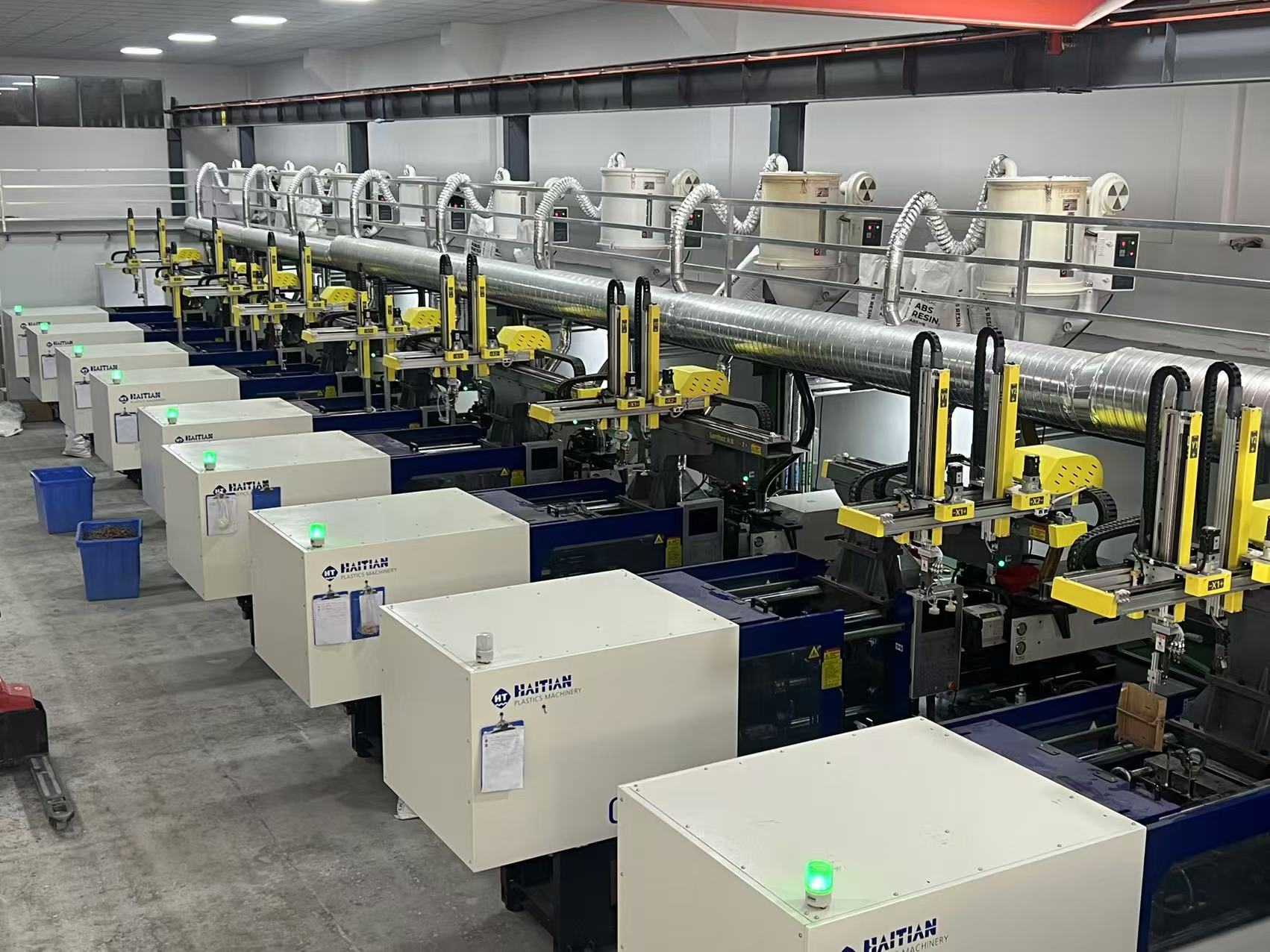
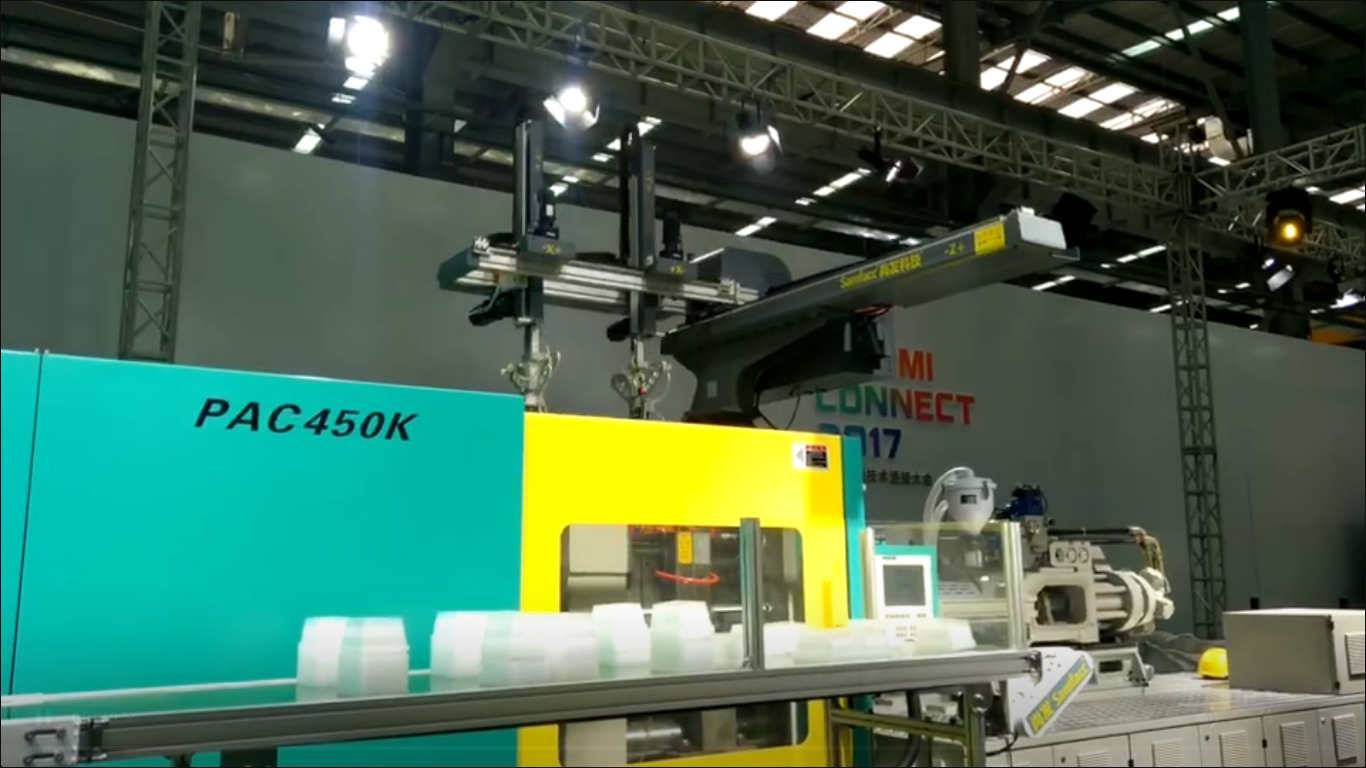
Samfacc offers five specialized robotic arm models for various industrial operations, demonstrating how do robotic arms work by integrating mechanical precision with advanced automated control.
(1) Horizontal Transfer Robotic Arm
Working Principle: Moves along horizontal tracks using servo motors and ball screws. Its end effector grips and releases components with ±0.2 mm precision, and motion can be adapted to vertical positions if required.
- Applications: Commonly used in injection molding and die-casting to remove finished parts, transfer items to packaging, or reposition components, improving efficiency and reducing cycle times to 2–3 seconds per part.
(2) IML (In-Mold Labeling) Robotic Arm
Working Principle: Precisely inserts labels into molds prior to injection, synchronized with molding cycles to ensure correct adhesion.
- Applications: Widely used in food, beverage, and cosmetic production. By integrating labeling with molding in one step, it reduces labor requirements by over 50% and minimizes defects.
(3) Packaging Robotic Arm
Working Principle: Multi-joint arm with adaptive grippers and force sensors, capable of stacking, sorting, and placing products without damage
- Applications: Automates packaging lines in electronics, and food industries, ensuring consistent placement and improving throughput by up to 40%.
(4) Vertical Transfer Robotic Arm
Working Principle: Moves components vertically using linear guides and servo-driven mechanisms, with ±0.15 mm repeatability. Compact design allows operation in constrained spaces.
- Applications: Efficient for vertical injection molding machines and stacking processes, handling parts in tight areas while maintaining high-speed performance.
(5) Side-Pick Robotic Arm
Working Principle: Accesses molds or conveyors from the side using servo-controlled actuators and multi-jaw grippers, handling up to 2 kg per cycle.
- Applications: Ideal for scenarios where access from the top or front is limited, allowing fast and accurate pick-and-place operations while reducing line stoppages and ensuring precise positioning.

Samfacc vertical robotic arms are engineered to deliver exceptional performance, energy efficiency, and safety across diverse industrial applications.
- High Energy Efficiency: Constructed from premium-quality materials, vertical robots are designed to significantly reduce energy consumption. This focus on energy efficiency helps clients lower operational costs while supporting sustainable production practices.
- Their high-speed operation meets the demands of various industries, ensuring optimal performance and maximum throughput.
- Expert team strictly adheres to industry standards and employs rigorously tested manufacturing procedures. This commitment ensures that products not only meet but often exceed safety expectations, protecting both operators and production lines.
IV. Conclusion
Robotic arms combine mechanical engineering, electronics, and computer science to perform high-precision tasks efficiently. Understanding how do robotic arms work involves examining kinematics, actuators, sensors, and control systems. Samfacc’s robotic arm models demonstrate versatility across applications, from injection molding to packaging, achieving sub-millimeter accuracy and high-speed operation. As technology advances, robotic arms continue to expand automation capabilities, reduce labor costs, and enable precision manufacturing across multiple industries.