 English
  Chinese
 Collaborative robots, or cobots, have become essential tools in modern manufacturing and service industries. Unlike traditional industrial robots that require isolation, cobots are designed to safely work alongside human operators. For brands like Samfacc, their advanced robotic solutions—featuring five-axis robotic arms and high-speed capabilities—are helping companies across multiple sectors streamline workflows and maintain a competitive edge.

Why Collaborative Robots Are Changing Industries
The rise of collaborative robots reflects a shift toward flexible, efficient, and safe automation. These machines are equipped with sophisticated sensors and control systems that allow them to perform tasks with high precision while responding to dynamic environments. As labor shortages and demand for customization increase, businesses are turning to cobots to fill gaps and boost productivity.
Key Features That Drive Adoption
- Enhanced Safety Standards: Cobots are built with force-limiting technologies and collision detection, enabling safe human-robot interaction.
- Ease of Programming: Intuitive interfaces make them accessible even to teams without extensive robotics expertise.
- Versatility: One cobot can handle multiple tasks with quick reprogramming, from welding to delicate material handling.
Collaborative Robots in the Automotive Industry
The automotive sector has been a leader in robotic automation for decades. With Samfacc’s five-axis robotic arms, manufacturers now achieve faster welding and assembly operations.
Benefits in Automotive Applications:
- Shorter Production Cycles: Cobots streamline repetitive tasks like welding, bolting, and component fitting.
- Improved Quality Control: High-precision movements ensure consistent results across production runs.
- Flexible Integration: They can be redeployed across production lines without significant downtime.
By working side by side with skilled technicians, collaborative robots make it easier to adapt to design changes or customized vehicle orders.
Electronics Industry: Precision at Micron Levels
Modern electronics manufacturing demands micro-level accuracy when handling fragile components. Samfacc’s collaborative robots excel in assembling complex circuit boards, connectors, and microchips.
Advantages of Using Collaborative Robots in Electronics:
- Delicate Handling: Sensors and adaptive gripping systems protect sensitive components from damage.
- Higher Throughput: Cobots optimize pick-and-place operations, testing procedures, and small-scale assembly.
- Reduced Human Error: Automated processes maintain consistency even in high-mix, low-volume production
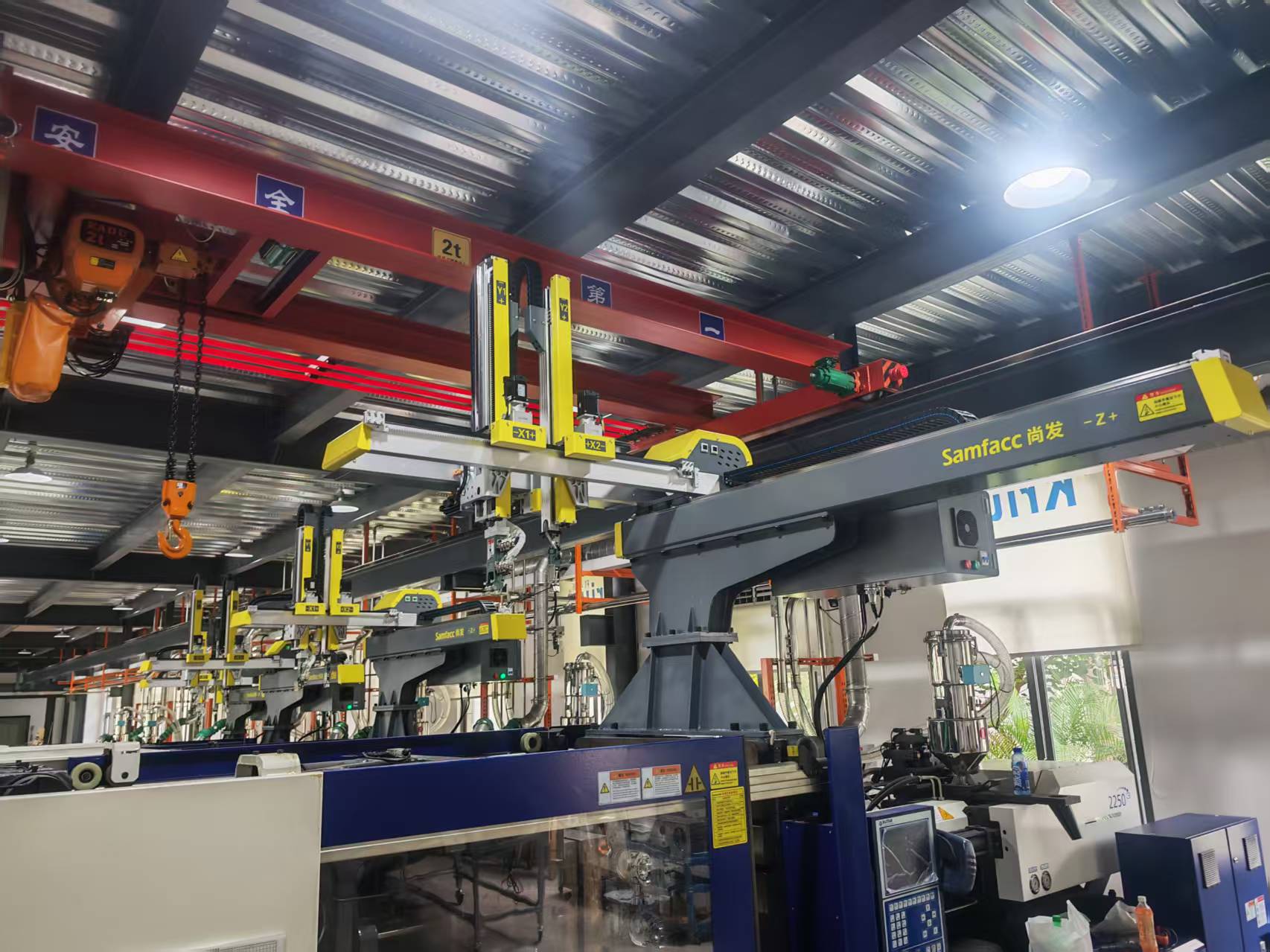
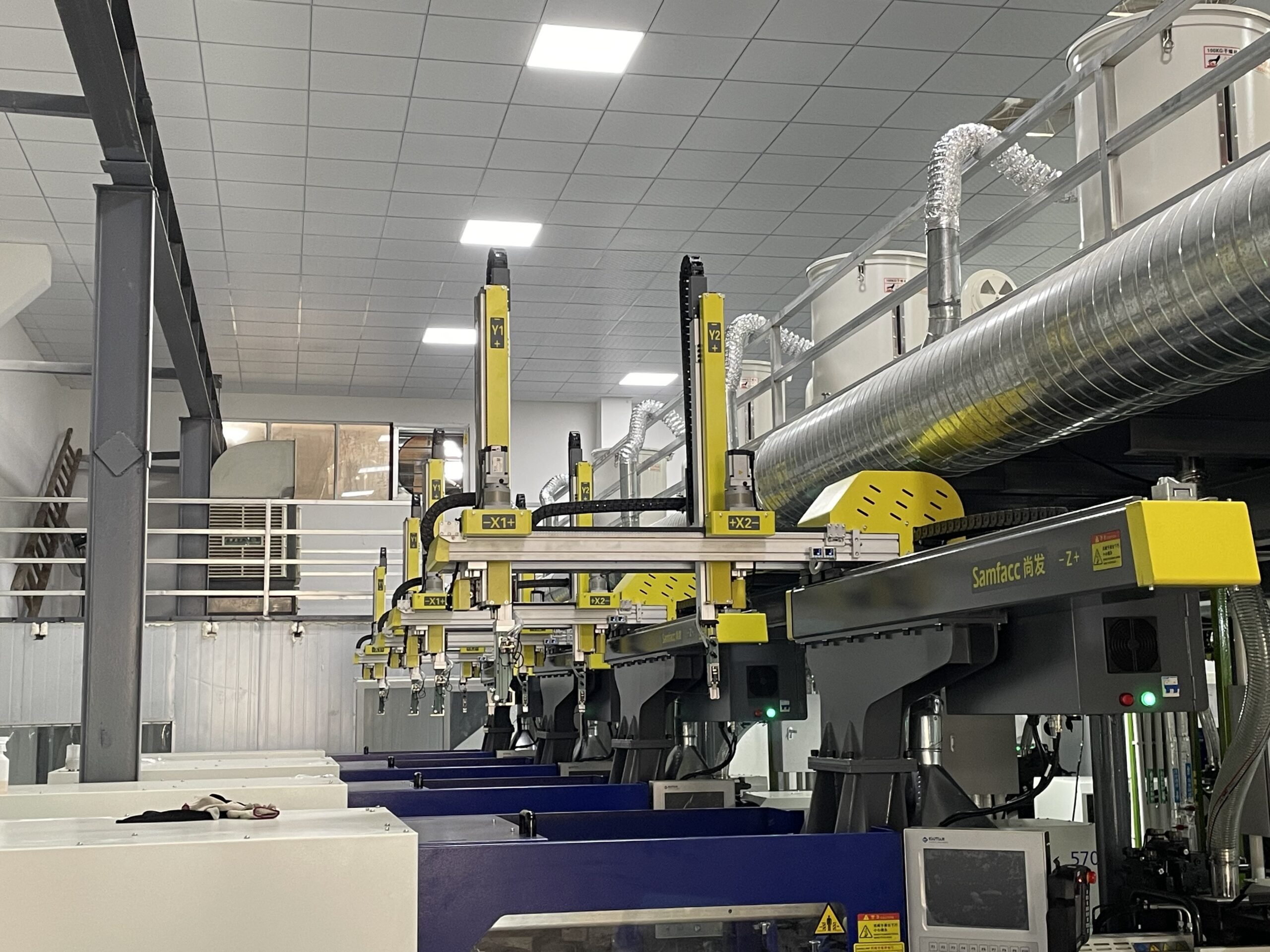
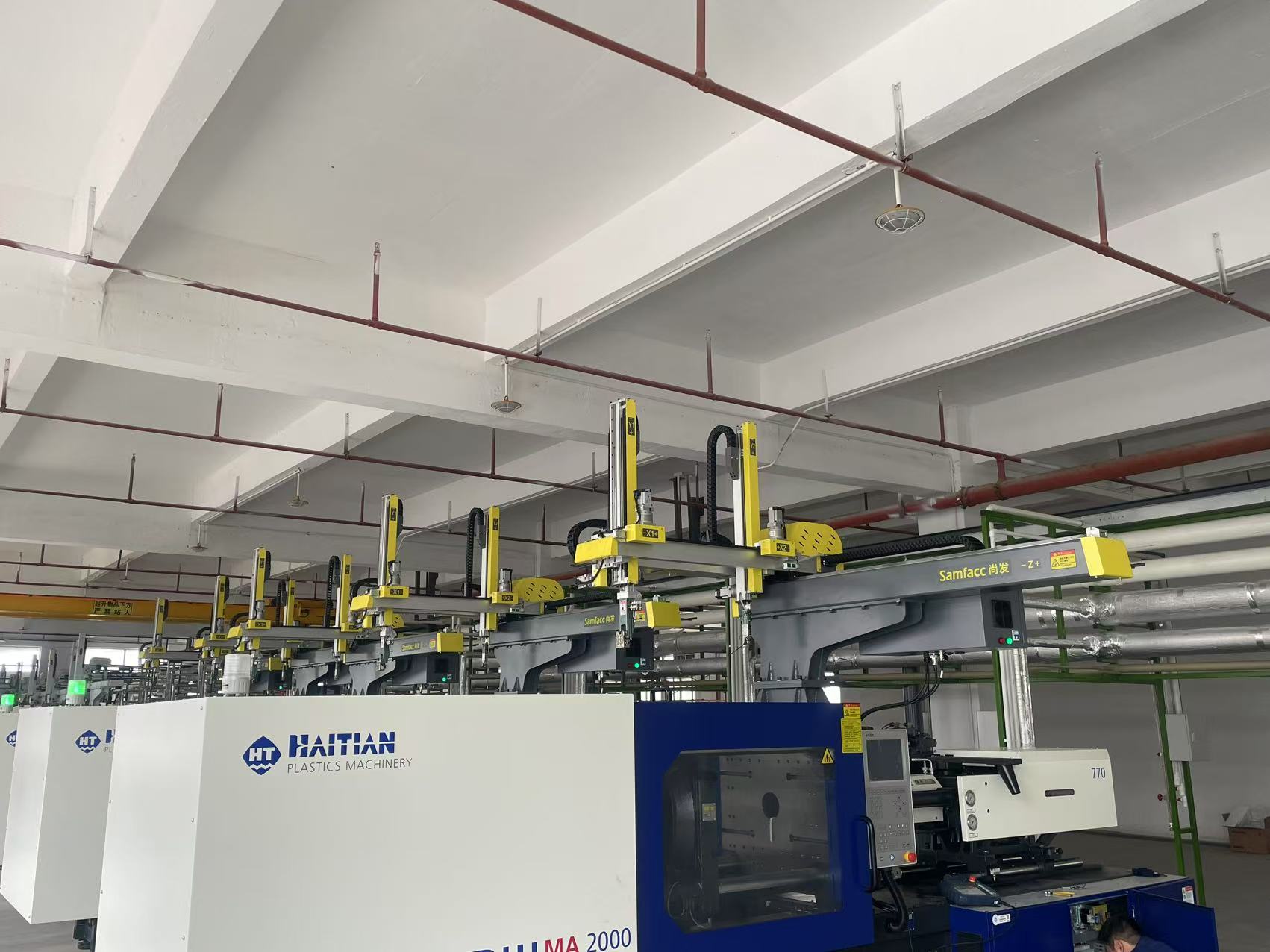
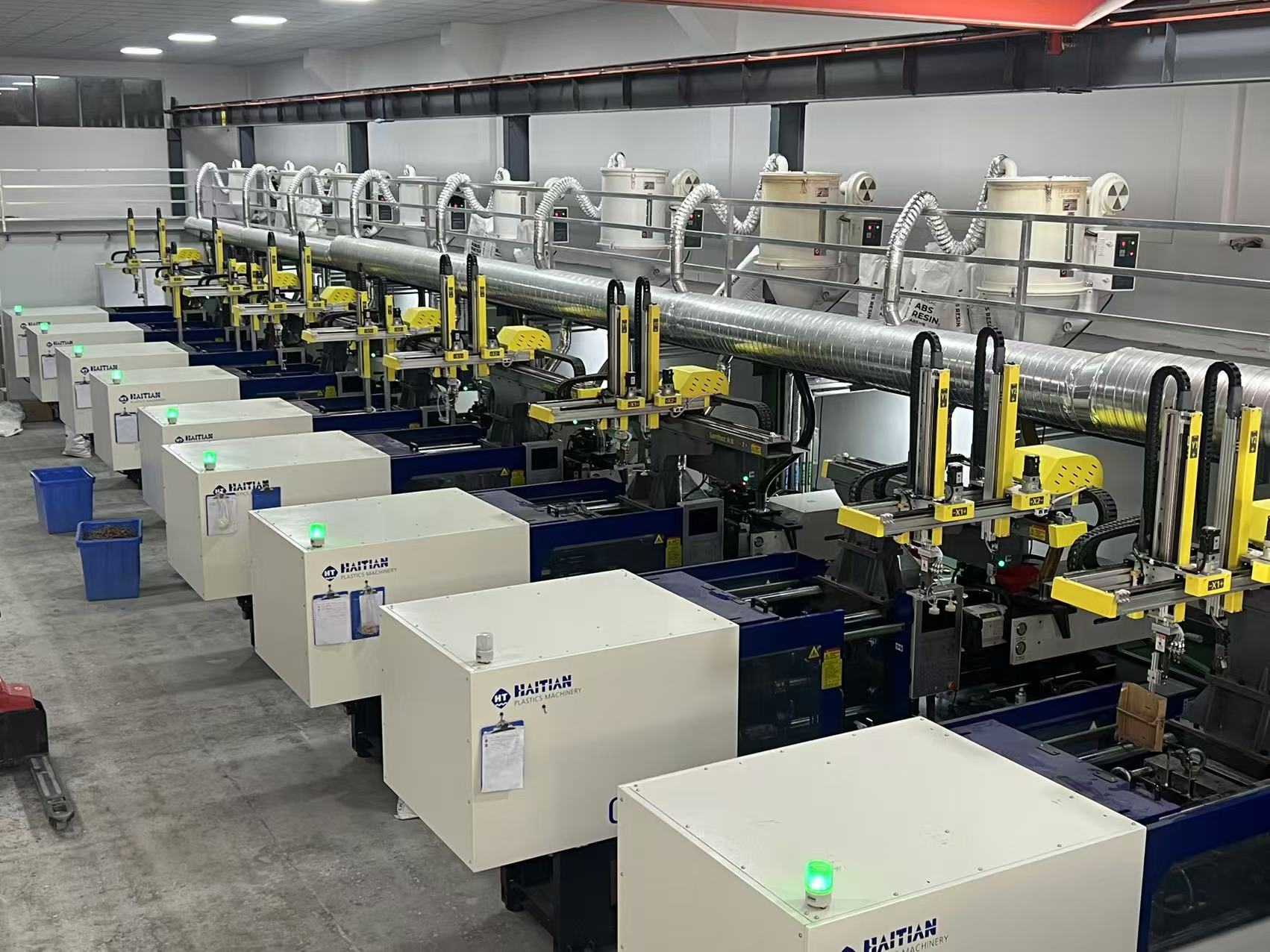
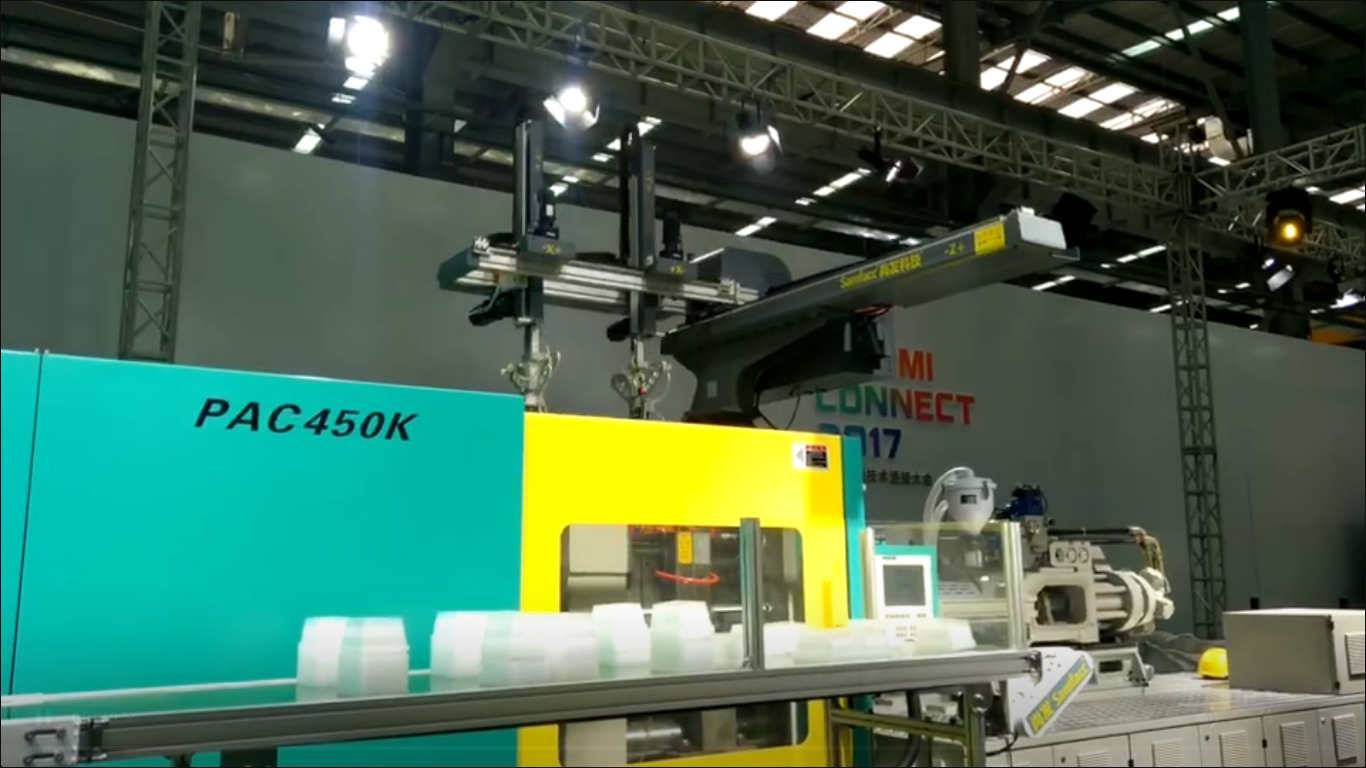
Plastic Industry: Simplifying Injection Molding Processes
Injection molding requires handling hot molds and heavy parts, which can pose safety risks for workers. Cobots are ideally suited to support this environment.
Samfacc Solutions in Plastic Manufacturing
- Mold Organization: Robots manage molds and parts efficiently to support continuous operations.
- Post-Processing Tasks: Cobots perform deburring, trimming, and inspection with minimal human intervention.
- Space Efficiency: Their compact design fits seamlessly into crowded production facilities.
Metal Processing: Boosting CNC Efficiency
In metalworking, collaborative robots assist with CNC machine tending, material loading/unloading, and inspection.
How Collaborative Robots Improve Metalworking Operations:
- Increased Uptime: Cobots can operate CNC machines around the clock, reducing idle time.
- Worker Safety: They handle heavy and sharp materials, minimizing risks to human operators.
- Higher Productivity: Automated workflows free up skilled machinists for complex tasks requiring human judgment.
Food Packaging Industry: Meeting Dynamic Needs
Food and beverage companies face constant demand for safe, hygienic, and efficient packaging solutions. Samfacc’s advanced packaging robots, including their specialized tableware packaging systems, demonstrate how cobots cater to this sector.
Features of Samfacc’s Tableware Packaging System
- Integrated Components: Includes a horizontal transfer robot, pick-up gripper, packaging unit, and stacking plates.
- Customizable Applications: Handles both single-item and multi-item packaging, adapting to diverse production requirements.
- Enhanced Hygiene Compliance: Designed with food-grade materials and easy-clean surfaces.
This level of automation allows manufacturers to respond rapidly to market changes, such as shifts in product formats or packaging designs.
Cross-Industry Advantages of Collaborative Robots
Across all these industries, collaborative robots share common benefits that make them an attractive investment:
1. Cost Efficiency
- Lower installation and maintenance costs compared to traditional industrial robots.
- Energy-efficient designs reduce long-term operational expenses.
2. Flexibility
- Suitable for both large-scale operations and small businesses seeking automation.
- Quick reprogramming enables fast adaptation to new tasks or production runs.
3. Improved Workforce Utilization
- Employees are freed from repetitive, physically demanding tasks to focus on higher-value work.
Samfacc: Driving the Next Wave of Robotic Innovation
With its state-of-the-art five-axis robotic arms and high-speed systems, Samfacc provides collaborative robots tailored for real-world challenges. From automotive assembly to food packaging, their solutions empower businesses to stay competitive in fast-changing markets.
Companies that adopt Samfacc’s collaborative robots are not just automating tasks—they are transforming their workflows into more agile, productive, and sustainable systems.


Final Thoughts: Why Collaborative Robots Are the Future
Collaborative robots are no longer optional—they’re a necessity for industries seeking efficiency, precision, and adaptability. With brands like Samfacc leading innovation, businesses gain access to cutting-edge technology that bridges the gap between human expertise and automated efficiency.
As industries evolve, the role of collaborative robots will only grow stronger, offering companies the flexibility and performance needed to thrive in a competitive global market.