 English
  Chinese
 In modern industrial and automation fields, the articulated robot arm plays a crucial role. It is widely used across industries like manufacturing, healthcare, aerospace, and more, thanks to its flexibility and high precision. Particularly in the injection molding process, robot arms are vital for improving production efficiency, reducing labor costs, and simplifying manufacturing processes. But how exactly does an articulated robot arm work? This article explores its working principle, structure, and applications in injection molding, helping you better understand this advanced robotic technology.
What is an Articulated Robot Arm?
An articulated robot arm is a type of mechanical arm that consists of multiple rotating joints, allowing for flexible movement in three-dimensional space. Unlike traditional linear robots, articulated arms use multiple joints (also called degrees of freedom or DOF) to achieve precise and complex movements. These joints are connected by links, and the robot arm can move freely within its range of motion.
The rotational joints enable the arm to operate in various directions, making it capable of performing intricate tasks. Each joint can be controlled independently, allowing the robot arm to execute precision movements in different environments.

How Does an Articulated Robot Arm Work?
1. Control of Joints and Degrees of Freedom
An articulated robot arm works by controlling the rotation of its joints, each powered by a motor. This allows precise positioning and movement of objects.
Degrees of Freedom (DOF) are the number of independent directions through which a joint can move.More DOFs mean the arm can perform more complex tasks. A typical 6-DOF arm can move and rotate freely in 3D space to handle a variety of operations.
2. Sensors and Control Systems
To ensure precise movement, sensors play a vital role in monitoring the status of the robot arm in real-time. These sensors track factors like joint positions, load, speed, and temperature, providing feedback to the control system to help adjust the arm’s movements dynamically.
The control system is responsible for calculating and sending control signals to the motors. Common control systems include computer-based digital control systems and real-time feedback control systems.
3. Power Systems and Actuators
A power system for an articulated robot arm typically includes electric motors, pneumatic devices, or hydraulic actuators.Most industrial robot arms use servo motors, which provide high precision and reliable motion control.
The actuators are the mechanical components that execute the actual tasks, such as grippers, welding guns, or other specialized tools. Actuators carry out the task based on the control instructions from the robot’s control system.
4. Programming and Automation
In addition to hardware control, programming is essential for directing the robot arm’s movements. Through programming, the robot can execute complex motion sequences based on predefined tasks. Common programming methods include teach programming (manually guiding the robot to learn the movements) and offline programming (writing the program on a computer and uploading it to the robot).

Applications of Articulated Robot Arms
1. Simplifying Injection Molding Processes
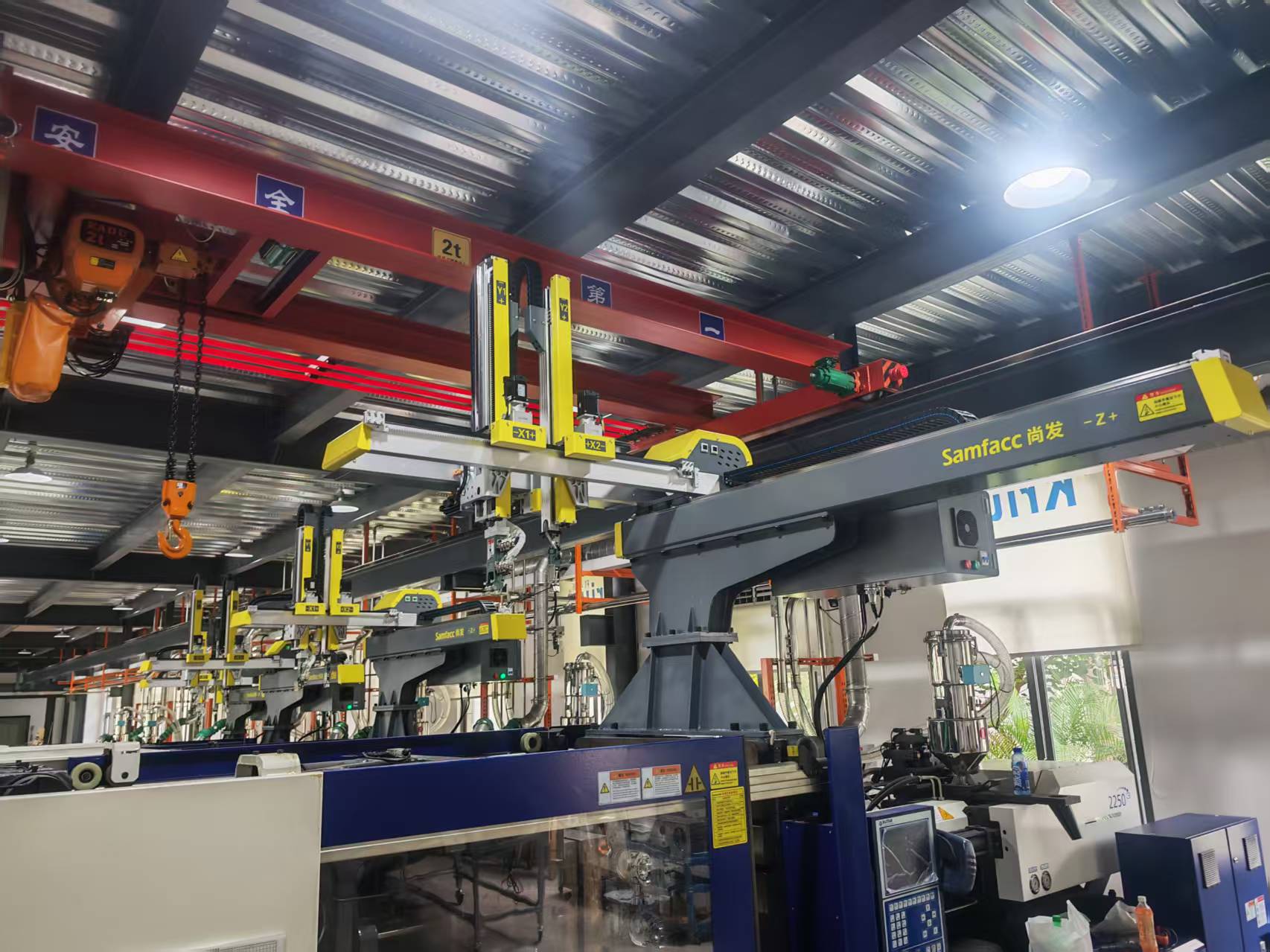
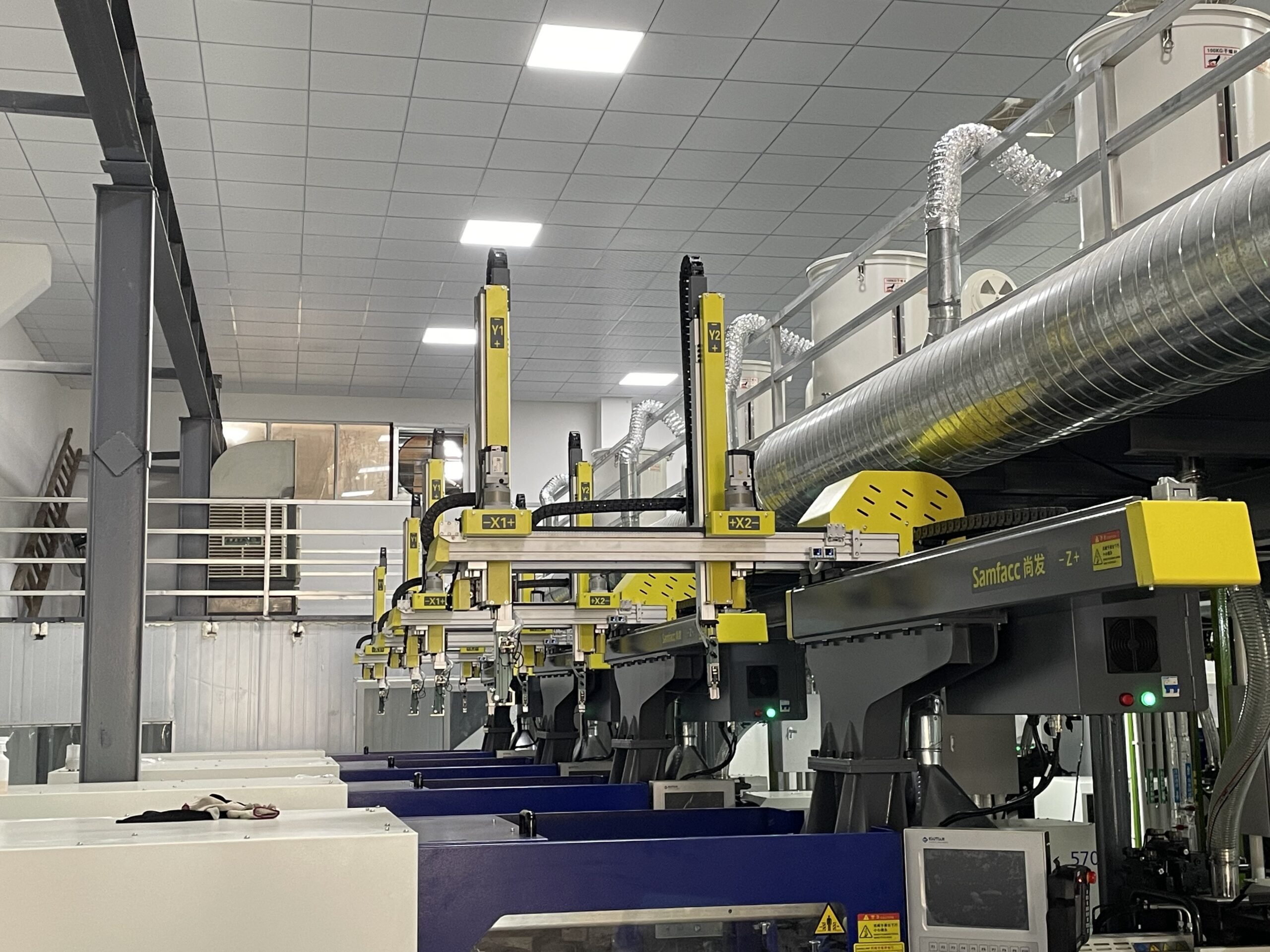
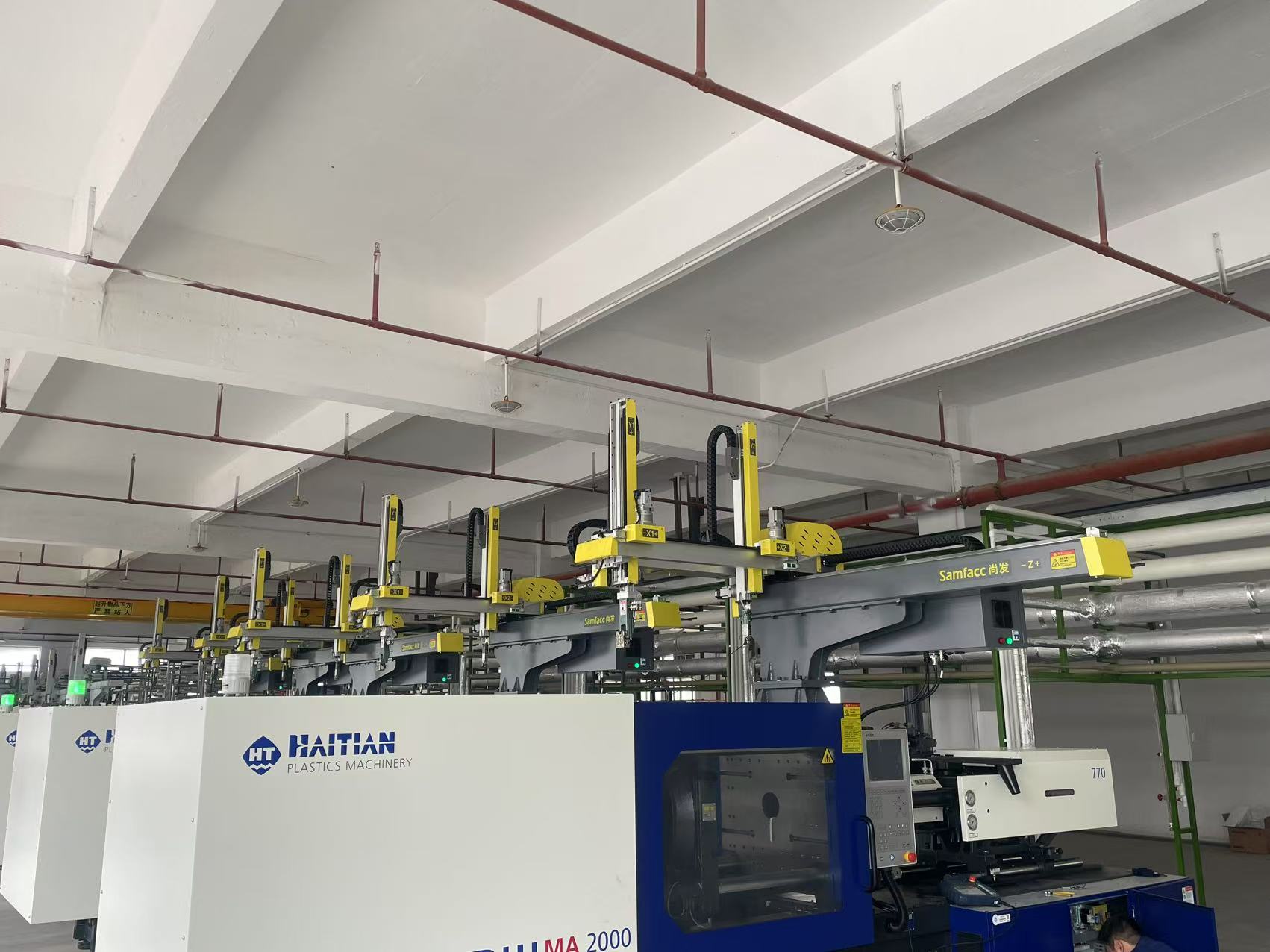
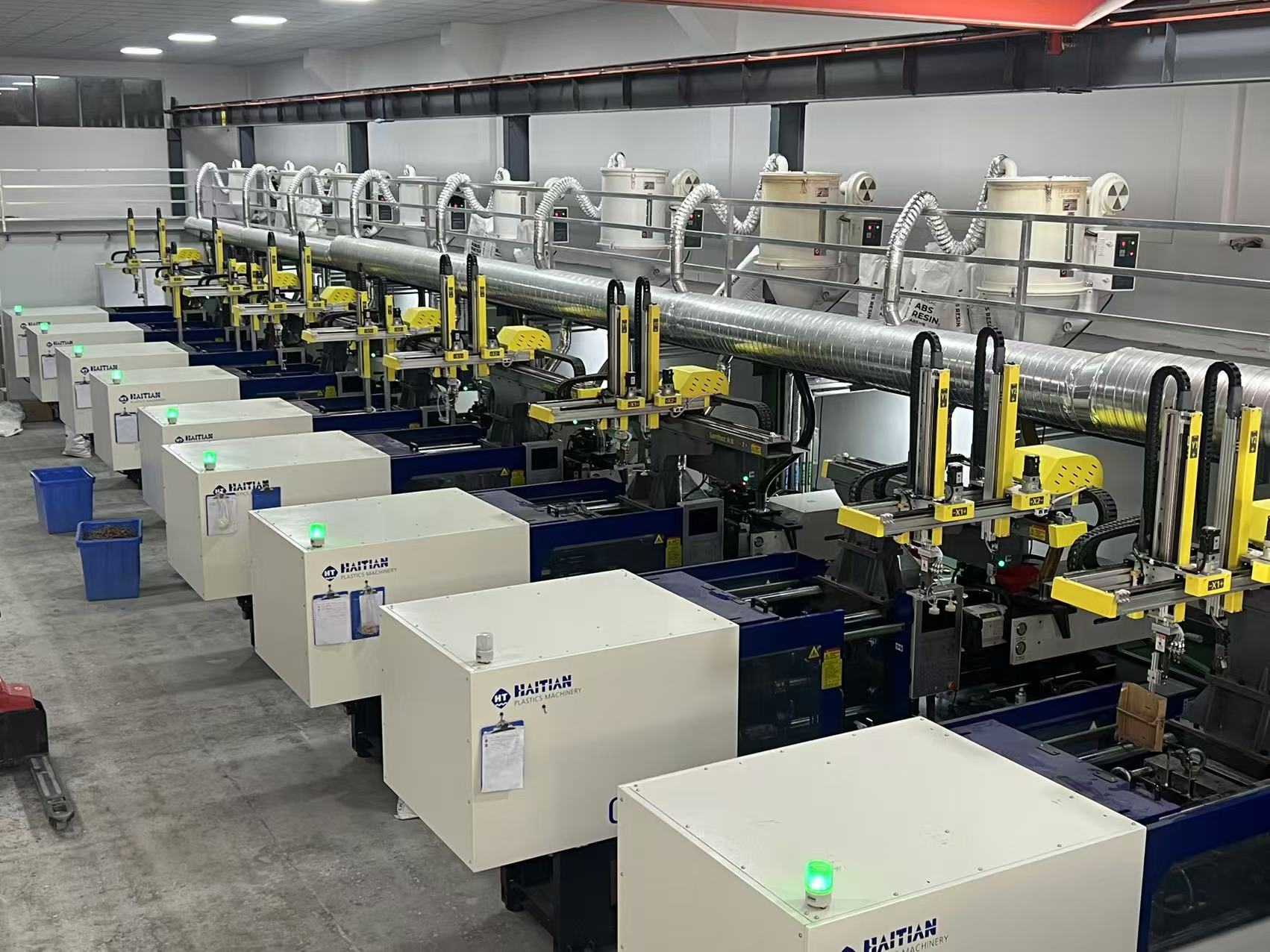
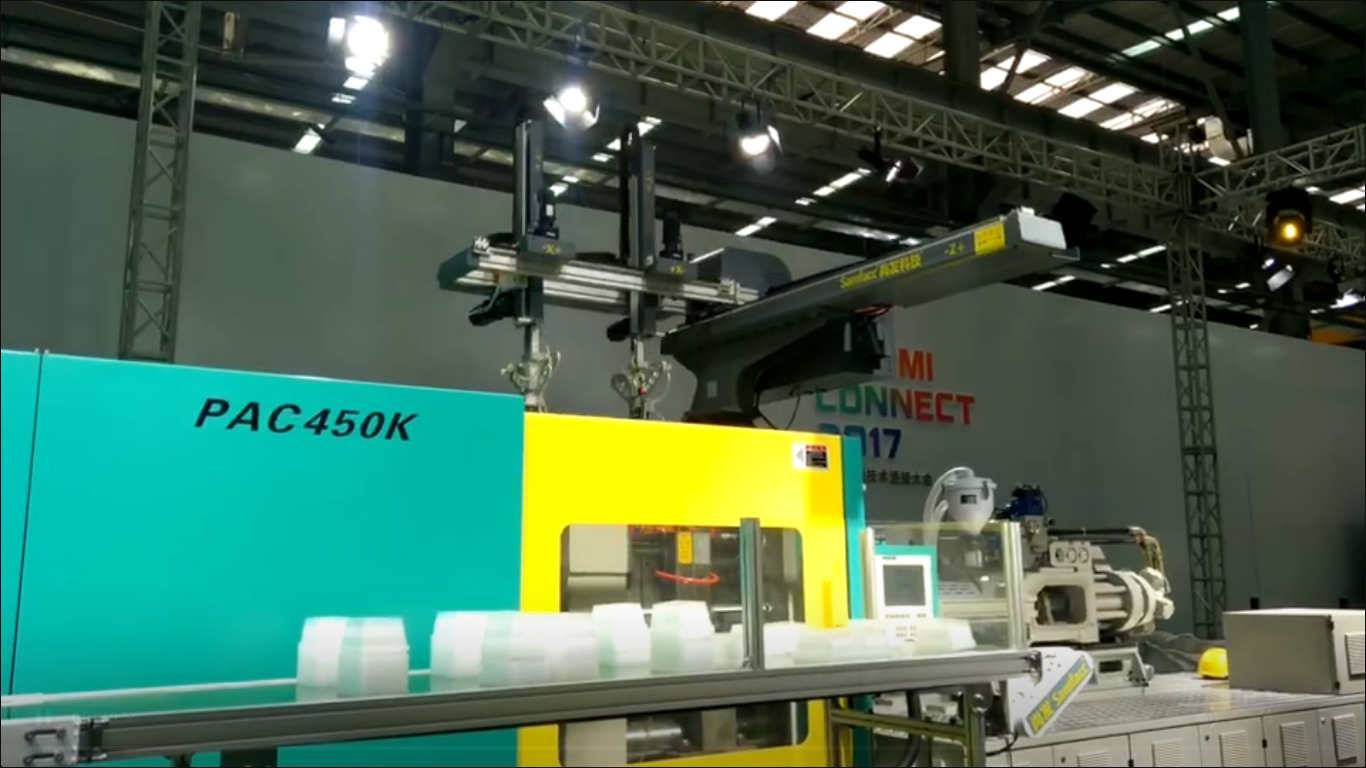
In injection molding, robotic arms, such as the High Speed Robot SFK Series, help optimize production lines, reduce manual labor, and improve product quality. These arms are ideal for tasks like automated part removal, waste handling, and packaging.
With high speed and precision, robotic arms can perform delicate handling tasks, boosting production efficiency. Key advantages include:
- Automating Heavy Tasks: Reduces manual labor and costs.
- Improved Quality: Ensures consistent product quality.
- Smooth Production Flow: Automatically moves parts from molds to designated locations.
Additionally, high-speed robotic arms accelerate production cycles, balancing speed and precision to enhance overall efficiency.
2. Manufacturing Industry
In the manufacturing sector, articulated robot arms are widely used for welding, assembly, painting, and material handling.
- Welding: Robot arms can control the welding gun’s position and angle, ensuring consistent weld quality.
- Assembly: Flexible joint movement allows robot arms to perform complex assembly tasks, replacing manual labor and increasing efficiency.
- Painting and Coating: Robot arms provide precise control over spray equipment, delivering uniform and fine coatings.
3. Healthcare
In healthcare, articulated robot arms are mainly used in surgical robots and rehabilitation robots. With high precision, these robots assist surgeons in performing minimally invasive surgeries or provide rehabilitation therapy.
- Surgical Robots: For instance, the Da Vinci Surgical System, an articulated robot armassists surgeons in performing complex surgeries, improving precision and patient safety.
- Rehabilitation Therapy: Robot arms are used in physical therapy for patients, offering accurate movement guidance for recovery.
Conclusion
Articulated robot arms offer precision, flexibility, and wide-ranging applications across industries. By controlling joint movement, they efficiently handle complex tasks, reduce costs, and ensure high-quality production.
Samfacc robotic arms help optimize production lines, reduce manual labor, and ensure consistent product quality. With high speed and precision, these arms significantly boost production efficiency and streamline operations.For more information or inquiries, do not hesitate to reach out to us. Our team at Samfacc is ready to assist with all your automation needs.