 English
  Chinese
 Injection molding defects can directly impact product appearance, structural integrity, and overall production efficiency. In industries where precision and consistency are critical, even minor defects may lead to increased costs and rejected parts. To effectively address these challenges, manufacturers rely on a systematic injection molding solution to identify root causes and apply targeted corrections.

1. How Can Solve Flow Marks?
(1) What are the characteristics of flow marks?
Generally, flow marks are streak-like or wavy patterns in the direction of melt flow, which are usually found on the product surface and impact product appearance. In most cases, an injection molding solution begins with product appearance-related problems.
(2) What causes unstable flow?
Unstable flow occurs when the mold temperature is low or when there are large variations in injection speed. This causes segmental flow. In addition, flow resistance may be caused by poor design of the gate. This causes flow marks. Therefore, an effective injection molding process involves process as well as mold design.
(3) What improvements can be made?
- Increase mold temperature to prevent premature cooling of the melt.
- Optimize the injection speed profile to avoid sudden changes
- Improve the design to reduce flow resistance.
- Improve mold surface finish.
2. How Can We Diagnose the Problem of Bubbles?
(1) Are the bubbles just air?
While the bubbles may be caused by air, they may also be caused by the presence of moisture or even volatile gases in the materials. In the case of transparent products, this is a major problem.
(2) What are the root causes?
Lack of drying, inadequate venting in the molds, and high injection speed are some of the causes. These are important considerations in any injection molding solution.
(3) What are the optimization approaches?
- Improve the drying of materials to control the level of moisture in the materials.
- Add or optimize mold venting systems
- Reduce the injection speed to prevent air from being trapped.
- Increase the hold time to allow the gases to escape.
3. How Can We Reduce Sink Marks?
(1) What causes surface depression?
Sink marks are typically seen in thick areas of a part due to the shrinkage of the plastic material as it cools without being adequately compensated for. This is one of the common problems that is considered in the practices of injection molding solutions.
(2) Is it a process problem or a design problem?
In fact, it is a combination of both. Insufficient packing pressure causes inadequate compensation of the plastic material, whereas improper design of the product also causes more shrinkage. Therefore, in the case of an injection molding solution, both problems have to be considered.
(3) What changes can be made?
- Optimize the cooling system for uniform temperature distribution
- Adjust the gate location to improve material feeding
- Improve product design to reduce thickness variation
4. How Can You Control Flash?
(1) Why is flash difficult to avoid?
Flash appears as excess material along the edges of a product, affecting both appearance and assembly accuracy. In an injection molding solution, this issue is often related to both equipment and mold conditions.
(2) Is high pressure the only cause?
Excessive pressure is one reason flash might occur. Other reasons include insufficient clamping pressure, worn-out molds, and improper alignment.
(3) What are the best ways to control flash?
- Reduce injection pressure and speed
- Inspect and repair the worn parting surface
- Regularly maintain the equipment to ensure smooth running
5. How Can We Identify and Eliminate Defects?
The analysis process needs to have a logical flow: material, equipment, process, and mold.
- Material: Checking the moisture content, flowability, and batch-to-batch consistency
- Process: Checking the injection speed, pressure, and temperature
- Mold: Checking the venting system, cooling system, and gate design
- Equipment: Checking the stability and precision of the machine
By using these steps in a layered approach, the injection molding solution can gradually narrow down the problem and avoid “blind” parameter tuning.

6. What Advanced Technologies and Innovations Help Reduce Defects?
- Intelligent Monitoring and Data Analysis
New generation injection molding machines have the capability to monitor parameters such as pressure, temperature, and flow rate in real time. By using data analysis techniques, any abnormalities can be detected in time to make the necessary corrections to prevent defects. This is one of the major directions in which injection molding solution development is taking place.
- CAE simulation and mold optimization
By using CAE simulation software in advance of the actual production process, defects such as air traps and non-uniform filling can be predicted. This makes the injection molding solution more proactive.
- Material and process innovation
The use of materials with high flow rates and low shrinkage properties ensures process stability. In addition, modern technologies such as multi-stage injection molding and dynamic temperature control allow injection molding solution systems to control their melts more effectively, thereby preventing defects.
Conclusion
Defects that occur during the injection molding process are influenced by various factors, including materials, processes, molds, and equipment. A well-structured injection molding solution helps to effectively prevent defects, thereby enhancing efficiency in the production process.
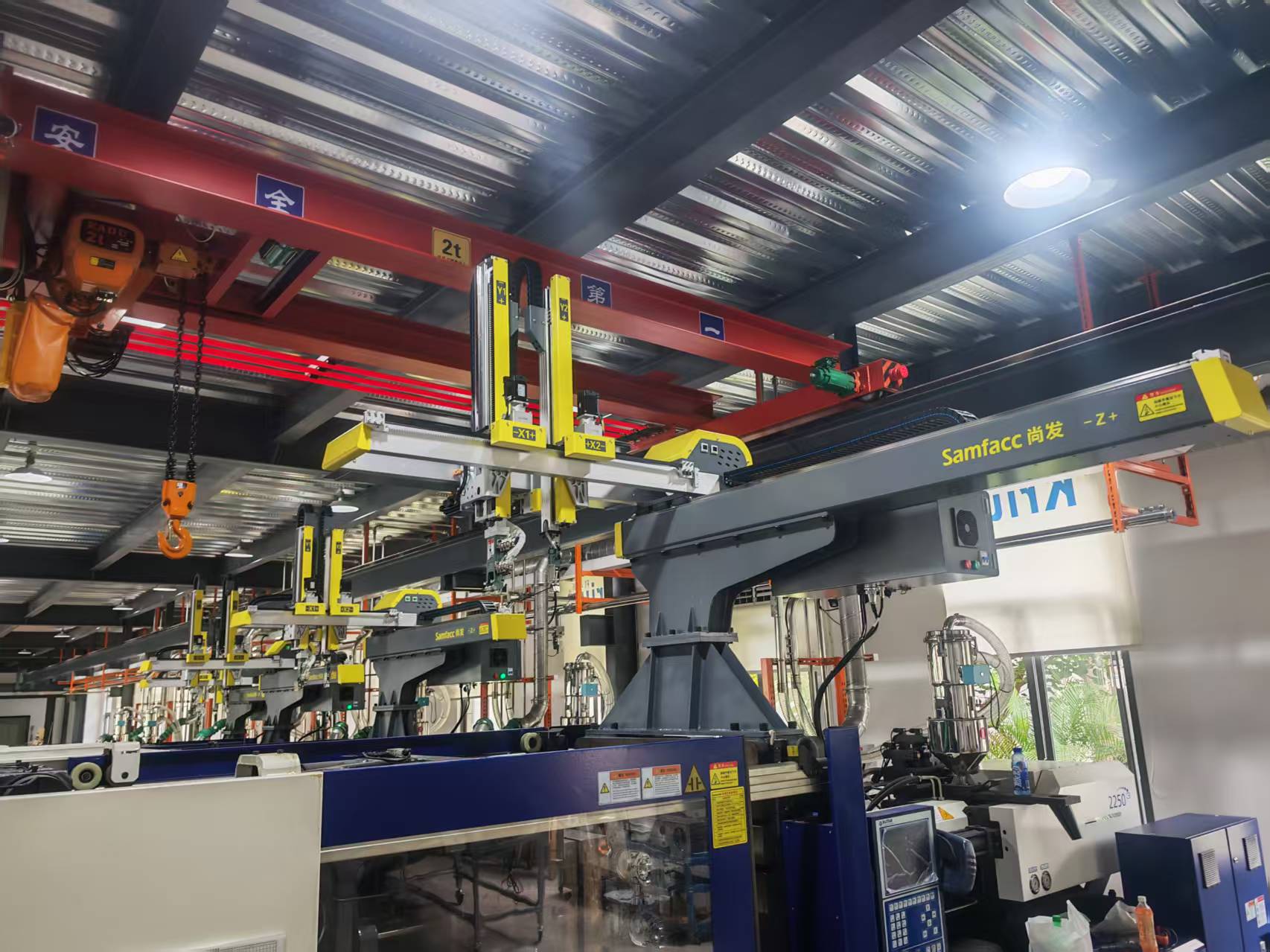
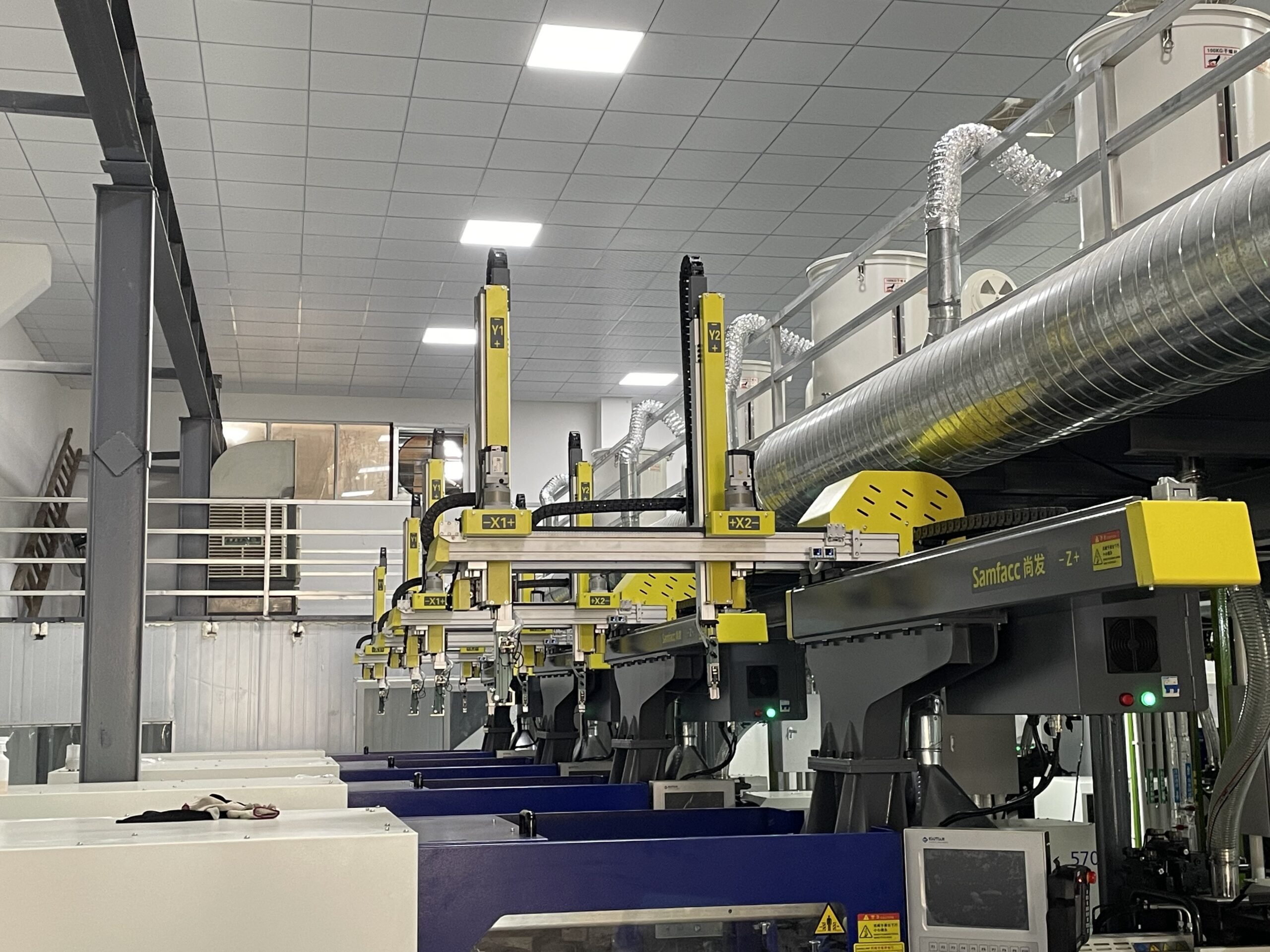
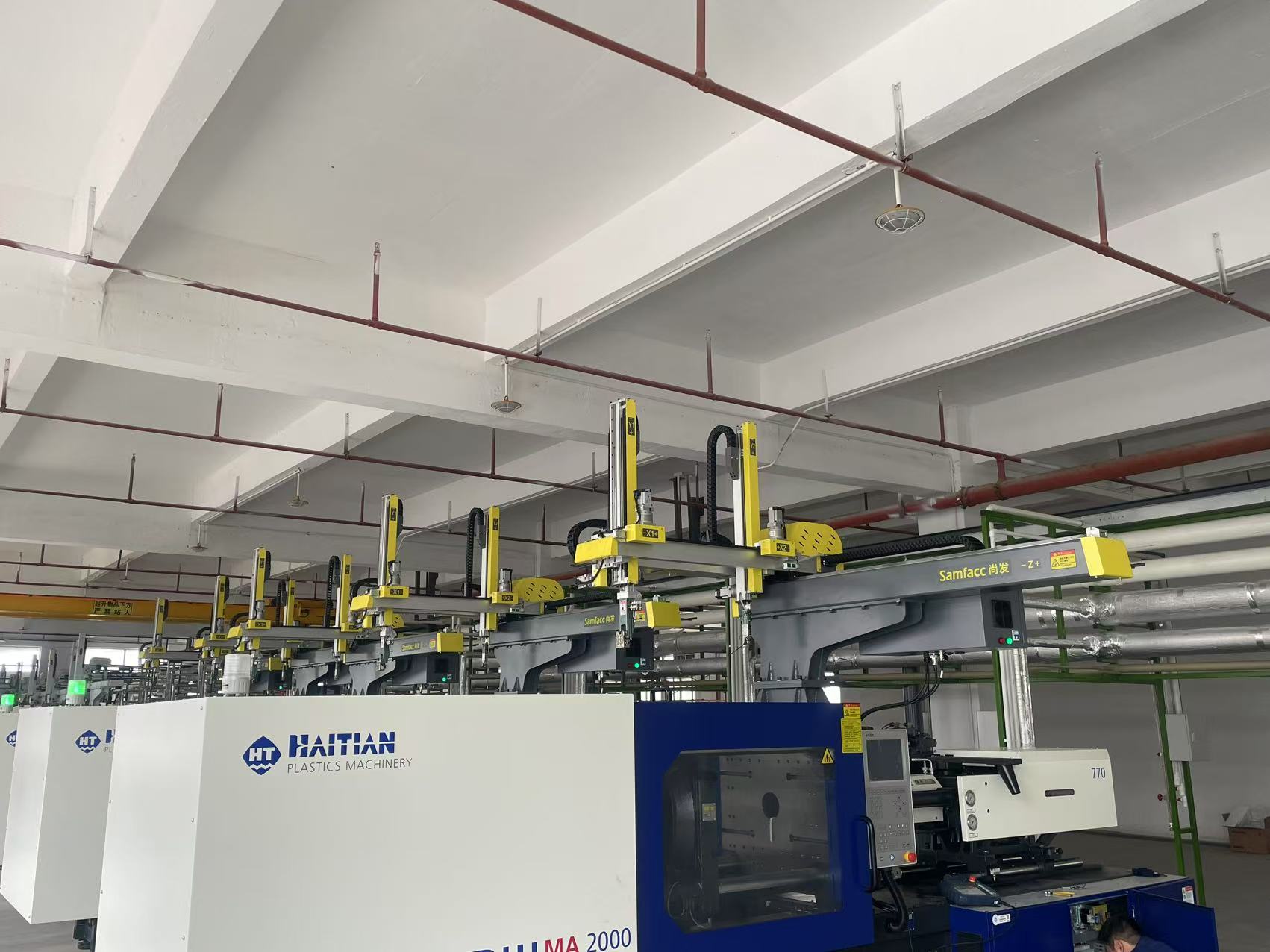
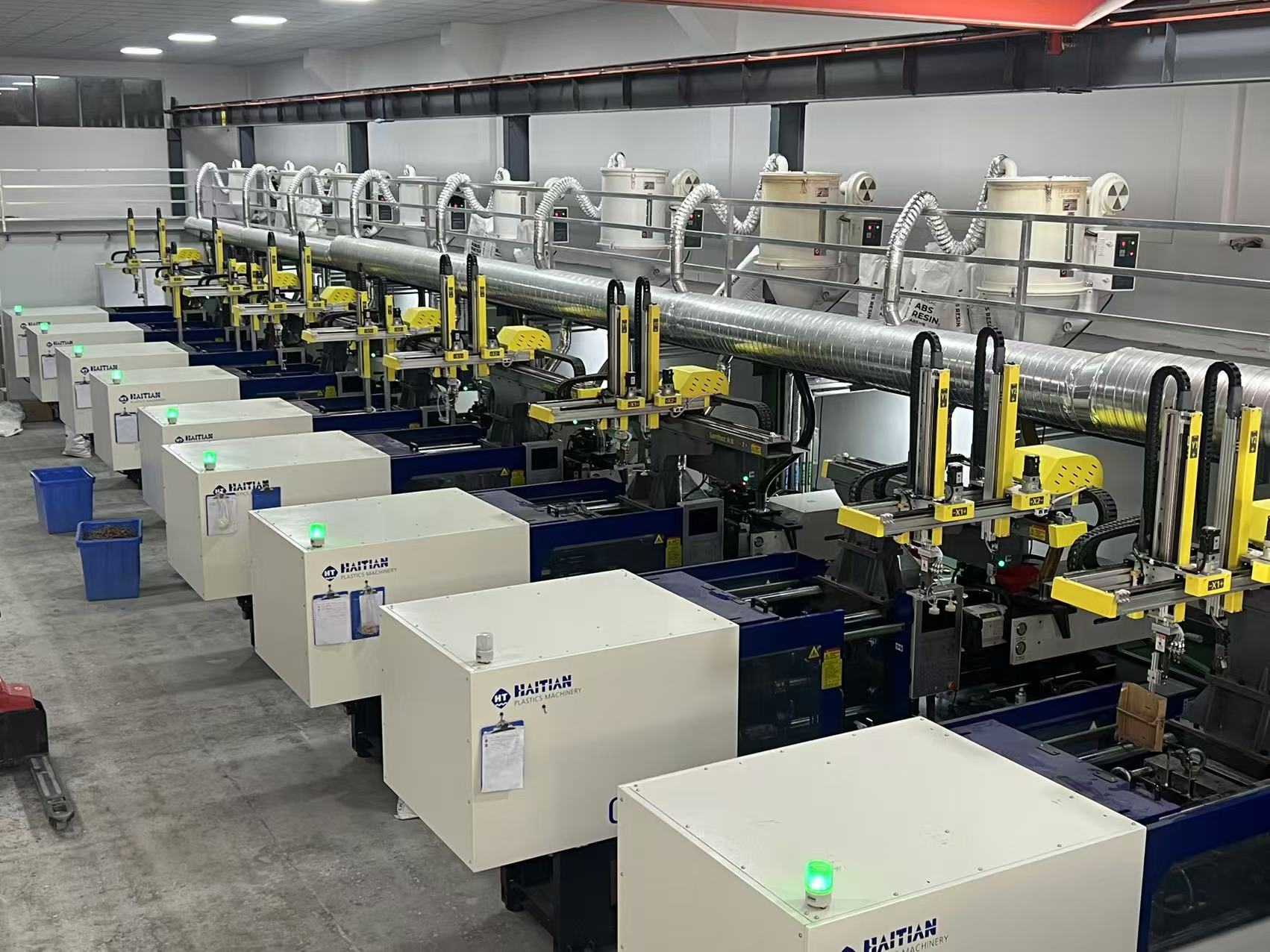
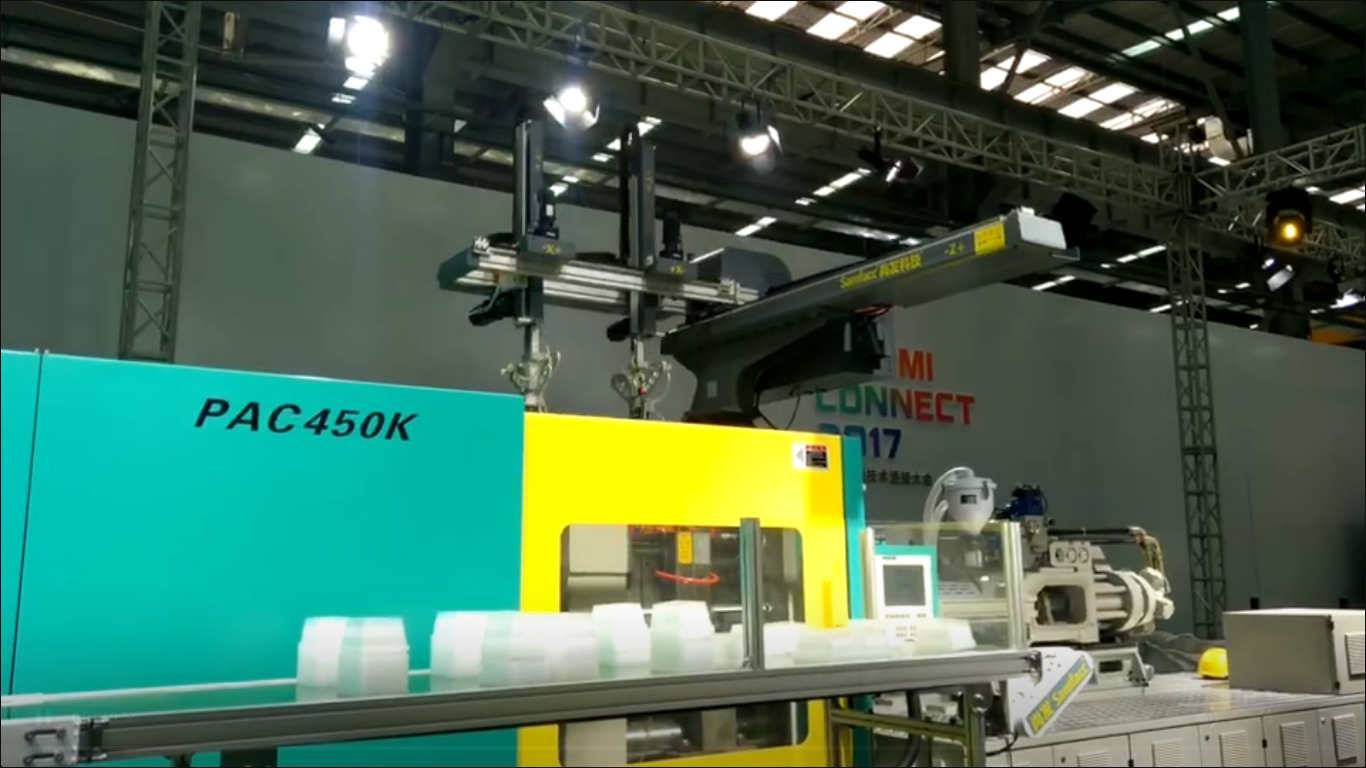
As a reliable injection molding machine manufacturer, SAMFACC integrates advanced automation and robotic systems into its injection molding solution to further improve consistency and precision.
By utilizing SAMFACC robots for material handling, part removal, and process coordination, an enterprise can achieve more stable production cycles and reduce human-related variability. Combined with strict inspection and quality control, this approach ensures that every project meets required standards while delivering high-quality, defect-free molded parts.