 English
  Chinese
 In modern manufacturing, injection molding cycle time is one of the most critical pointers for measuring product effectiveness and cost control. A well- optimized cycle helps factor meliorate affairs while maintaining stable product quality.
This composition provides a structured overview of injection molding cycle time, including its description, calculation, impacting factors, and practical optimization strategies to help improve overall product performance.
What Is Injection Molding Cycle Time?
Injection molding cycle time refers to the total time demanded to complete one full molding cycle, from the launch of the injection to the launch of the next cycle. It generally includes injection, packing( holding), cooling, earth opening, and ejection.
In real product surroundings, cycle time depends not only on machine performance but also on material parcels, earth design, and process settings. Proper control of the injection molding cycle time ensures harmonious quality and an effective product.

Why Cycle Time Is Important for effectiveness and Cost in injection molding cycle time
Reducing injection molding cycle time can significantly ameliorate manufacturing effectiveness. A shorter cycle means further corridors produced within the same time frame, directly adding value and reducing cost per unit.
In addition, optimized cycle time helps:
- Improve product consistency and dimensional accuracy
- Reduce energy consumption
- Increase machine utilization
- Lower scrap rates and production losses
Therefore, managing injection molding cycle time is essential for both operational efficiency and cost control.
Breakdown of Injection Molding Cycle Time
- Injection Time
This is the process of filling the mold cavity with the molten plastic. It is regulated by the rate at which the injection is made and the pressure involved. This process has to be completed without any defects, such as short shots and flash.
- Cooling Time
This process is the longest in the injection molding cycle. It is the process of allowing the plastic in the mold enough time to cool and harden so that the object can be ejected without deforming.
- Packing (Holding) Time
Packing time compensates for material shrinkage during cooling, ensuring uniform density and preventing defects like sink marks. However, excessive holding time can unnecessarily extend the overall cycle.
- Ejection Time
This stage involves removing the finished part from the earth. A well- designed ejection system reduces distortion and ensures smooth part release.
- Mold Opening and Closing Time
This is the process of opening and closing the earth. This process is controlled by the speed of the injection molding machine; a brisk and more accurate injection molding machine is very important in reducing the overall injection molding cycle time.
How to Calculate Injection Molding Cycle Time
The basic formula for the injection molding cycle is:
t = td + ti + tc
Where:
- t = injection molding cycle time
- td = downtime or auxiliary time
- ti = injection time
- tc = cooling time
This formula simplifies the process and allows the engineers to analyze and optimize the different stages of the injection molding cycle time individually.
Factors Affecting Injection Molding Cycle Time
- Material Properties
Different types of plastics have different properties in terms of heat absorption or dissipation. Crystalline plastics take longer to cool down than amorphous plastics.
- Mold Design
Mold structure, cooling channel layout, and heat dissipation efficiency significantly affect cycle time performance.
- Machine Performance
High-performance injection molding machines offer faster response times and more stable operation, helping reduce overall cycle time.
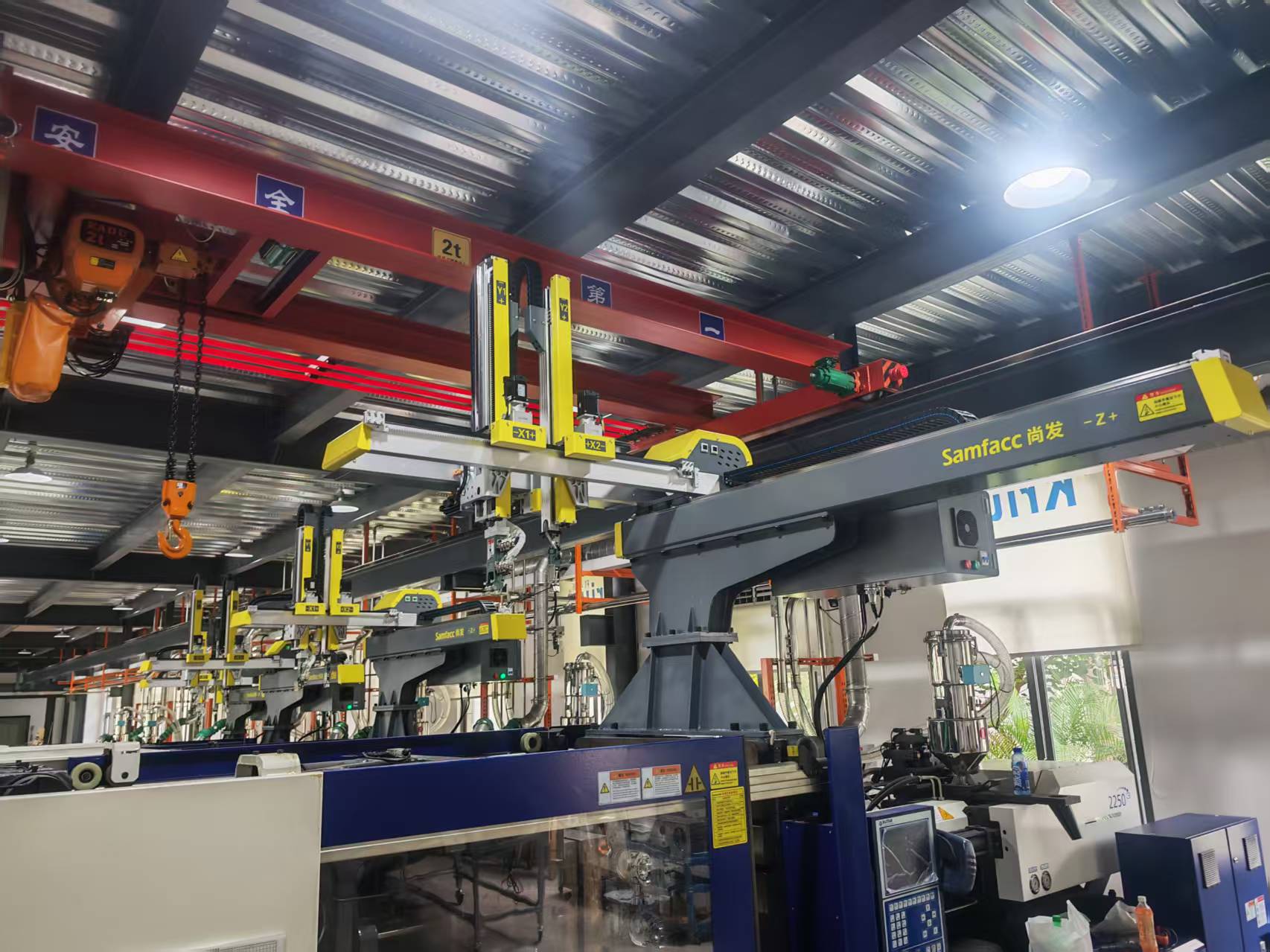
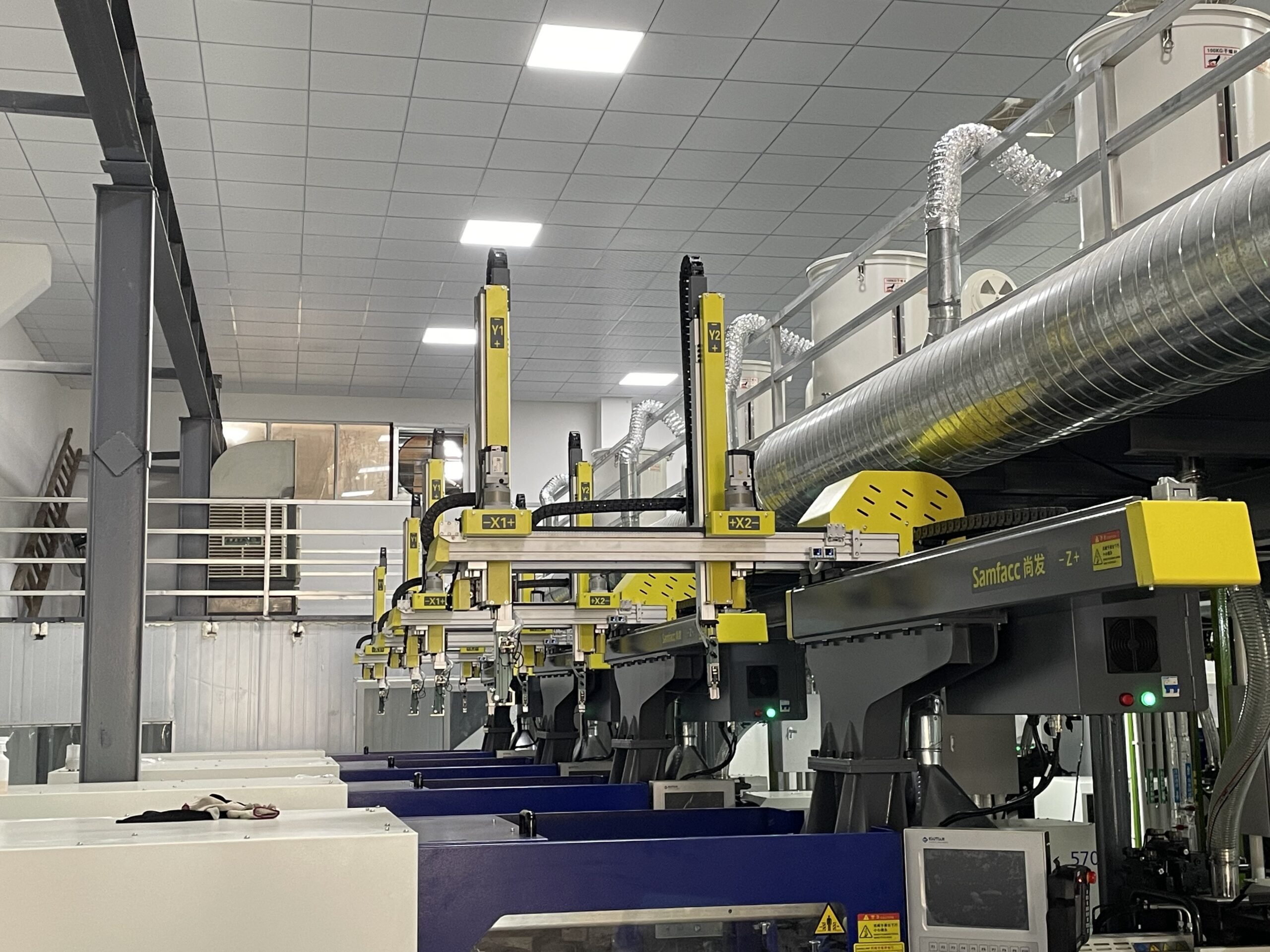
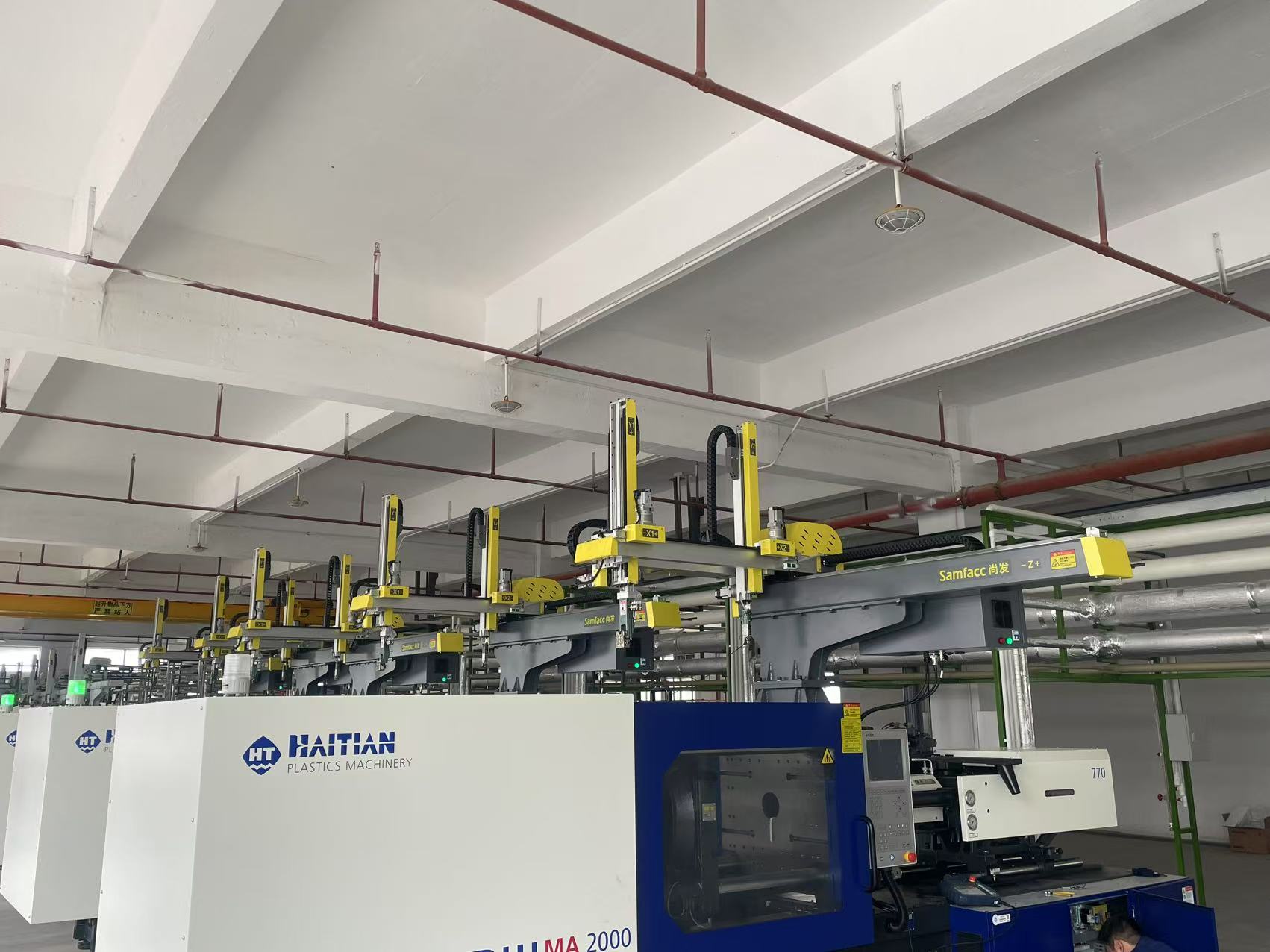
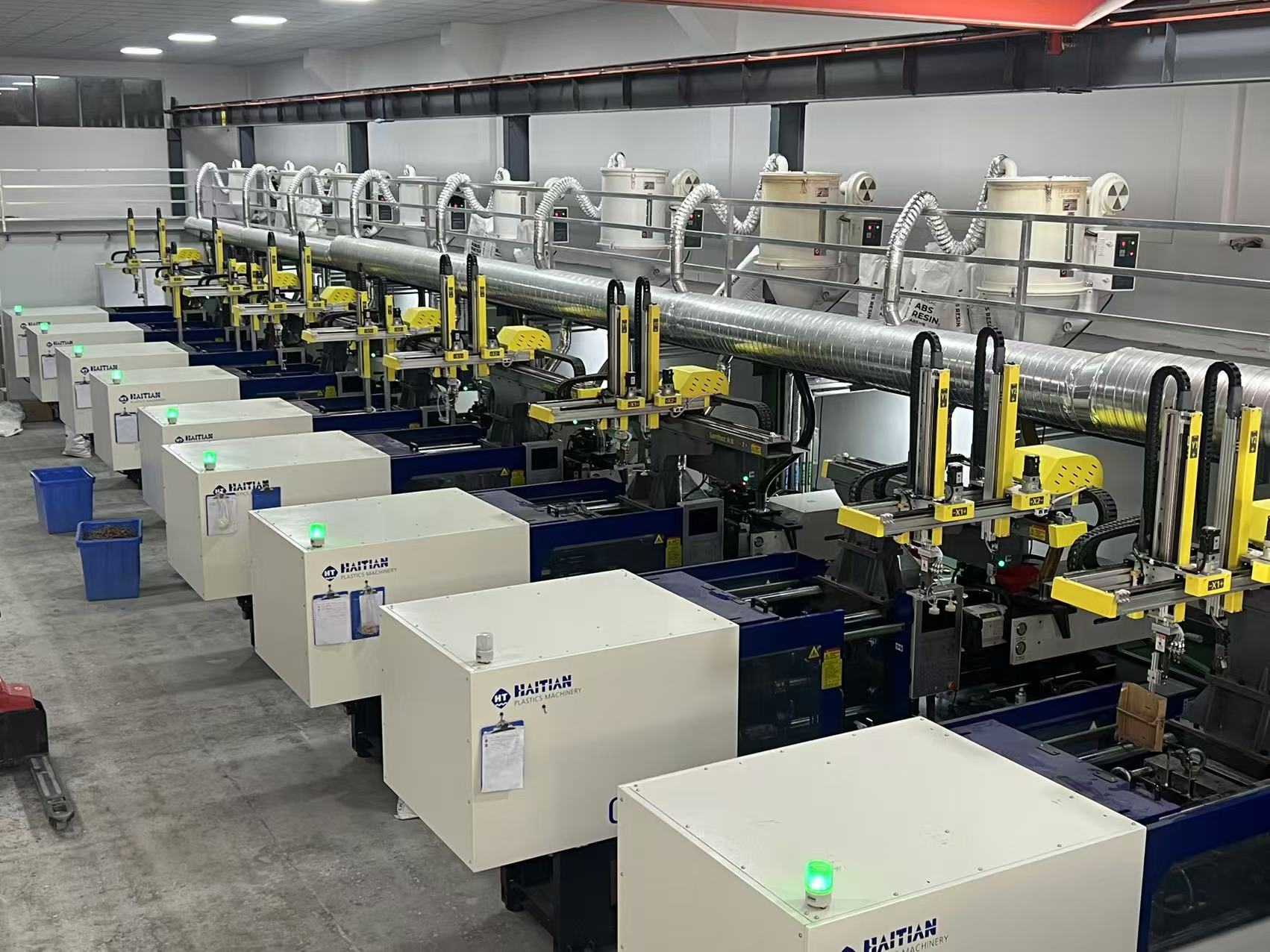
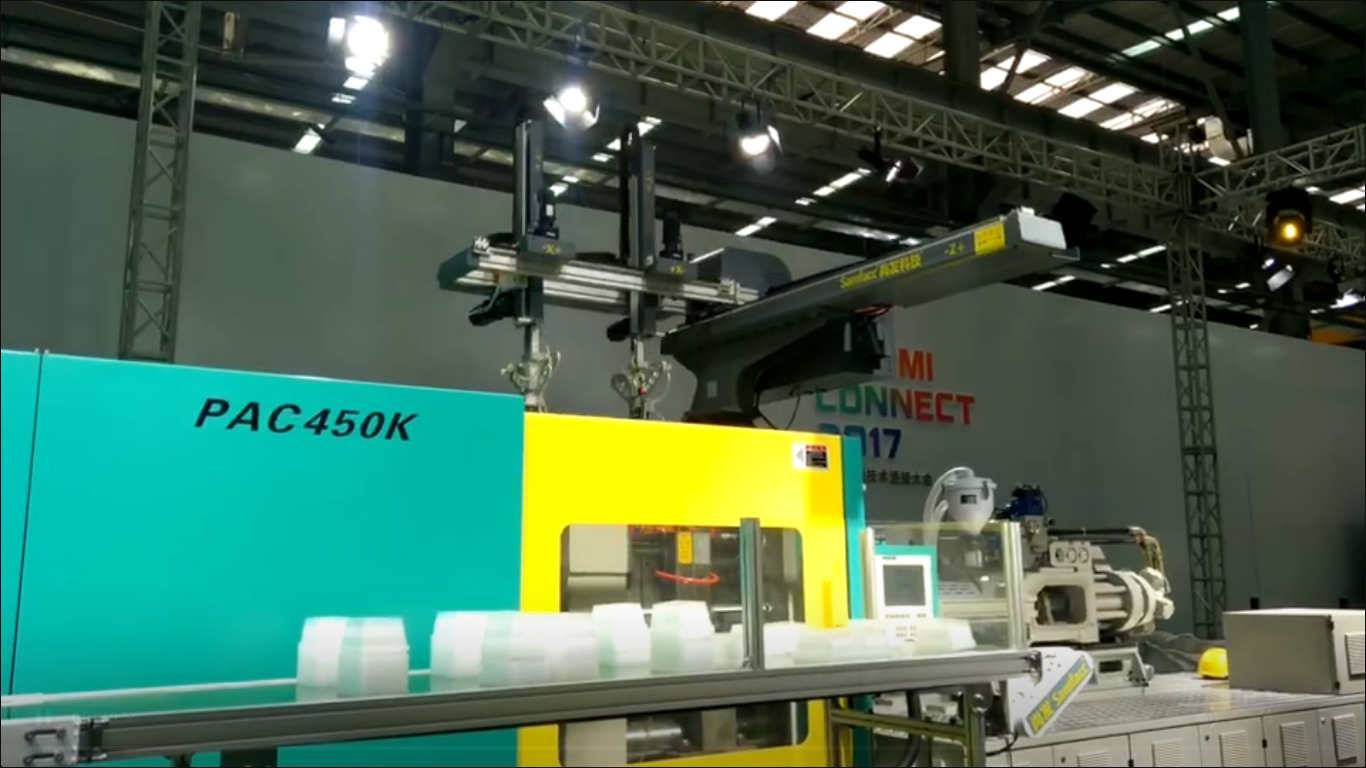
Example SAMFACC, injection molding robots can automate part handling and improve efficiency, further optimizing the production cycle.
- Process Parameters
Temperature, pressure, and injection speed settings must be properly controlled to balance quality and efficiency.
Methods to Reduce Injection Molding Cycle Time
- Optimize Injection Stage
Improving injection speed and screw design can dock filling time while maintaining quality.
- Ameliorate Cooling effectiveness
Enhancing cooling systems — similar to optimizing water channels or using high thermal conductivity accoutrements — can significantly reduce cooling time.
- Optimize Packing Stage
Proper control of pressure and holding time ensures product quality without extending the cycle unnecessarily.
- Optimize Ejection Stage
Effective ejection mechanisms reduce junking time and minimize the threat of part damage.
- Optimize Mold Movement
Using high- speed and high-perfection machines helps reduce earth opening and ending time, perfecting overall effectiveness.
SAMFACC Advanced results to Ameliorate Injection Molding Cycle Time
With advanced earth design and intelligent control systems, SAMFACC provides professional results to optimize injection molding cycle time. Their technologies concentrate on perfecting cooling effectiveness, stabilizing process parameters, and reducing energy consumption, enabling them to achieve advanced productivity and harmonious product quality.

FAQ
Q1: What are the typical time ranges for each stage?
The values vary depending on material and product design, but cooling time generally accounts for the largest portion of the injection molding cycle time.
Q2: Why does cooling time dominate the cycle?
Because plastics have low thermal conductivity, heat dispersion takes longer compared to other stages.
Q3: How do manufacturers balance cycle time and product quality?
By optimizing process parameters and perfecting earth design, while ensuring that product quality remains stable.
Conclusion
Injection molding cycle time plays a pivotal part in determining product effectiveness and manufacturing costs. By assaying each stage and optimizing material selection, earth design, and process parameters, manufacturers can significantly ameliorate affairs while maintaining high- quality norms.
With advancements in robotization and smart manufacturing, further optimization of injection molding cycle time will continue to be a crucial factor in achieving competitive advantages in the industry.