 English
  Chinese
 Modern factories are going for automated solutions to keep up with rising demand for faster, cleaner, and more efficient packaging. According to recent studies, the market size of labeling robots was worth at USD 1.2 billion in 2024 and is expected to reach USD 2.5 billion by 2033. This growth is driven by an increase in e-commerce, cost reduction in manufacturing, and the need for accurate labeling across different industries such as food, pharmaceutical, cosmetics, and industrial goods.
In this article, you will get to know how labeling robots work, how they are benefiting industries, and which SAMFACC IML solutions match your production needs. Let’s get started.
What Are Labeling Robots and How Do They Work?
Labeling robots help factories put labels on products quickly and neatly. They use a robotic arm to move items, sensors to line up each label correctly, and software to keep everything in sync. This makes packaging faster, reduces mistakes, and keeps products looking consistent and professional.
Key Benefits of Labeling Robots
Here are some key benefits of labeling robots.
- Labeling robots deliver precise and uniform labeling for every product.
- They increase production speed and handle high workloads efficiently.
- These machines reduce labor costs and minimize material waste.
- They can be easily adjusted for different packaging sizes and shapes.
- Their hygienic and safe design makes them ideal for food and pharmaceutical use.

Applications of Labeling Robots in Modern Industries
Here are applications of labeling robots in modern industries.
- They are used in the food industry for labeling cups, bottles, jars, and containers.
- They are applied in the beverage sector for labeling cans, juice bottles, and packaging sleeves.
- They help in pharmaceutical manufacturing for labeling vials, medicine bottles, and cartons.
- They are used in the cosmetic industry for labeling creams, tubes, and skincare products.
- They are adopted by logistics and retail for barcoding and tracking product packages.
How SAMFACC IML Robots Enhance Productivity
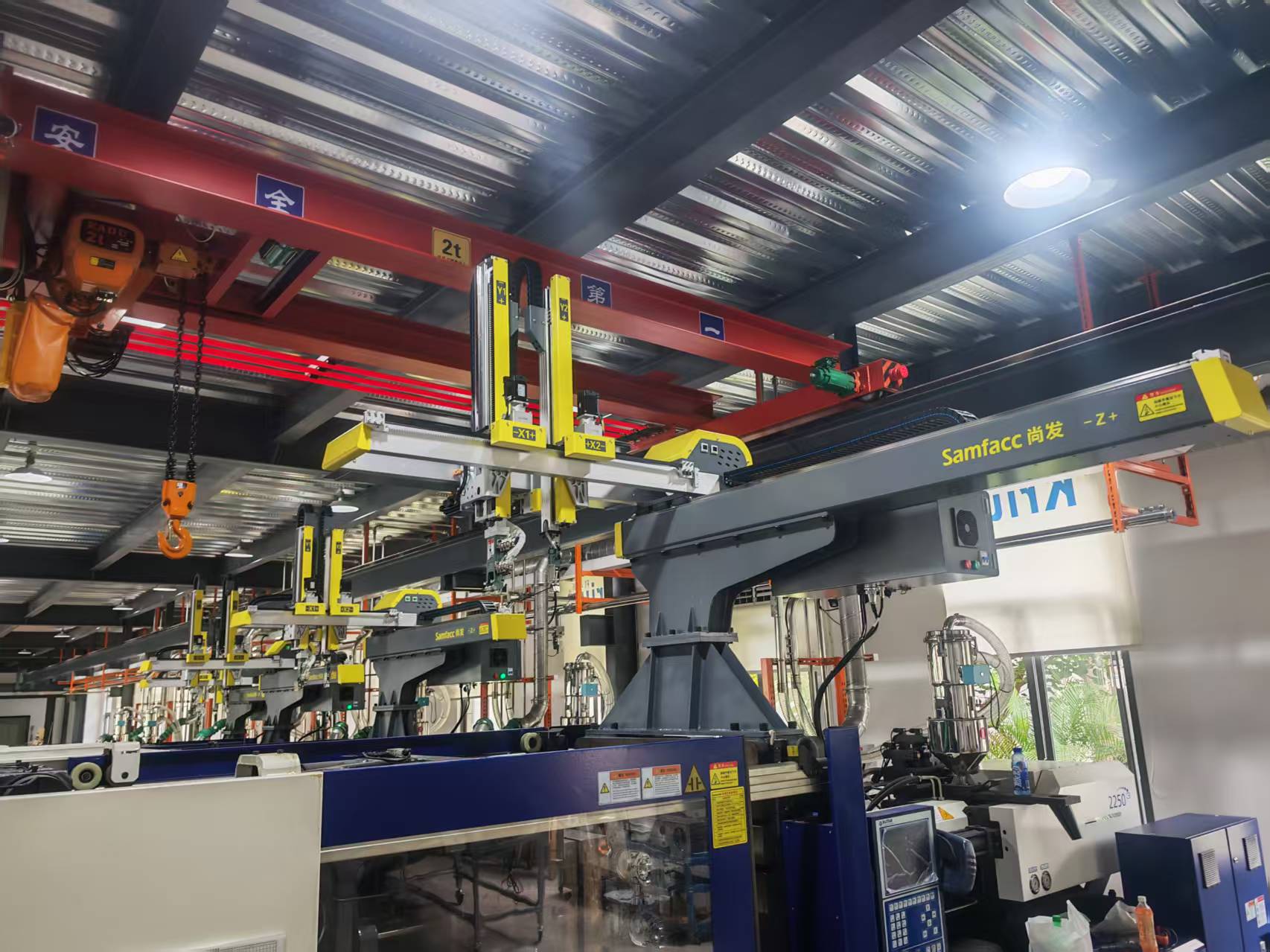
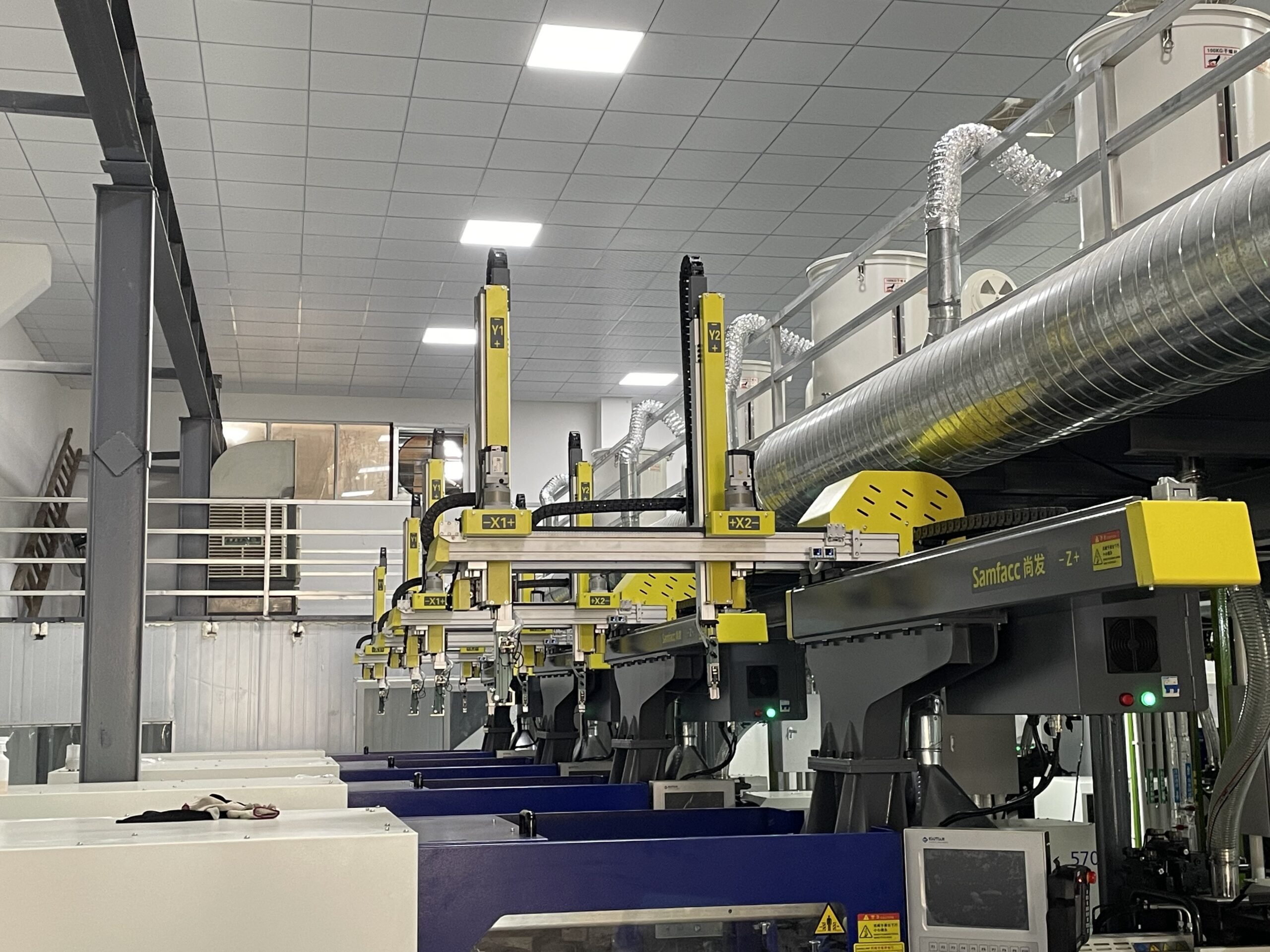
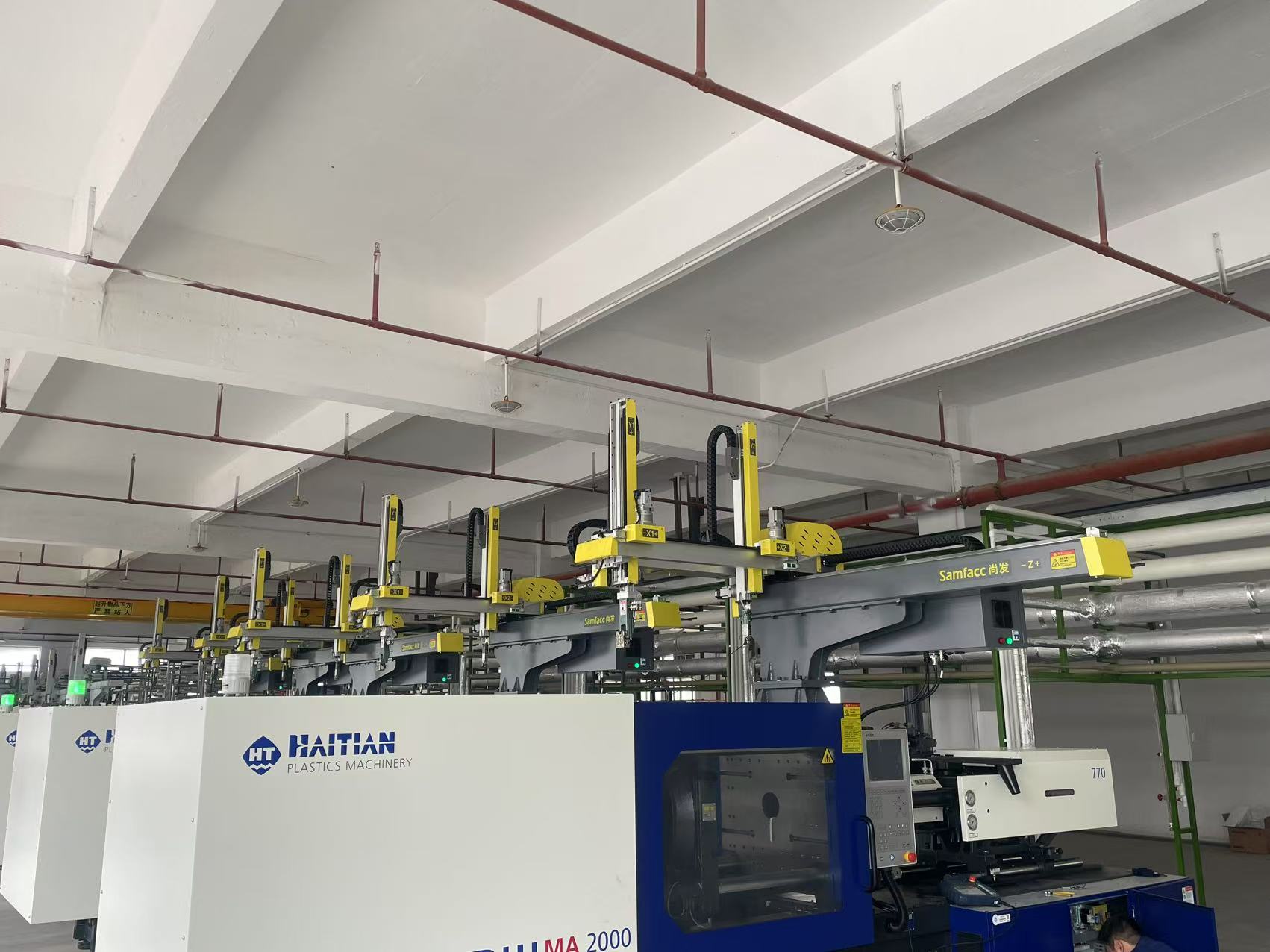
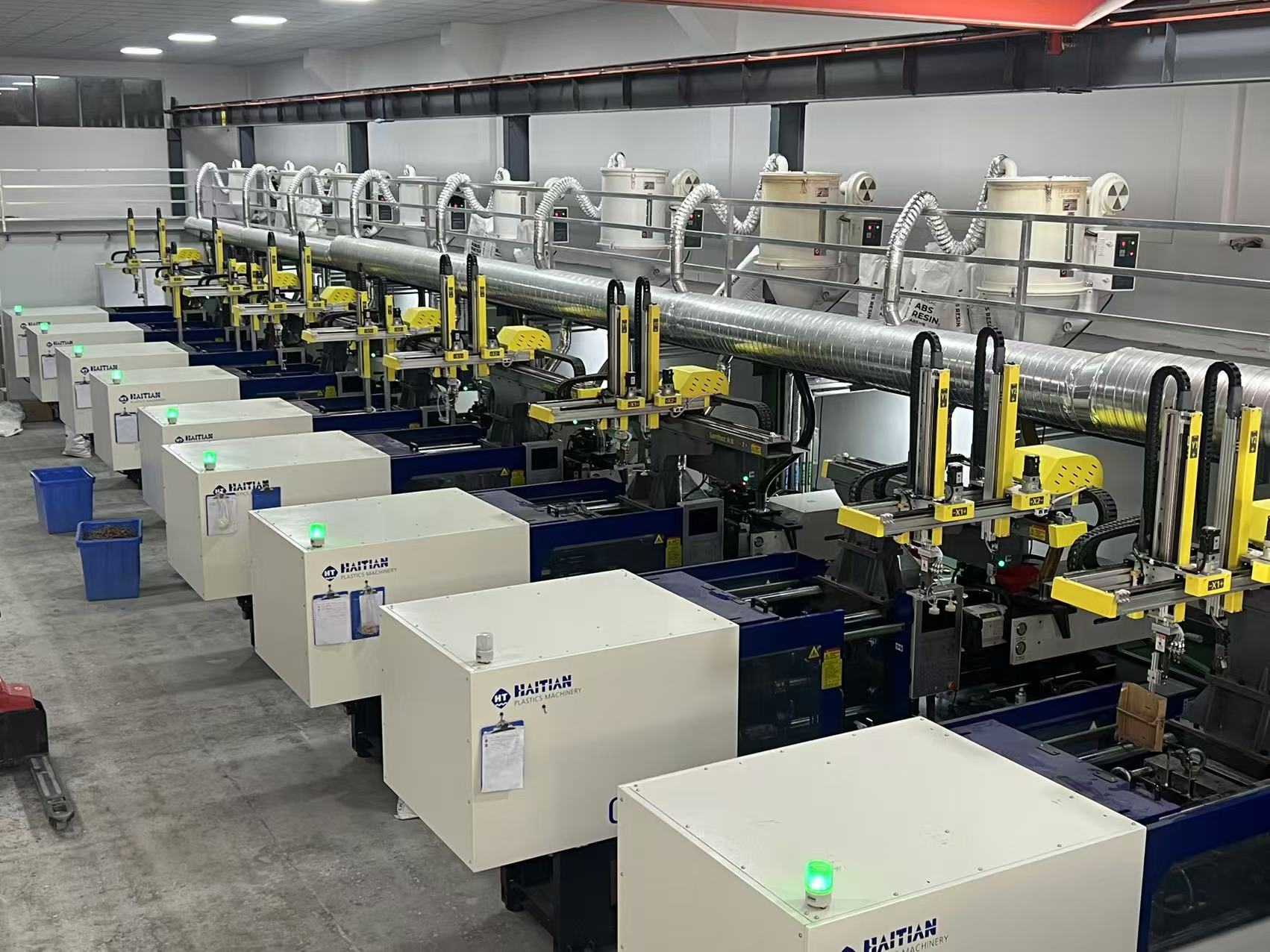
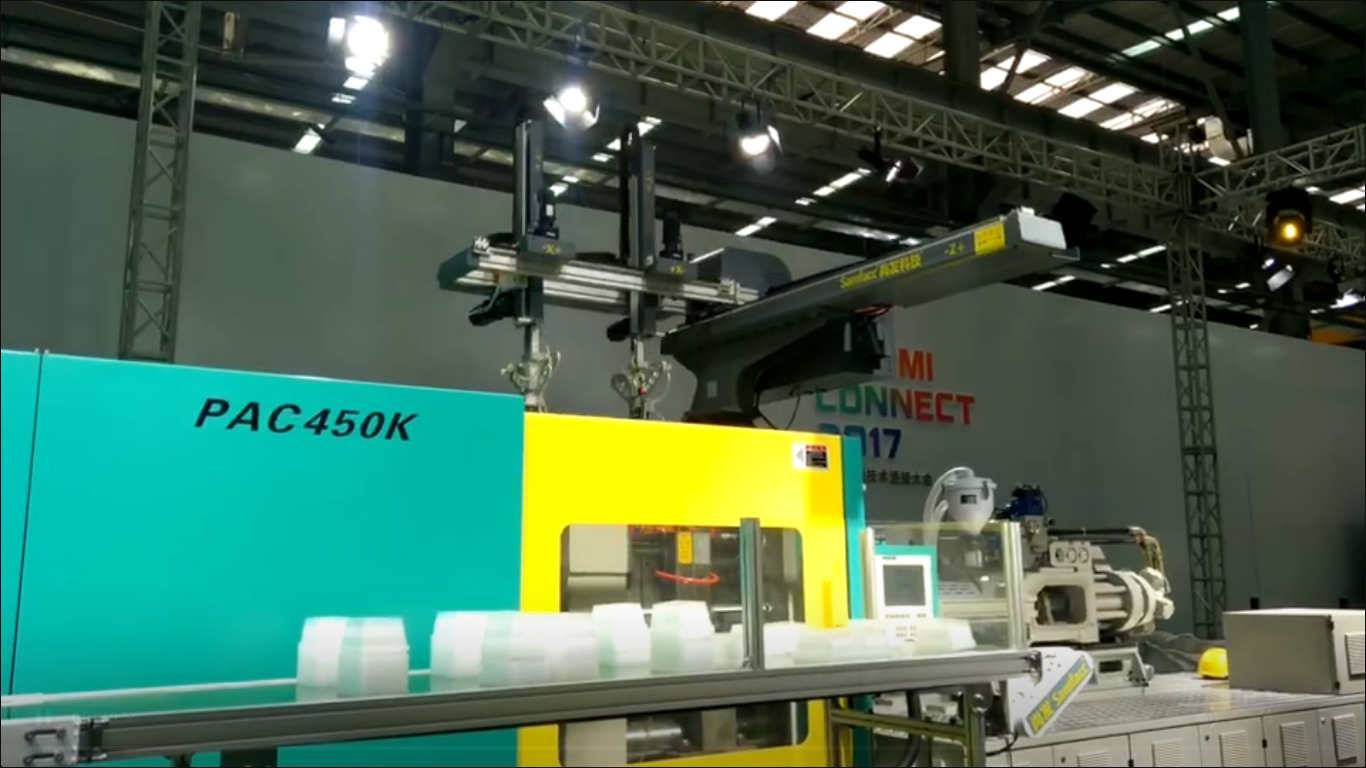
SAMFACC IML robots use in-mold labeling to place labels inside the mold during production. It creates a clean and lasting result. Their top-entry and side-entry systems work smoothly on both flat and curved products. With short cycle times and steady performance, they help factories increase output and maintain uniform labeling. Browse their products page get more info.

FAQs
- What is in-mold labeling (IML)?
In-mold labeling is a process where labels are inserted inside the mold before the product is manufactured. It allows the label to fuse with the container during molding for a smooth finish. - Can labeling robots handle different product shapes?
Yes, SAMFACC labeling robots can work with both flat and curved surfaces as they use their top-entry and side-entry systems. - How fast are SAMFACC IML robots?
They offer quick production cycles, often between 3 to 6 seconds, depending on product size and design. - Are these robots suitable for food packaging?
Yes, their precise and neat operation makes them ideal for hygienic industries like food and beverage packaging.
Conclusion
You have now learnt how labeling robots are redefining packaging and making the production process faster, cleaner, and more reliable. They save time, reduce costs, and keep every product looking perfect. And when it comes to quality and innovation, SAMFACC is one name you can always count on.