 English
  Chinese
 A robot arm used in an industrial manufacturing facility is normally tasked with duties that need to be performed over and over again throughout a work shift. When a machine works for eight or more hours, even slight variations in handling can influence the whole process.
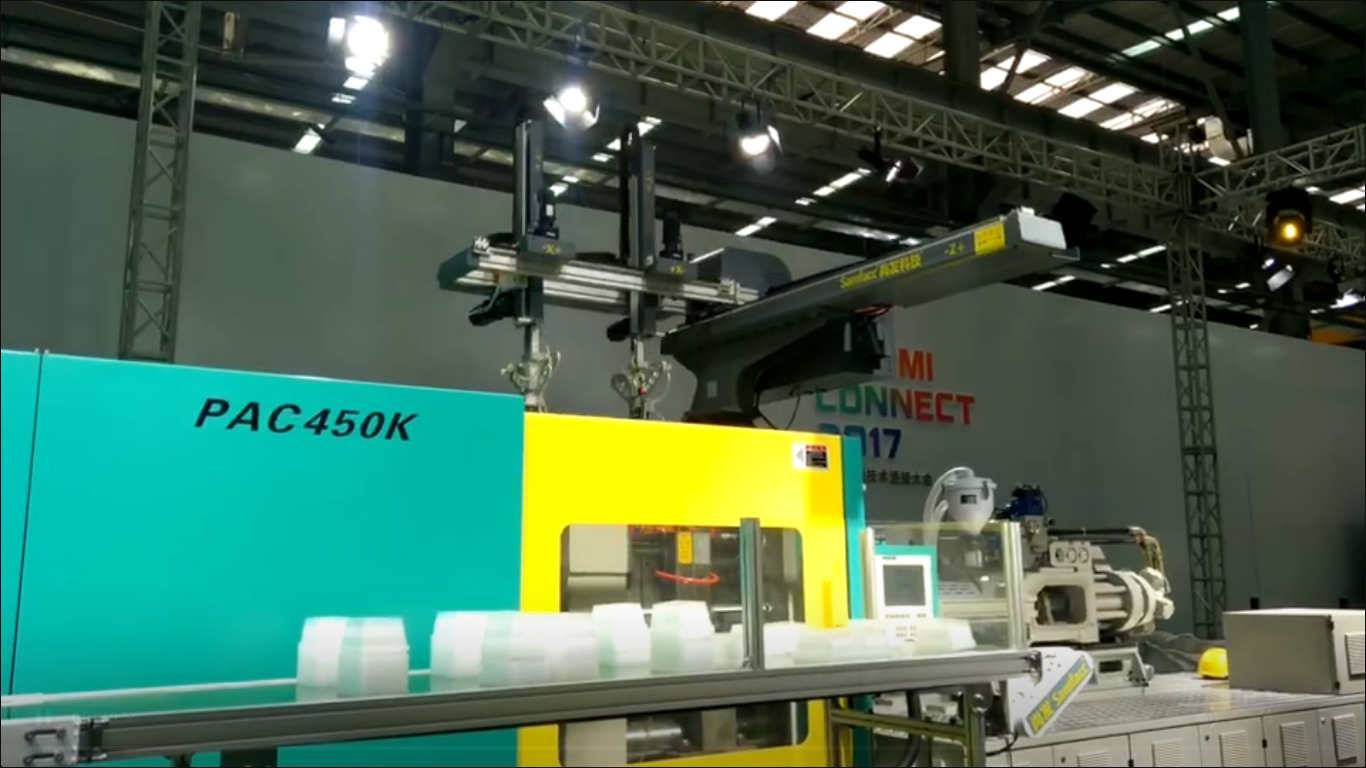
In injection molding, the duty of a robotic arm becomes especially obvious. As soon as the mold opens, the molded product should be taken out fast before the start of the next cycle. A suitable robot arm will ensure this motion without interfering with the normal cycle of the injection molding machine.
1. What Is a Robotic Arm?
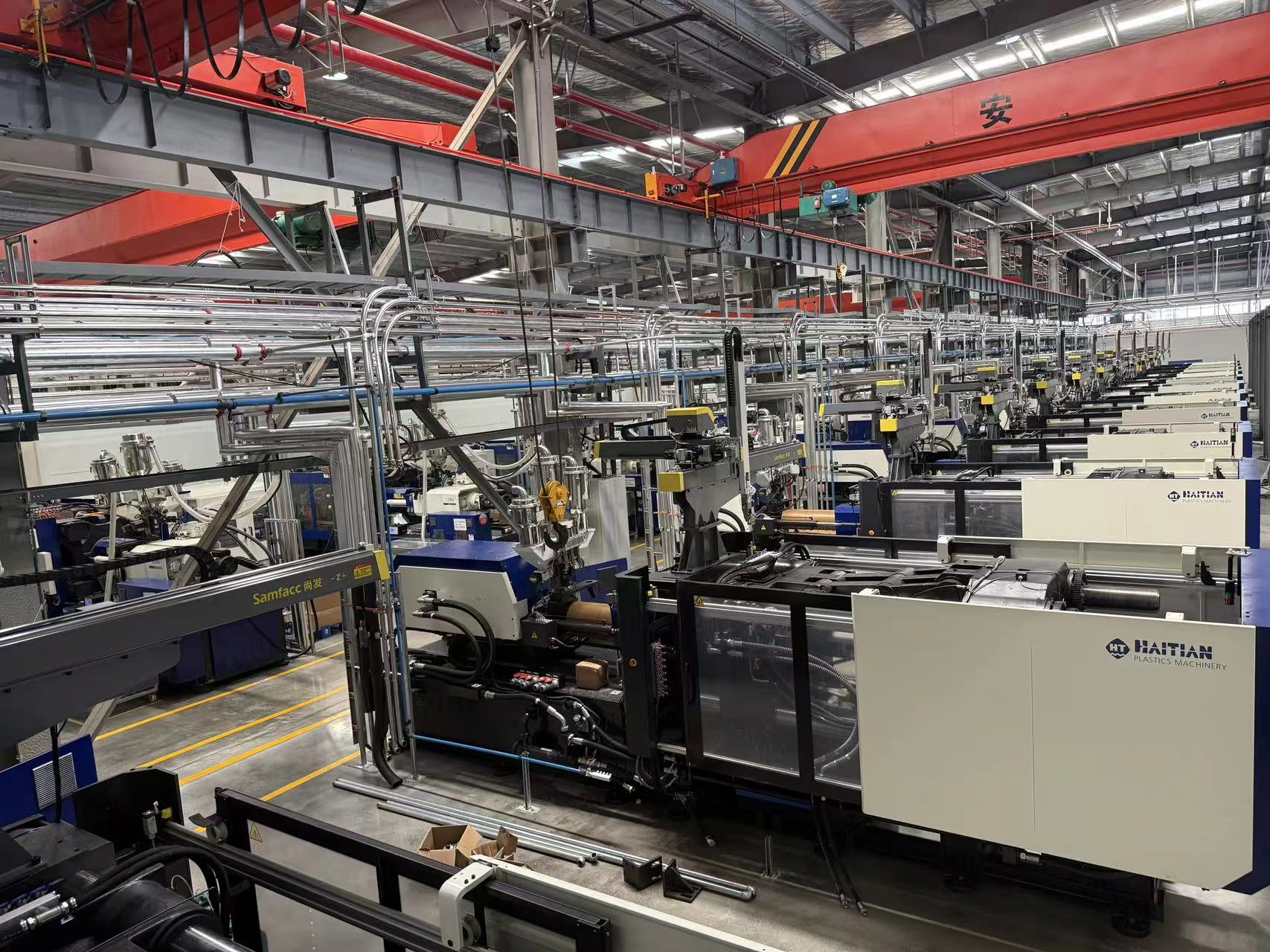
A robotic arm refers to a programmable mechanical system that is used for manipulating tools or products through pre-programmed motion paths. The standard components of the system include the arm itself, drive mechanism or servos, control system, and the end-of-arm tool, which usually is a gripper.
An important point about the tool is that it depends on what the part being processed needs as far as the holding process is concerned. A plastic part with a smooth surface requires a special kind of manipulation as compared to a thin-wall part or a heavy housing. It depends on the product weight, form, material, and location.
Different mechanical designs are also used depending on the manufacturing facility. Small robots are required if space is limited, while larger machines need longer reach and greater load capacity. This is the reason why an arm in use at one factory will have very different features from the one used at another factory.
2.Purpose of Robotic Arm Used in Manufacturing
Product Pick and Place
Pick-and-place is one of the most widespread applications. The robotic arm picks up a manufactured product from a mold, conveyor belt, or processing machine and moves it to a certain destination point.
For instance, in a highly productive manufacturing line, the movement is performed several hundred or thousands of times within a working shift period. The programmed way helps to standardize the process and minimize manual movements.
Loading and Unloading of Machine Tools
In case we use a robot for machine loading, the latter will insert a workpiece into the machine before processing and extract it when the process is completed. It may also be used for loading/unloading machines in the process of injection molding.
The timing matters here. If the removal process takes too long, the robot may become a bottleneck even when the main machine is capable of a shorter cycle.
Material Handling
Parts produced in factories are transferred to several stations before the final product is manufactured. A robot arm used can transfer parts without an additional operator at each station.
The payload carrying capacity is one of the most critical aspects. The required payload capacity should cover not only the product, but also the gripper and other equipment transported by the robotic arm.
Sorting and Stacking
Following the manufacturing process, parts can be separated into different groups and ordered according to a specific pattern. The robot arm used can place each part according to predefined coordinates and can be used in sorting, stacking, and preparation of the product for packaging.
The order of placing parts can also be changed if the specifications of the product are changed, if the tooling and robot program allow it.
Product Transfer
In some cases, there is a need for a simple connection between two production stages. In such cases, a robotic arm can remove the product from one machine and put it onto another.
This type of transfer is often a small part of the overall process, but it can become a useful automation point when production volume is high.
3. Benefits of Robotic Arms Used in Manufacturing
The value of automation is not limited to replacing manual movements. A robotic arm used in the right production environment can influence cycle stability, labor allocation, and workplace conditions.
Stable Repetitive Operations
Human beings naturally differ in their movement speeds throughout the day. A robot that is programmed has the same routine in operation each time. Given that the production cycle is measured in seconds, consistency in handling could make a significant difference.
For example, a robot designed to work in a production cycle of 6 – 9 seconds has to ensure that it does not disrupt the molding cycle. Therefore, it is the ratio between the speed of the robot and the cycle of the machine that becomes critical.
Less Repetitive Manual Labor
Extracting items from an injection molding machine in the course of a full shift can become tiresome and boring for a person. Automation means that operators will have extra time to monitor equipment, inspect the product, prepare materials, or handle exceptions.
Exposure Reduction to Machine Parts
Injection molding machines contain moving molds and heated components. Automating product removal reduces the number of times workers need to approach these areas during normal production.
Easier Integration
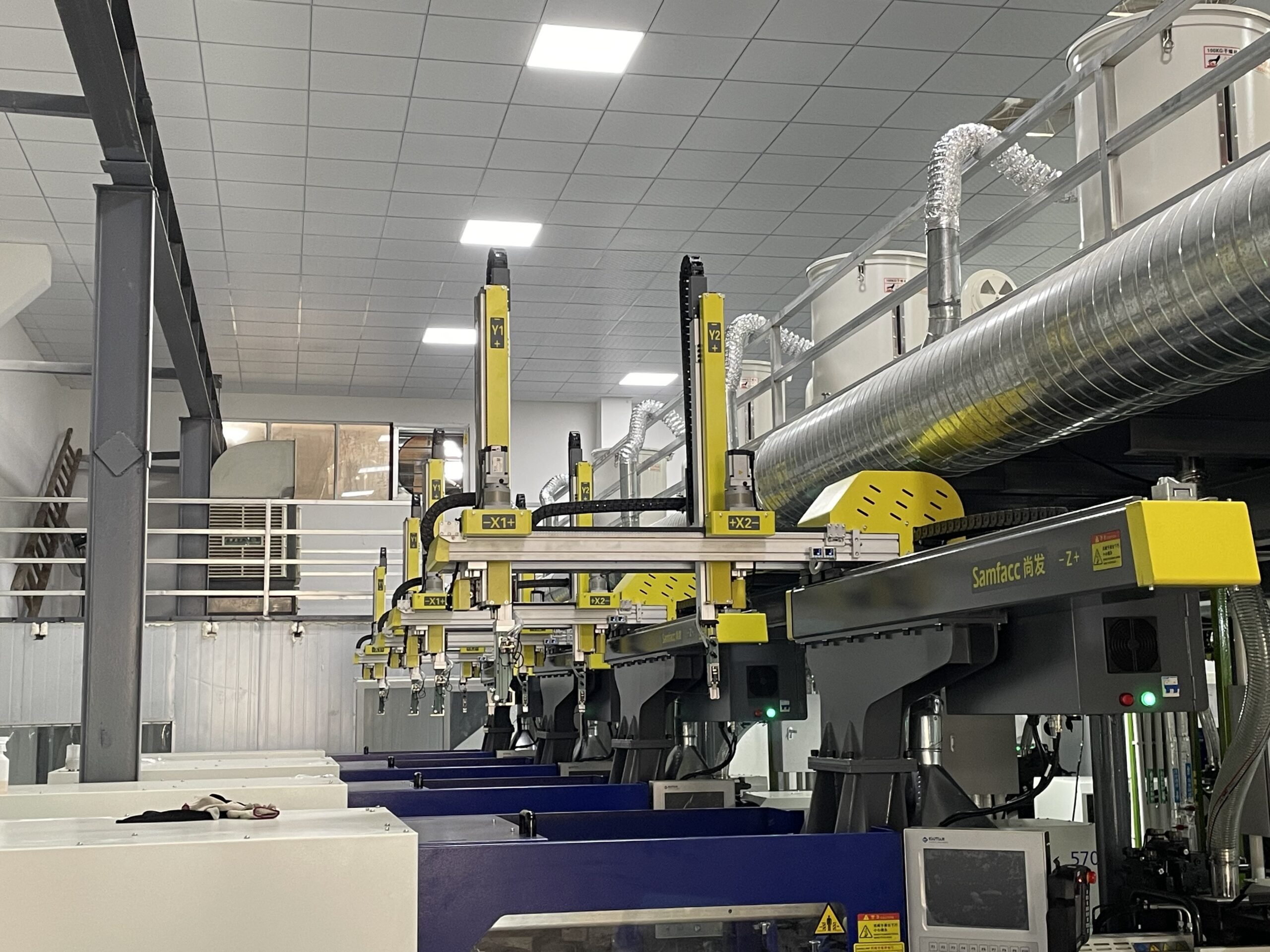
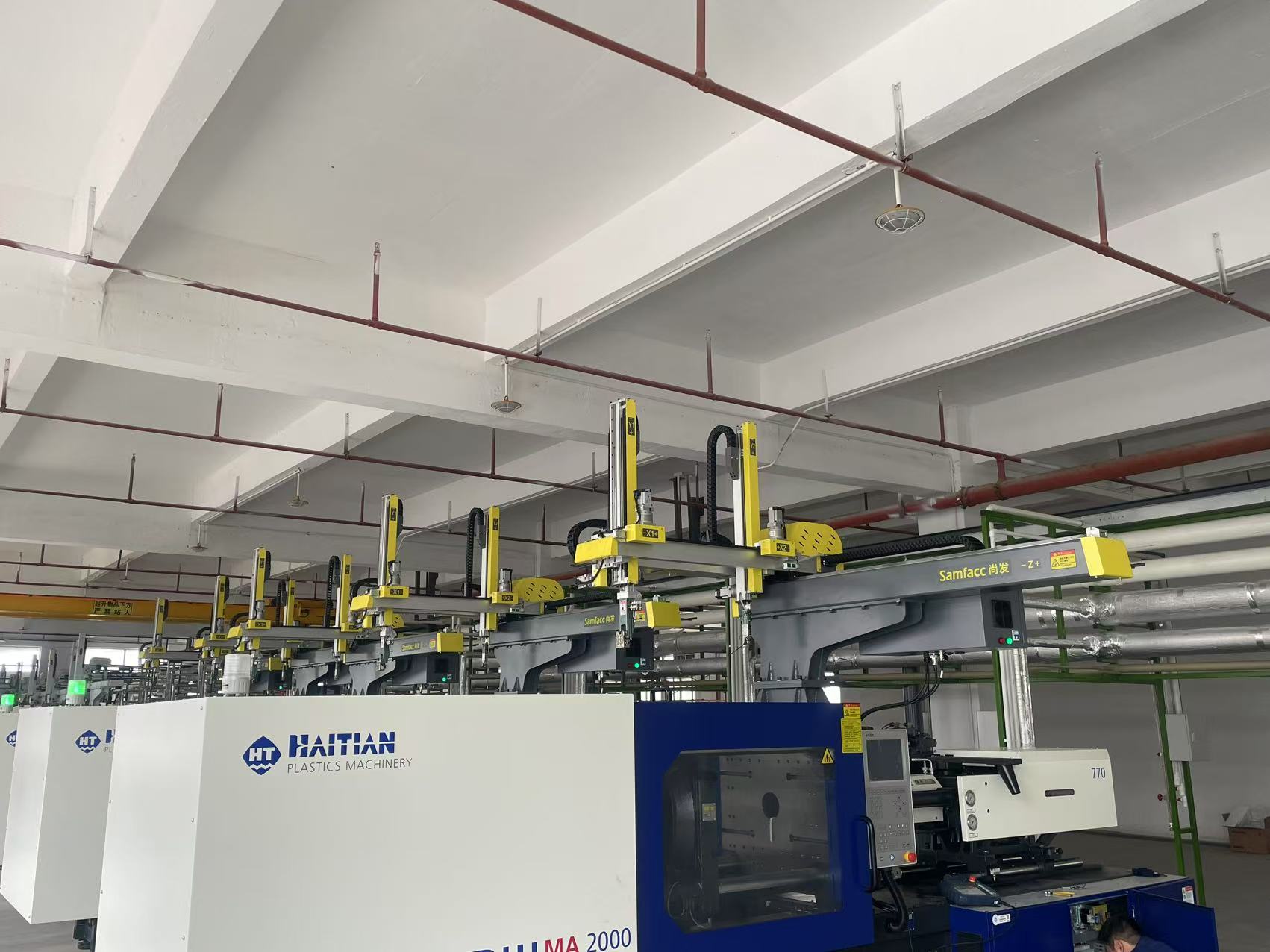
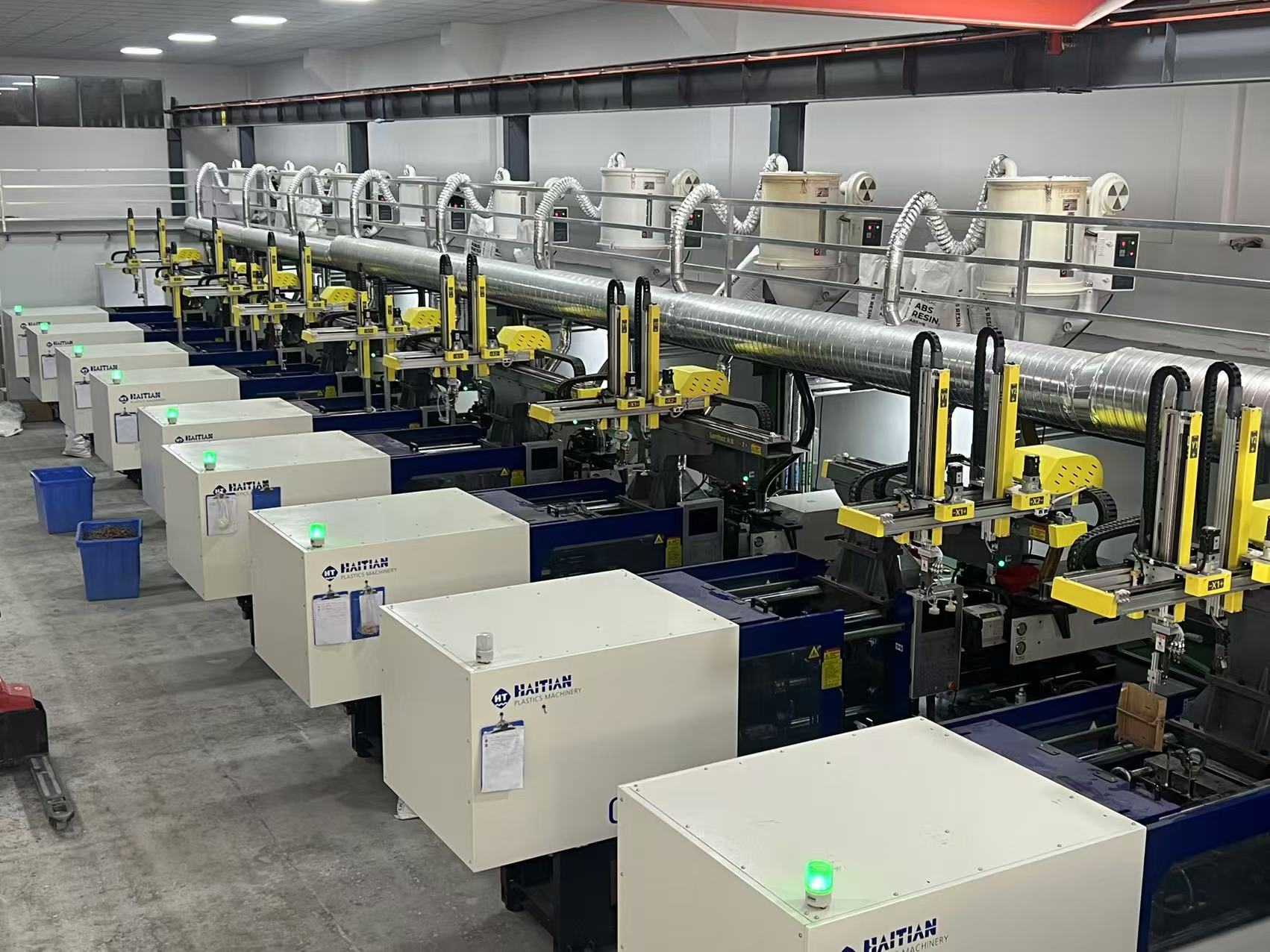
A robot arm can be connected with conveyors, sensors, injection molding machines, inspection units, and packaging equipment. With suitable controls, the individual operations can work as part of one production sequence instead of relying on manual transfers.
4. How to Choose the Right Robotic Arm Used in Manufacturing?
Matching the Injection Molding Machine
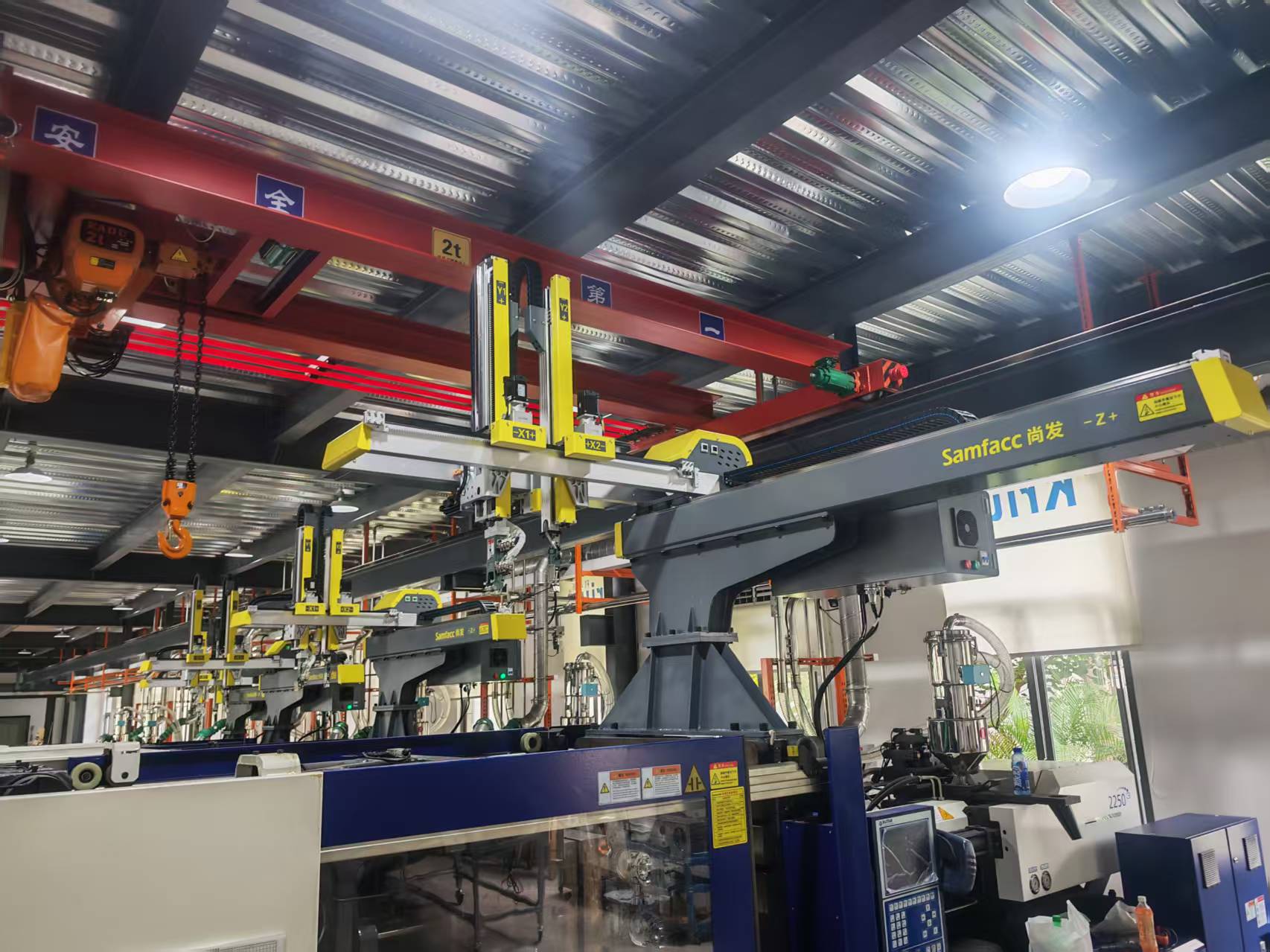
Machine Tonnage is a very good place to start. For example, the SAMFACC Swing Arm SP Series is suitable for injection molding machines with tonnages between 80 and 160 tons. The typical cycle time is 6-9 seconds as per the specifications, and it can be applied in product and sprue removal processes.
This series could be a good choice where the production cell needs a smaller robot for extraction purposes.
Product Size and Weight Considerations
A larger product requires more than a larger gripper. The robot needs enough reach and payload capacity to move the part safely while maintaining the required motion.
For large plastic products, SAMFACC’s Large Range Robot is designed for injection molding machines from 900 to 3500 tons. The series uses 3–5 servo axes and has a listed take-out cycle of approximately 10–15 seconds.
Typical applications include:
- Automotive bumpers
- Refrigerator housings
- Air-conditioning housings
- Industrial pallets
Cycle Time Consideration
Cycle time needs to be taken into consideration with respect to the movement distance of the robot. The robot might have high speed capacity, but if its path is too long or the gripper needs many movements, then the actual take-out time might differ.
Prior to choosing a robotic arm that will work with injection molding, the manufacturer needs to determine the machine cycle time, mold opening time, product removal time, and the remaining time prior to the next cycle start.
Consider Space Available
The factory layout also needs to be taken into consideration. The robot needs sufficient space to work without hindrance from the mold, machine, conveyor, operator area, and safety device.
A compact structure might be helpful in a small cell, while a large injection molding machine might need more extensive working space.
Conclusion
A robot arm used in manufacturing processes can perform different operations ranging from picking and placing to loading machines, material handling, sorting, stacking, and transporting products. Machine size for injection molding, product weight, working area, cycle time, factory planning, and end-of-arm tooling should be taken into account before the installation of a robotic arm. Robotic arm configurations are available
If you are thinking about automating your injection molding process and are not sure which robotic arm configuration will suit your equipment, you can turn to SAMFACC. Application requirements will be considered based on your machine, mold, product, and production cycle.