 English
  Chinese
 Industrial robots have evolved from being complicated systems designed by engineers into widely used modules in modern manufacturing. Today, industrial robot applications play a crucial role in improving production speed, safety, and overall product quality across many industries. From simple material transfer procedures to complex assembly operations, industrial robots are designed and built to perform repetitive tasks systematically and reliably. This article first explains the main types of industrial robots in a simple way, and then introduces common industrial robot applications across different industries.

What Is an Industrial Robot?
An industrial robot is a programmable automated machine capable of performing tasks independently. In modern industrial robot applications, these machines significantly enhance efficiency and accuracy in manufacturing environments. By handling repetitive, potentially dangerous tasks, industrial robots allow human workers to focus on supervision, quality inspection, and process optimization rather than manual execution.
Types of Industrial Robots
- Articulated Robots
Articulated robots feature rotary joints similar to the human arm, allowing a wide range of motion and flexibility. In many industrial robot applications, these robots are valued for their ability to perform precise and complex movements. They are especially effective when handling large components or working in environments that require access from multiple angles.
- Cartesian (Traverse) Robots
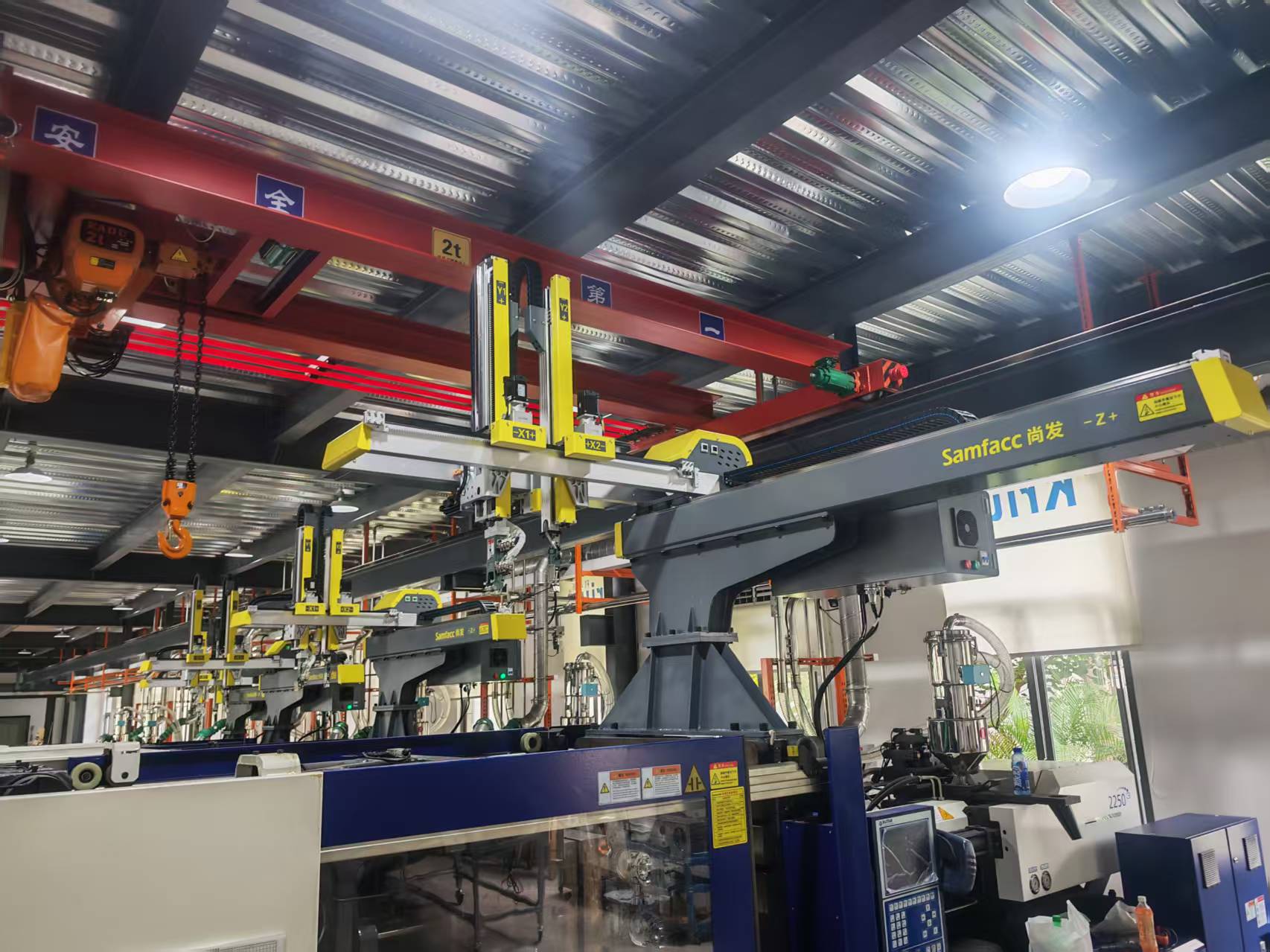
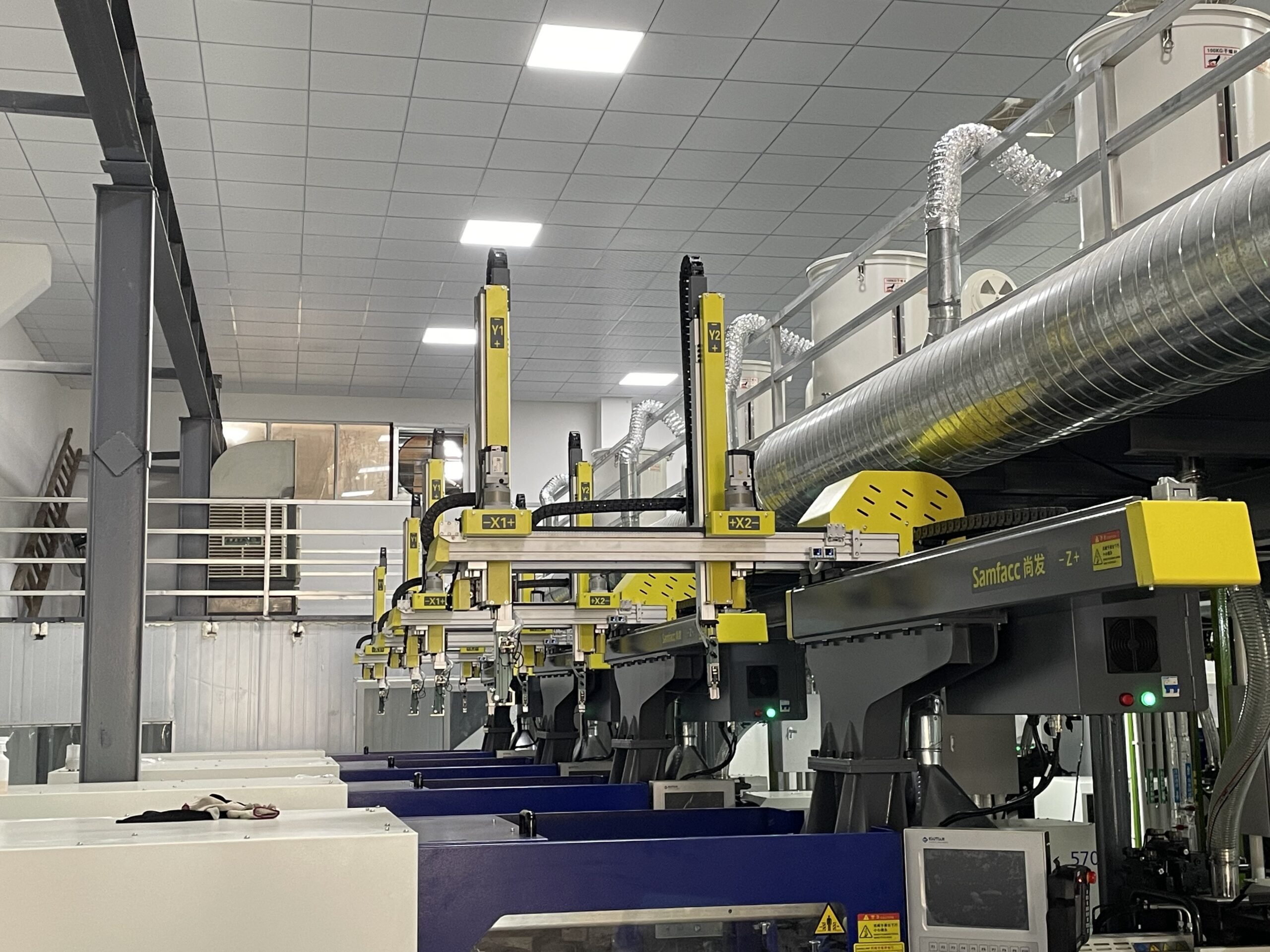
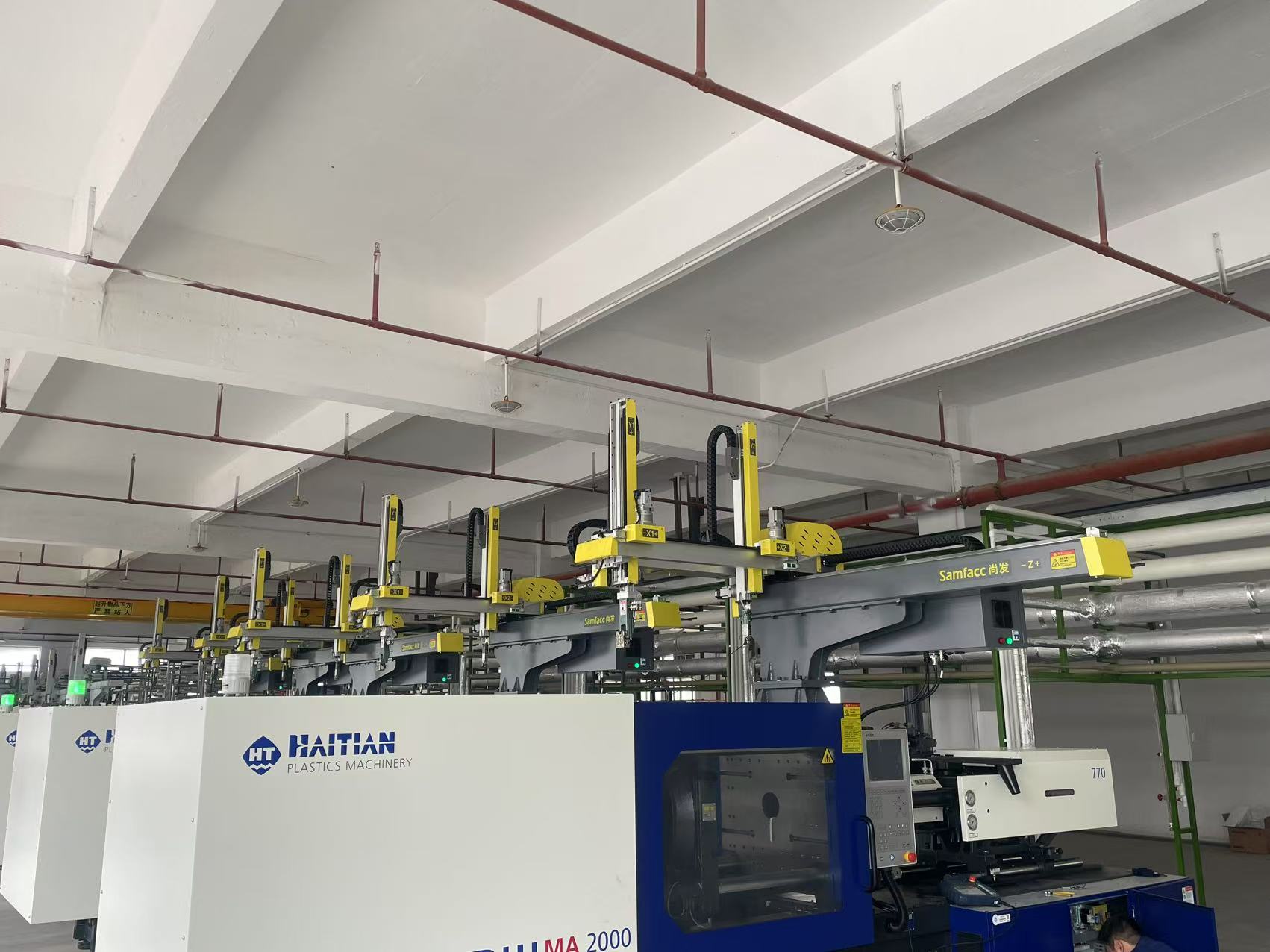
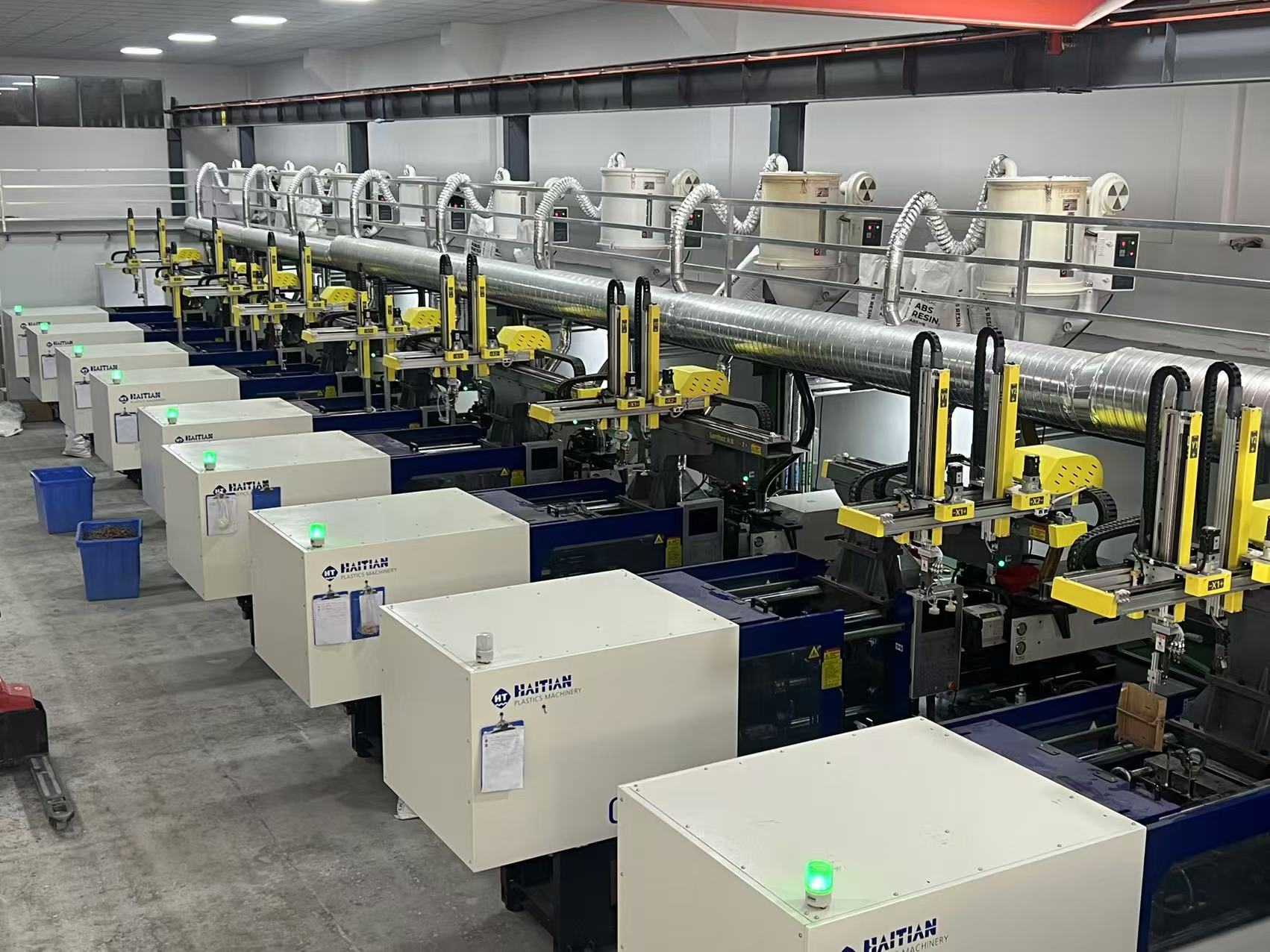
Cartesian robots, also known as traverse robots, move along linear X, Y, and Z axes. Their simple structure and high positional accuracy make them suitable for repetitive, straight-line movements. Within industrial robot applications, Cartesian robots are often chosen for tasks that demand consistency, stability, and easy programming.
- Vertical Robots
Vertical robots primarily operate along the vertical axis and are designed to fit into space-constrained production environments. These robots are commonly used in industrial robot applications where compact installation and efficient vertical movement are required.
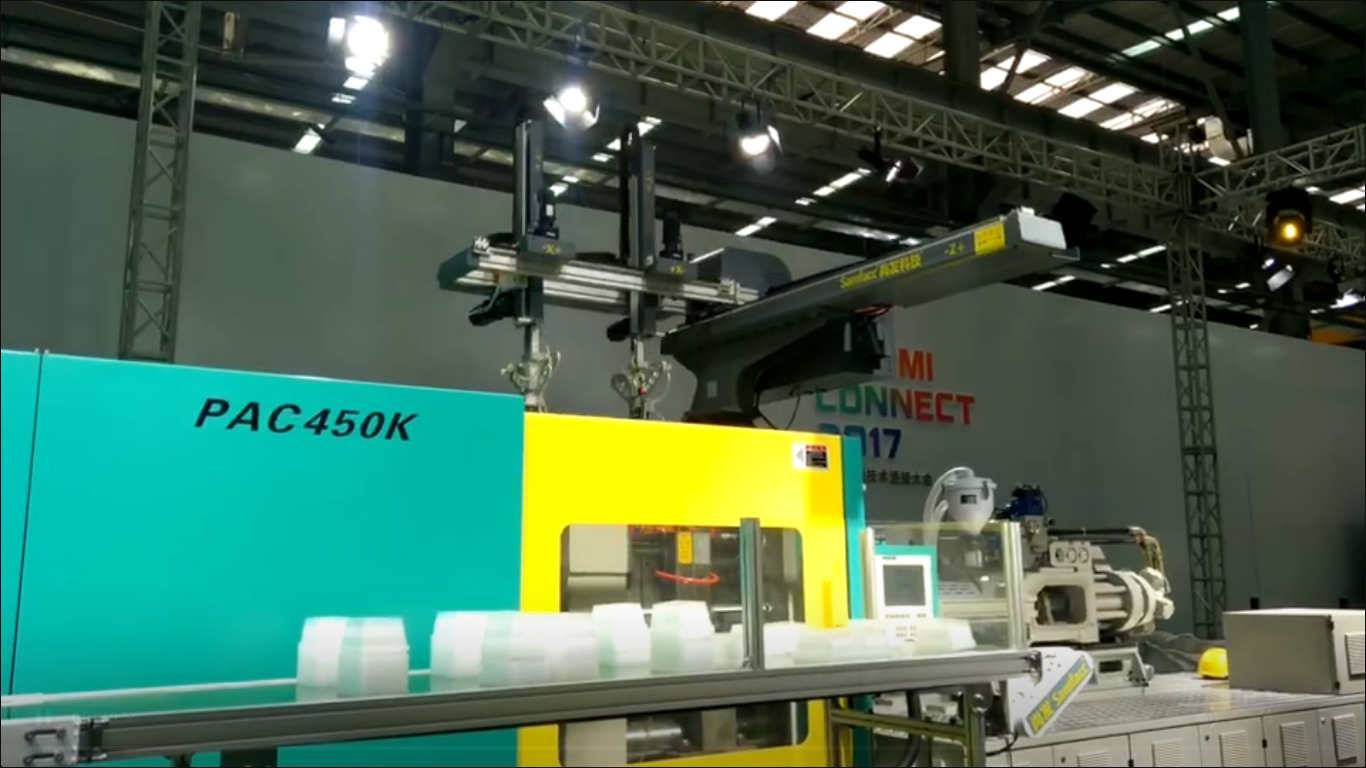
As an industrial robot manufacturer, SAMFACC’s vertical robots apply advanced control technology to support high-speed and precise automation in injection molding processes. Their performance helps meet the diverse operational demands found in modern industrial robot applications.

- Specialized Robots
Specialized robots are developed for specific manufacturing needs, such as in-mold labeling (IML) or collaborative operations. These robots focus on precision, timing, and smooth integration with existing production systems. In many industrial robot applications, specialized robots handle delicate tasks or operate in synchronization with molding and packaging equipment.
SAMFACC’s IML robots combine automated labeling with robotic handling functions and can be customized according to customer requirements. During in-mold labeling processes, they control label deviation within ±0.02 mm, ensuring reliable alignment in multi-cavity molds. Such precision makes them well-suited for advanced industrial robot applications in food and packaging production.

Industrial Robot Applications
- Automotive Industry
The automotive sector was among the earliest adopters of industrial robot applications. Articulated robots are widely used for welding, painting, and assembling vehicle components. These robots offer stable precision on large workpieces, reduce worker fatigue, and maintain the high production speed required in automotive manufacturing.
- Electronics and Semiconductors Industry
In electronics manufacturing, industrial robot applications commonly involve small articulated robots and vertical robots. These robots perform delicate tasks such as component handling, soldering, and inspection. High accuracy is critical in this industry, and robotic automation helps improve both yield and product consistency.
- Food and Packaging Industry
The food and packaging industry benefits significantly from industrial robot applications using Cartesian and traverse robots. These robots support sorting, packaging, and palletizing processes while reducing manual handling. Their use enhances hygiene standards and helps maintain consistent output during peak production periods.
- Pharmaceutical Industry
In pharmaceutical production, industrial robot applications often rely on vertical and articulated robots for filling, packaging, and inspection. Robotic automation minimizes direct human contact with sensitive products, supports regulatory compliance, and ensures repeatable, controlled manufacturing conditions.
- Metal Processing and Assembly
Metal processing is another field where industrial robot applications are widely adopted. Articulated robots are commonly used for grinding, polishing, welding, and assembly operations. They improve operational accuracy, enhance workplace safety, and help increase production efficiency when handling heavy or sharp materials.
Conclusion
Industrial robots are an essential part of modern manufacturing systems. Understanding different robot types and their corresponding industrial robot applications helps manufacturers improve productivity, reduce risks, and optimize production workflows. SAMFACC provides industrial robot application solutions across multiple industries, including automotive, electronics, food processing, pharmaceuticals, and metal manufacturing. In addition, SAMFACC specializes in customized robotic solutions tailored to specific production needs. For any inquiries about industrial robot applications, please contact us for further assistance.