Enhancing Production with an Injection Machine Robot

In the competitive world of plastic manufacturing, efficiency and consistency are paramount. As factories strive to meet higher demands while maintaining strict quality control, automation has become a necessity rather than a luxury. One of the most significant advancements in this sector is the widespread adoption of the injection machine robot. These automated systems are designed to streamline the molding process, ensuring that production lines run smoothly around the clock. By integrating an injection molding robot into your workflow, manufacturers can achieve a level of precision and speed that is difficult to replicate manually. This shift not only optimizes output but also creates a safer working environment for employees.

Injection Machine Robot (1)

The Role of an Injection Machine Robot in Modern Manufacturing

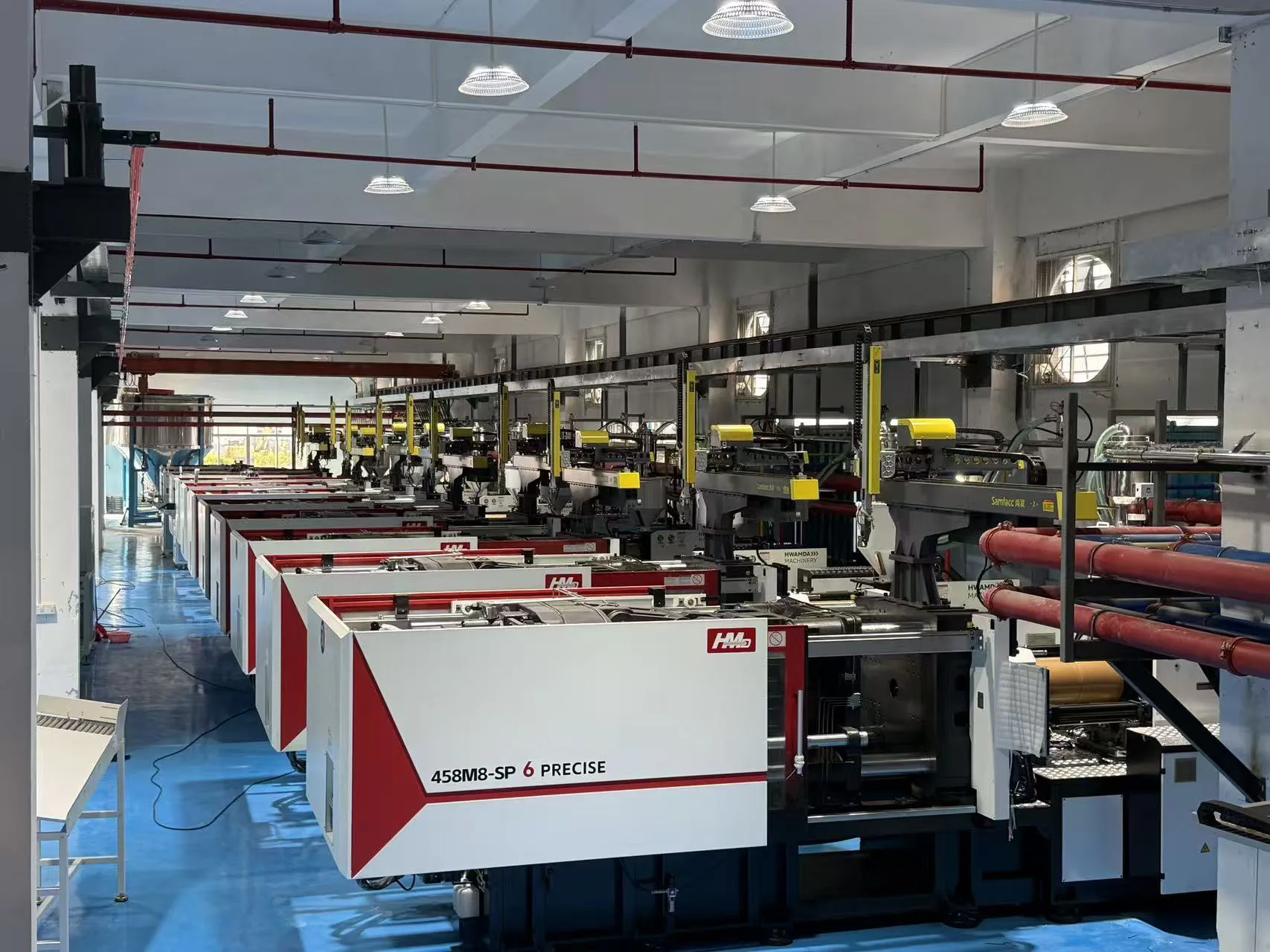
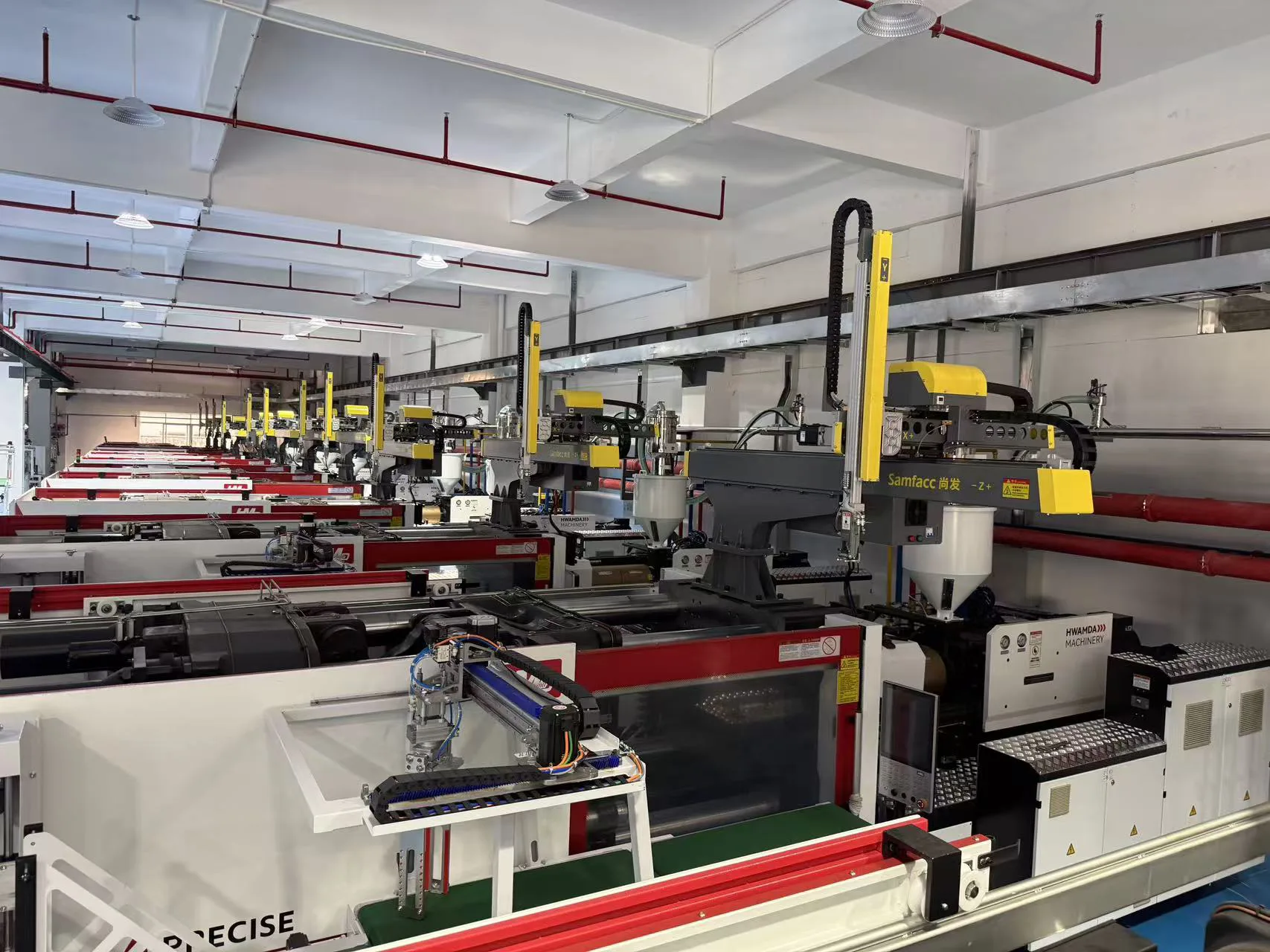
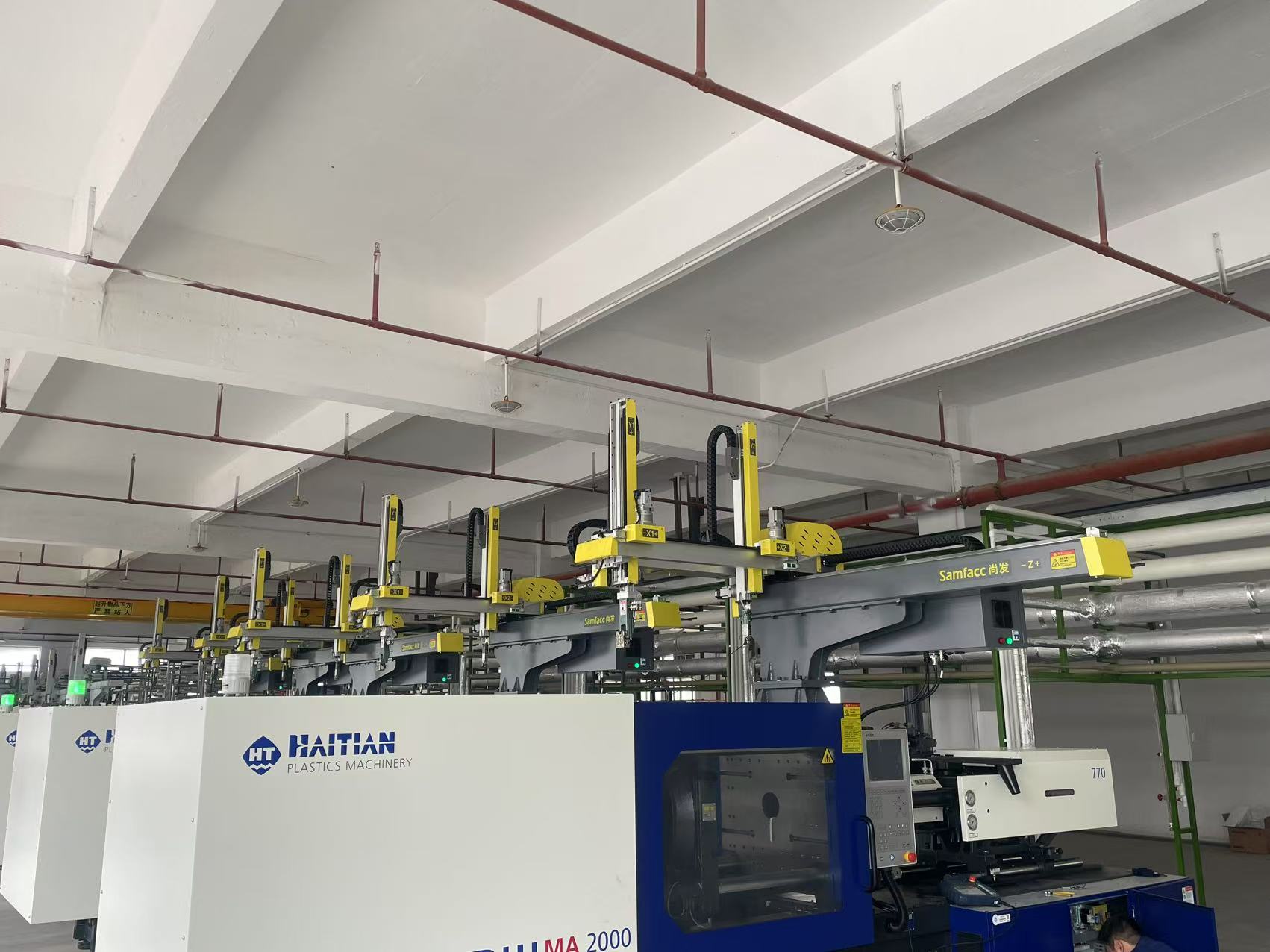
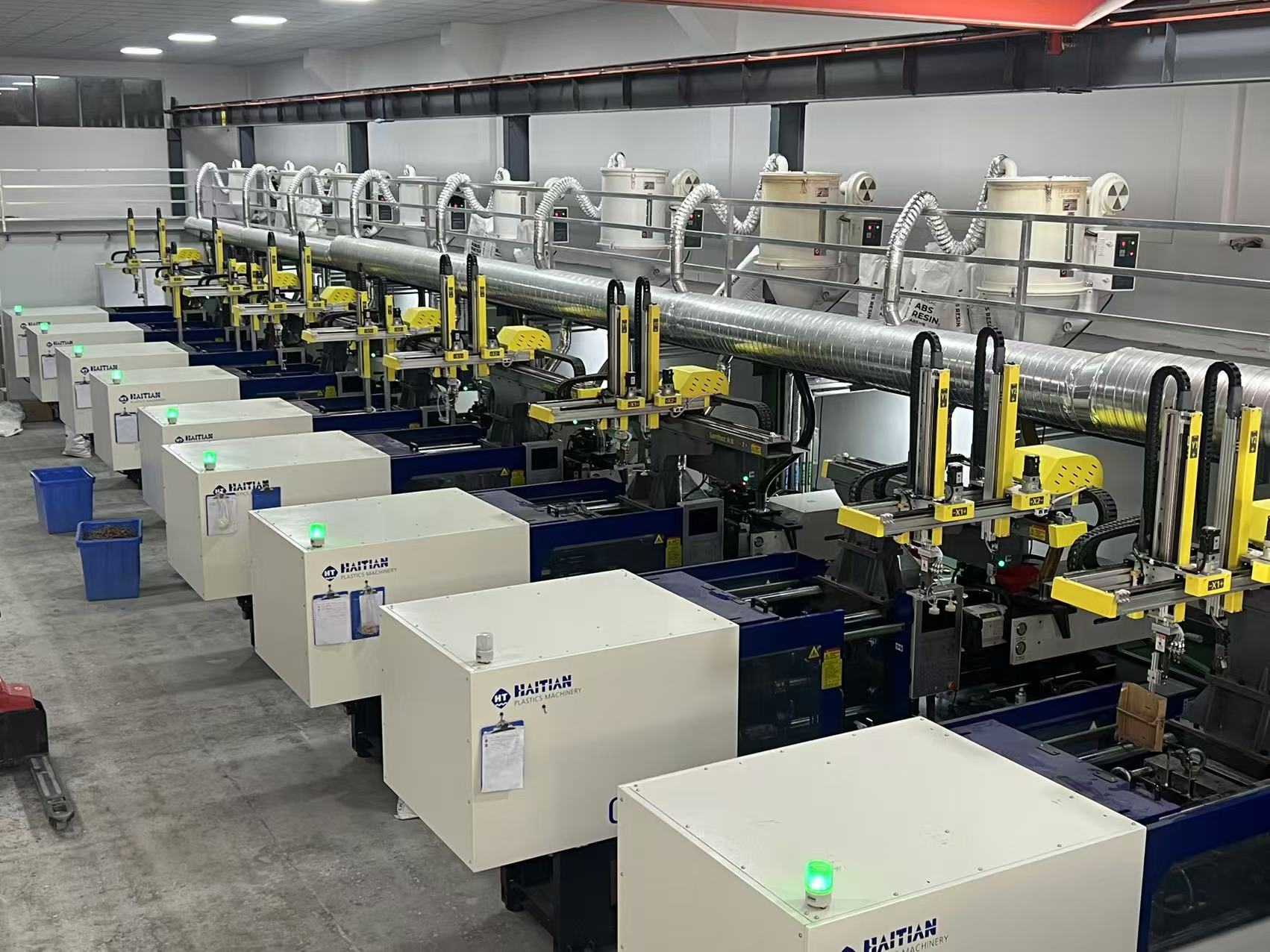
The primary function of an injection machine robot is to automate the removal of parts from the mold, replacing manual intervention with highly synchronized automation. In a traditional setup, a human operator must open the safety gate, reach in to extract the part, and then close the gate to restart the cycle. This manual process introduces variability in cycle times and poses significant safety risks. By contrast, an injection molding robot synchronizes perfectly with the molding machine to streamline the entire workflow.

Key operational advantages include:

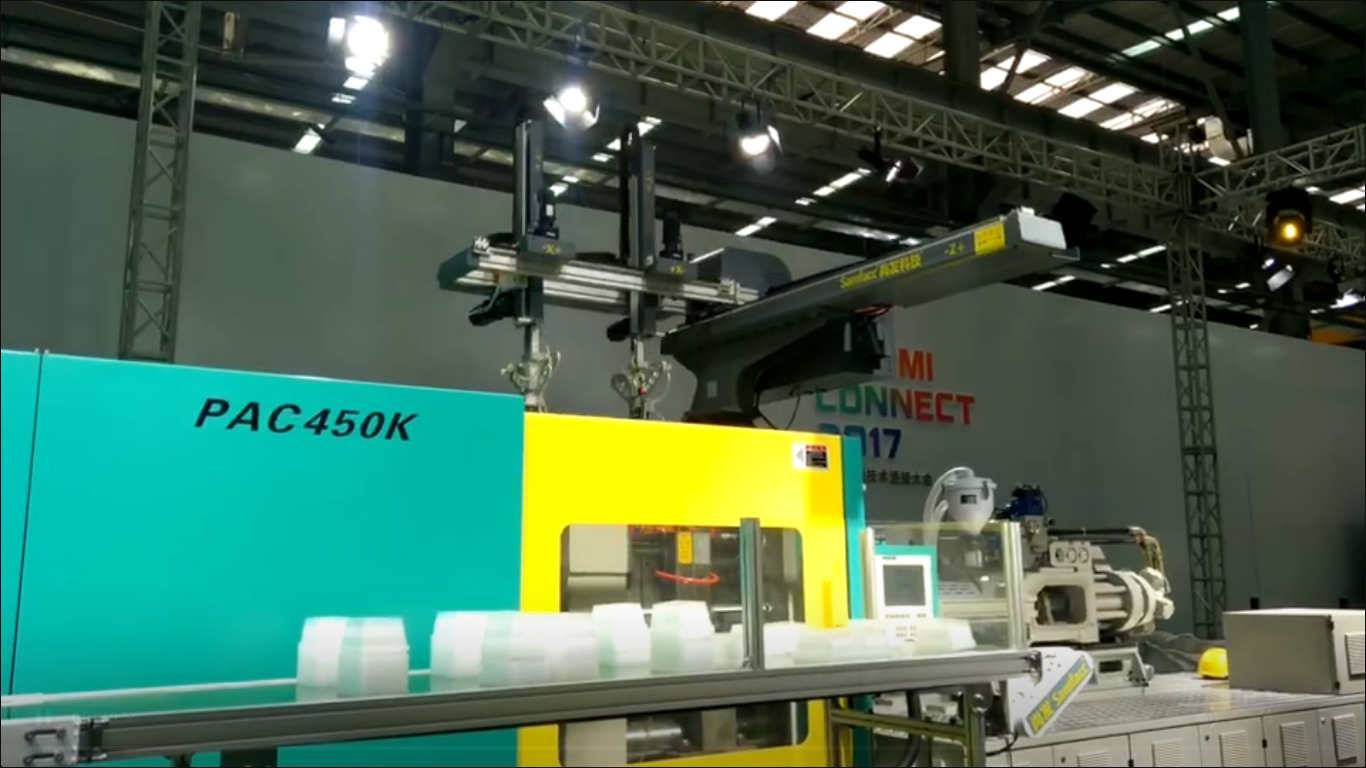
  • Seamless Mold Interaction: The injection molding robot enters the mold area the moment it opens, extracts the part using custom end-of-arm tooling (EOAT), and exits rapidly. This seamless interaction reduces the overall cycle time, allowing for more shots per hour.
  • Going beyond basic part removal: Injection molding robots—thanks to flexible programming—can also handle secondary processing tasks such as gate removal, in-line quality inspection, and automatic conveyor loading, ensuring seamless integration across the production workflow. Further enhancing the automation cell’s capabilities.

Key Types of Automation

When selecting an injection molding robot, it is crucial to understand the different configurations available to match your specific mold and factory layout. Below is a quick reference guide to help you identify the right solution for your production needs:

机器人类型 Key Features Best Applications
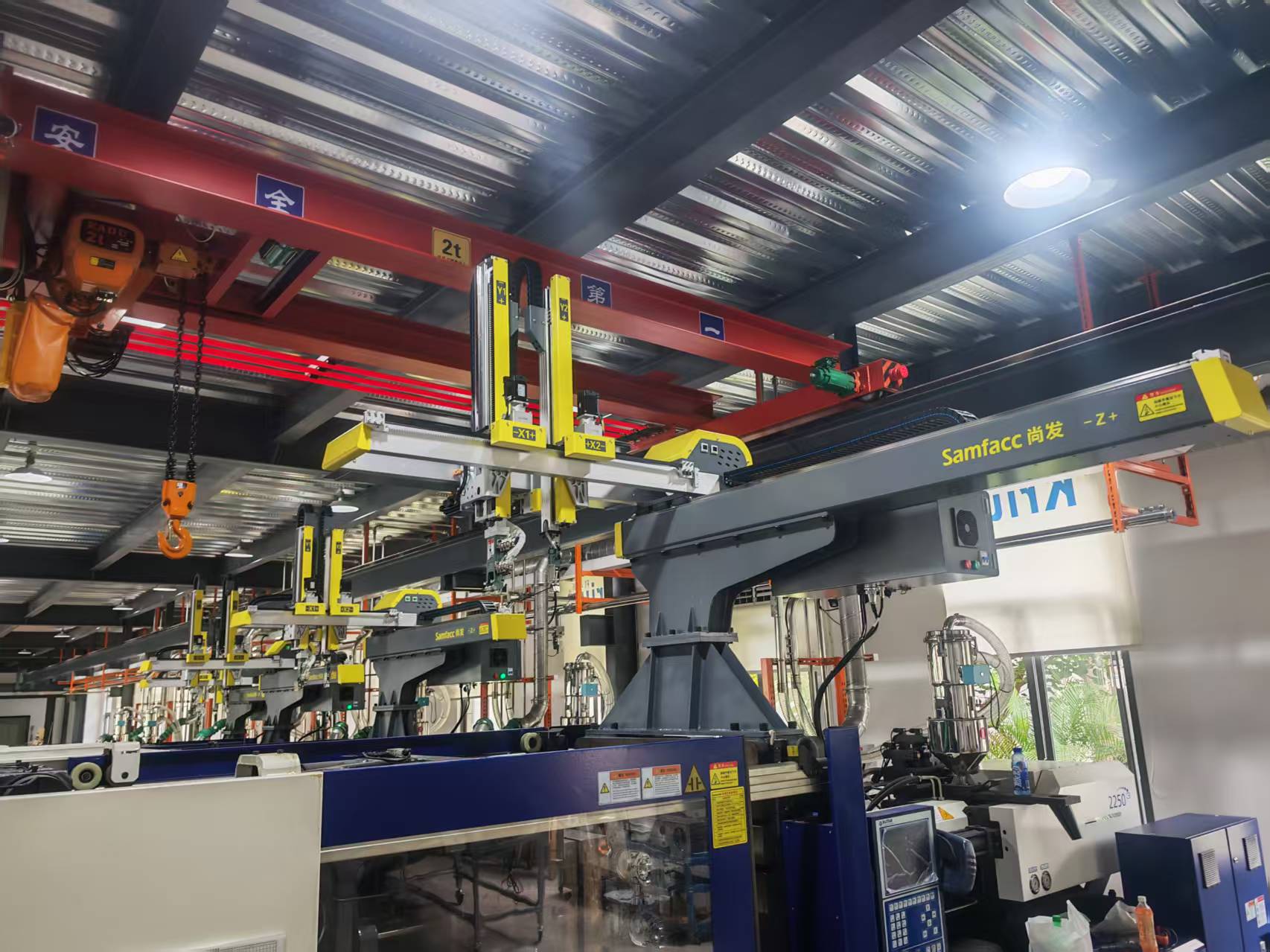
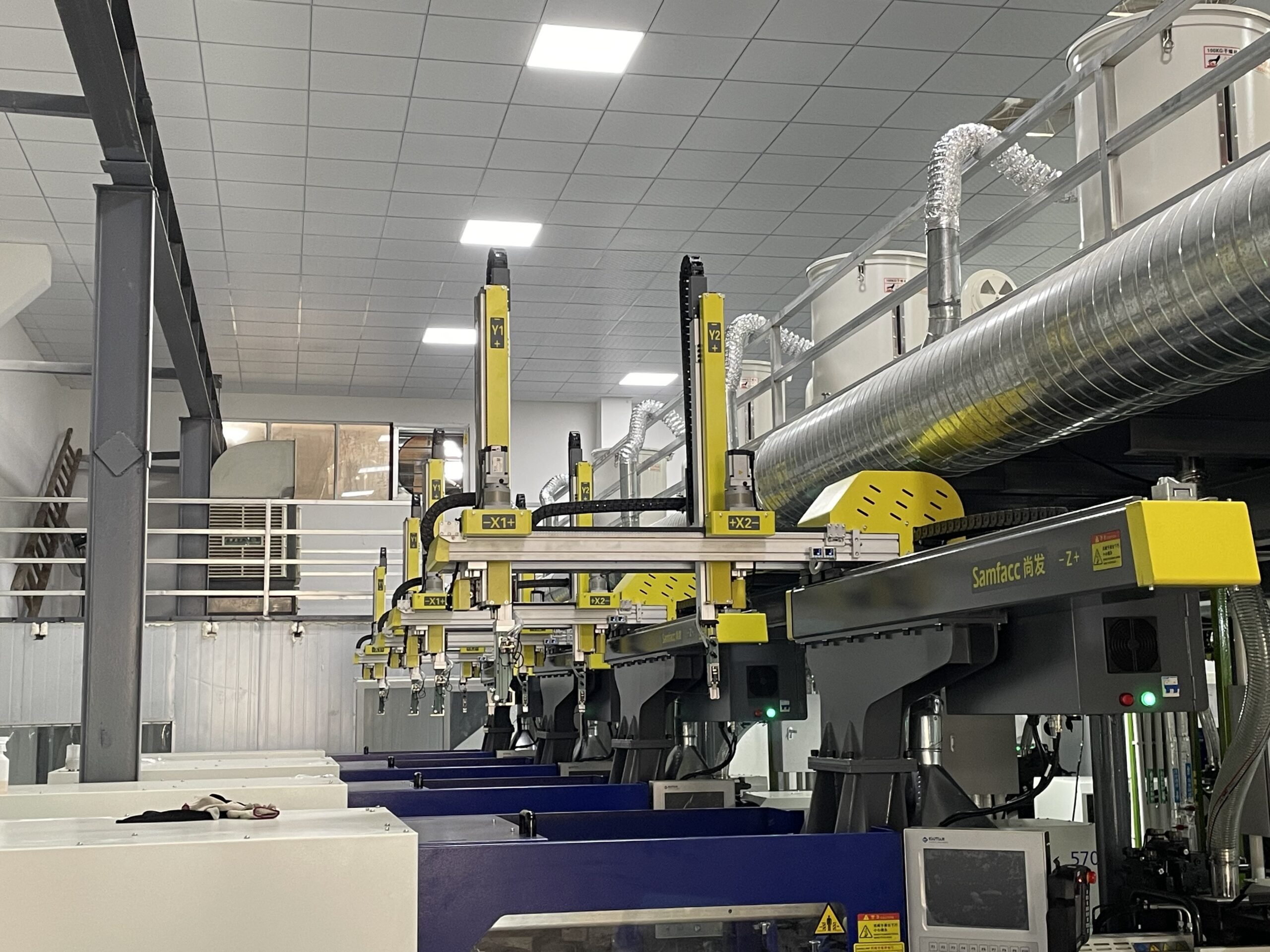
横走式机械手 Versatile X, Y, Z-axis movement; available in standardhigh-speed configurations. General-purpose part removal, medium-to-large parts, and multi-cavity molds.
侧入式机器人 Enters mold parallel to tie bars; extremely fast cycle times. High-speed thin-wall packaging, caps, and containers.
IML系统 Specialized in precise in-mold labeling; high positional accuracy. Food containers, buckets, and packaging with integrated labels.
纵走式机械手 Compact footprint; designed for vertical injection molding machines. Insert molding, small electronic components, and overmolding.

Each type of injection machine robot serves a distinct purpose, and choosing the correct configuration is essential for maximizing your return on investment.

Boosting Efficiency and Safety with Automation

Implementing an injection machine robot offers tangible benefits that directly impact the bottom line, primarily by optimizing two critical areas:

  • Unmatched Production Efficiency: Unlike human operators who require breaks and shift changes, an injection molding robot can operate 24/7 without fatigue. This continuous operation ensures that the cycle time remains constant, thereby maximizing the utilization of the injection molding machine.
  • Enhanced Workplace Safety: The area around an operating molding machine is inherently hazardous due to high temperatures, heavy moving platens, and high-pressure hydraulics. By deploying an injection molding robot, the need for operators to reach into the point of operation is eliminated, significantly reducing the risk of accidents and ensuring compliance with strict occupational health regulations.
  • Improved Product Quality: Beyond speed and safety, an injection molding robot handles parts gently and consistently. This precision reduces the rate of product damage or deformation that frequently occurs with manual handling, ultimately lowering scrap rates and improving overall yield.

Integration and Future-Proofing Your Production Line

When introducing injection machine robots, many manufacturers are most concerned about the challenges of compatibility and integration with their existing production lines. Fortunately, modern robotics are designed with user-friendly interfaces and standard communication protocols, such as Euromap 67, to ensure seamless connections with various brands of injection molding machines.

To streamline this process, manufacturers should focus on the following key integration steps:

  • Standardized Communication: Utilizing universal protocols allows the injection molding robot to communicate effortlessly with the molding machine’s control system, minimizing compatibility issues.
  • Simplified Setup: The initial configuration typically involves teaching the injection molding robot the specific coordinates of the mold and the designated drop-off points.
  • Efficient Changeovers: Once programmed, the injection molding robot can store these parameters for future use, making product changeovers quick and highly efficient.

Injection Machine Robot (2)

Looking ahead, the capabilities of the injection machine robot continue to evolve alongside Industry 4.0 advancements. Advanced models now offer robust data collection features that provide significant operational advantages:

  • Remote Monitoring: Factory managers can track production counts, cycle times, and error rates remotely in real time.
  • Predictive Maintenance: This data integration is vital for anticipating mechanical issues before they cause unplanned downtime.
  • OEE Tracking: Comprehensive analytics help manufacturers accurately measure and improve Overall Equipment Effectiveness.

结论

The transition to automated manufacturing is a strategic move for any business looking to remain competitive. An injection molding robot is not just a tool for moving parts; it is a comprehensive solution for improving quality, safety, and profitability. From automotive components and medical devices to packaging for everyday consumer goods, selecting the right robotic system can completely transform your production efficiency.

Samfacc, we specialize in designing and manufacturing high-performance automation solutions. Our robot matrix is designed to meet the rigorous demands of modern injection molding. Explore our product lineup to find the perfect injection machine robot for your facility and take the first step towards a smarter, safer factory.

类别

相关帖子

Automation Assembly2
Robot Automation System
Pick And Place Automation System 1
automated plastic1
滚动至顶部